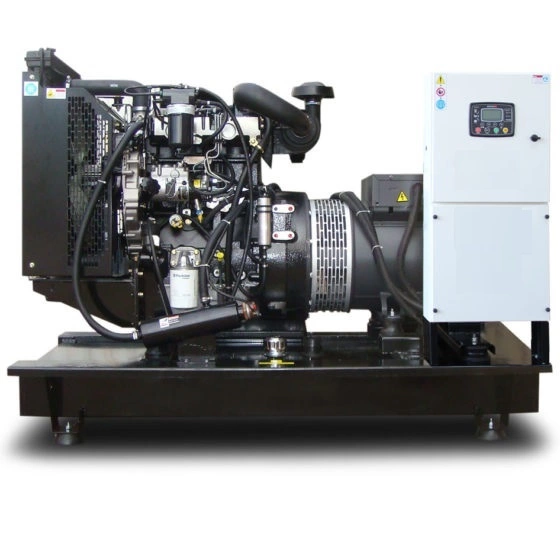
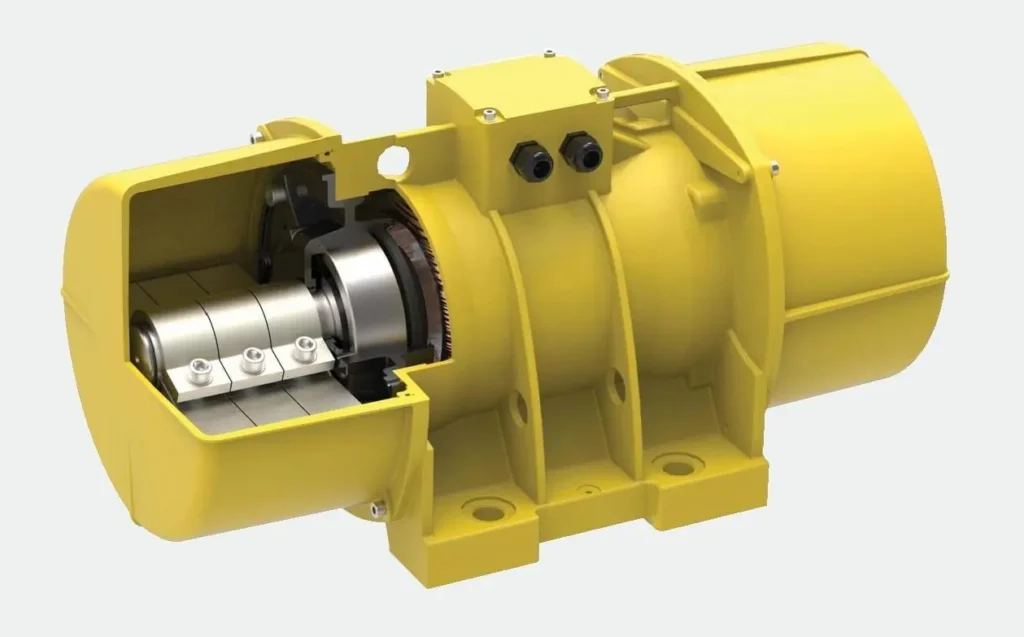
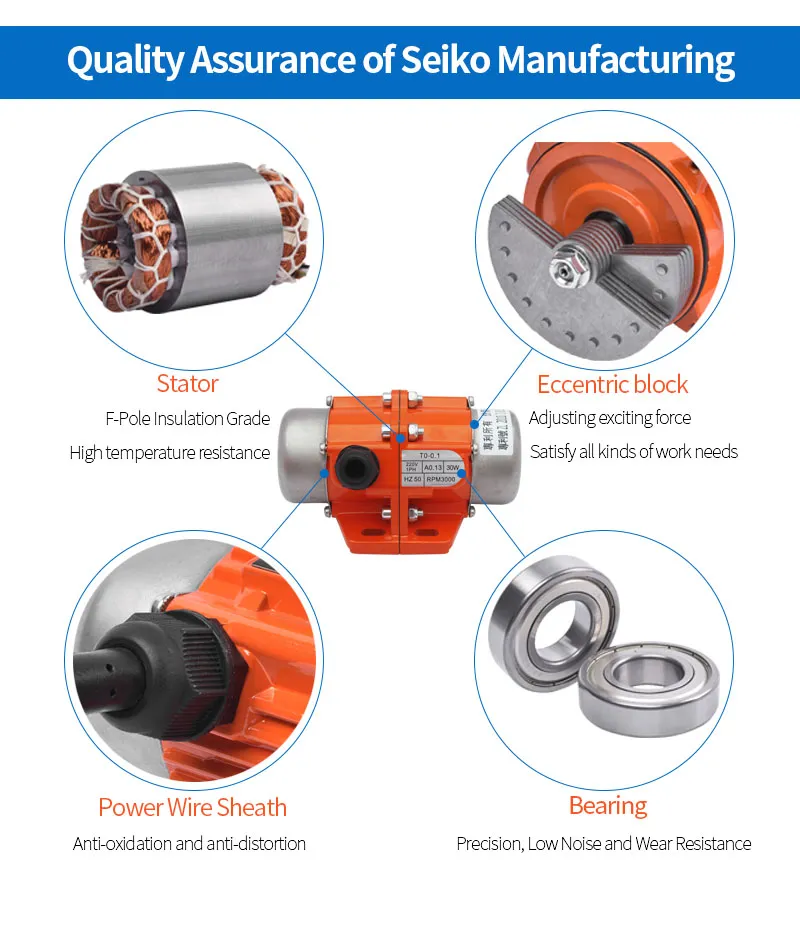
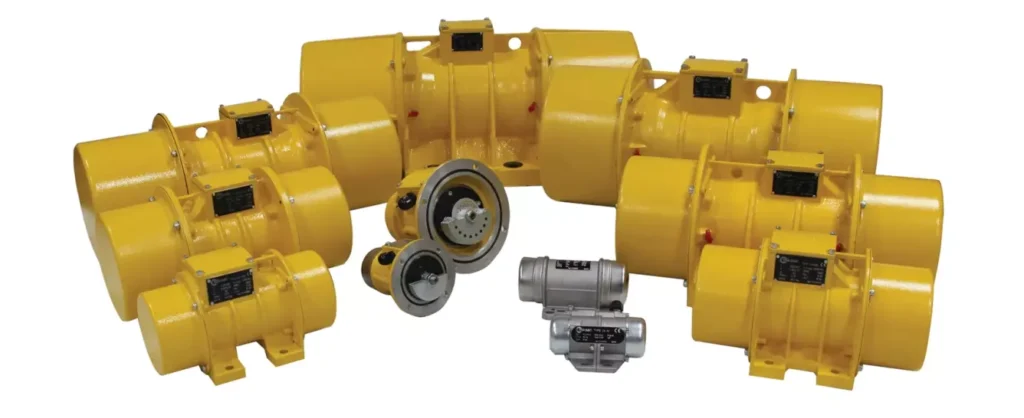
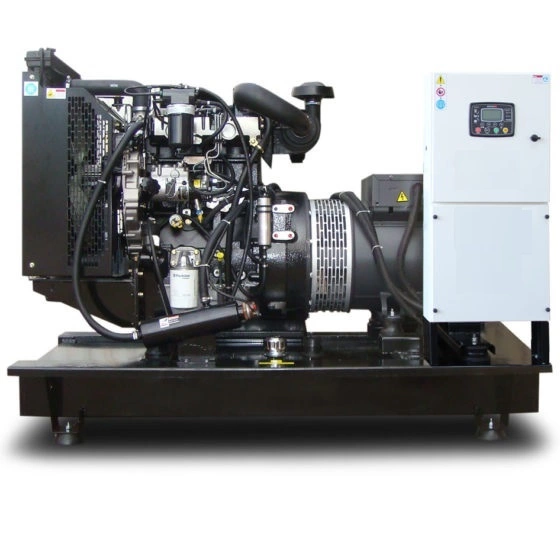
We supply 2nd hand Generator for Sale. Good condition. High-quality diesel engines with low prices. Spare parts warranty and Free Consultation.
2nd hand Generator for Sale
The generator is a system that mainly consists of a diesel engine that produces rotational movement and an alternator that is coupled to the diesel engine and generates electrical energy.
Generators can be used in regions where there is no electricity ( mining, road construction, suburban sites, movie sets, border patrol, etc. ) permanently and can be used in applications where electricity usage is critical ( airports, hospitals, schools, factories, rail, etc. ) as a network ( mains ) backup.
Generally, the generator is a device that generates the alternating current at 400/230 V – 50 Hz or 480/277 V – 60 Hz or 380 /220 V – 60 Hz, or 220/127 V – 60 Hz voltages and frequencies.
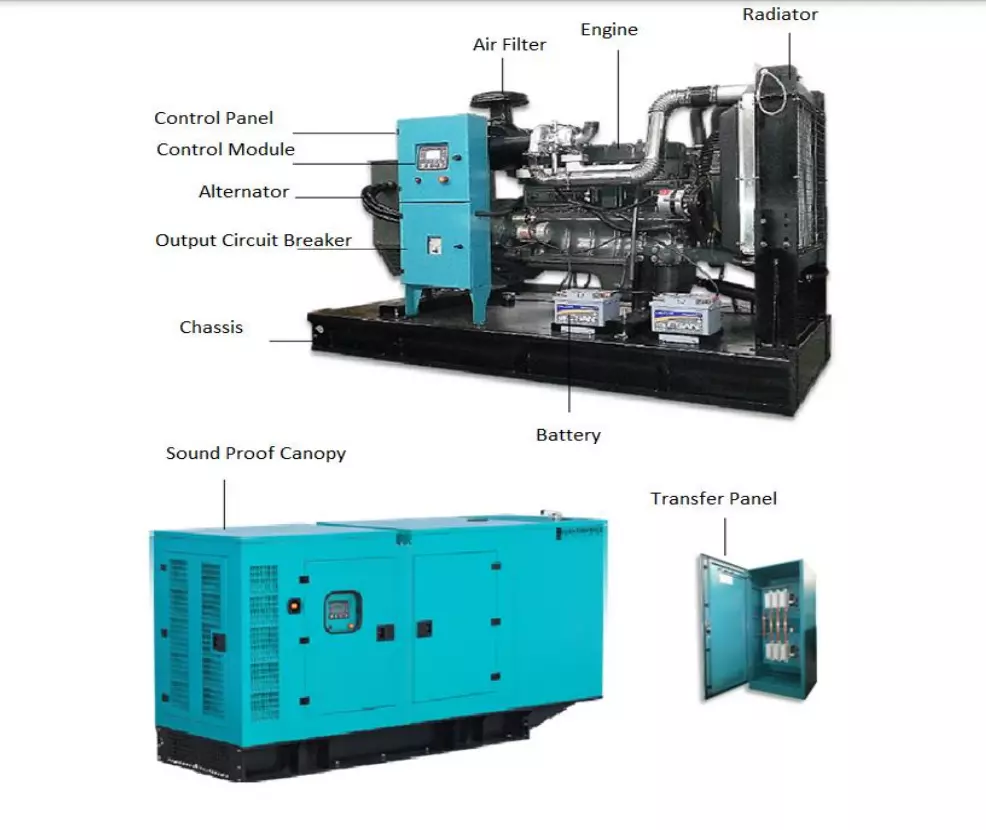
Parts of the 2nd hand Generator for Sale
Parts of the 2nd hand Generator for Sale
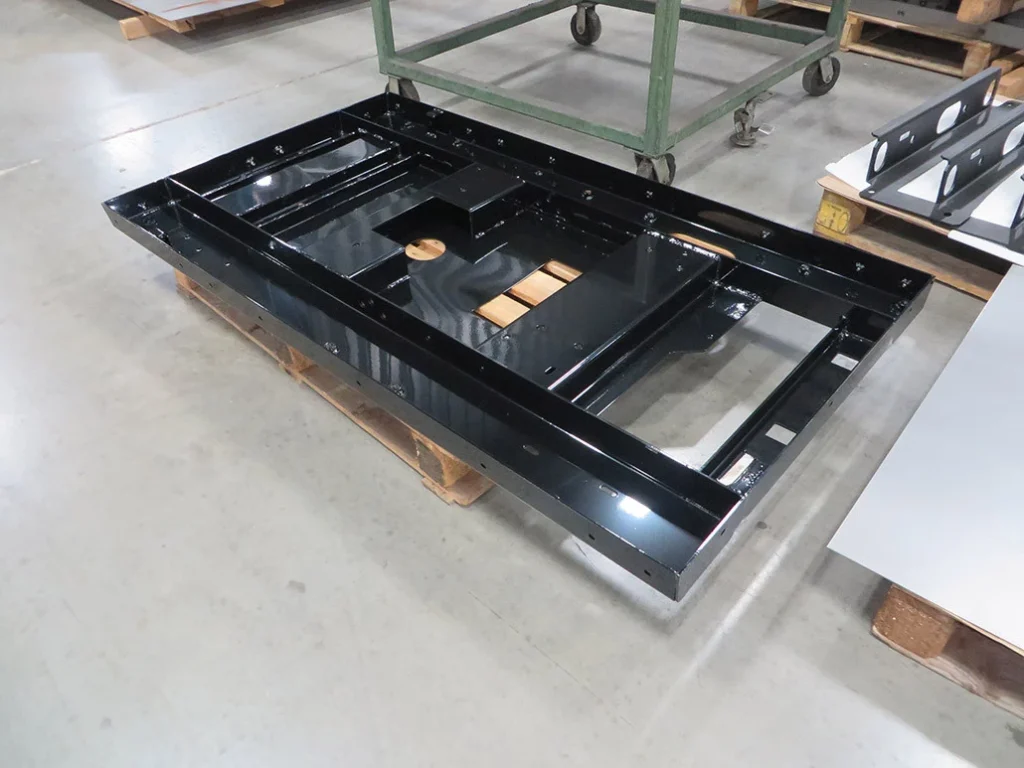
5.2- Chassis: All equipment of the generator is mounted on the steel chassis, inside of it the fuel tank is available. Diesel suction and return hoses, fuel filler cap, fuel level indicator float, and lifting holes located on the generator chassis (frame). The fuel tank is designed to feed to the generator at least eight hours of continuous operation. An external fuel tank is provided for the generators above 1100 kVA power. The engine and alternator are mounted on the chassis with anti-vibration mounts.
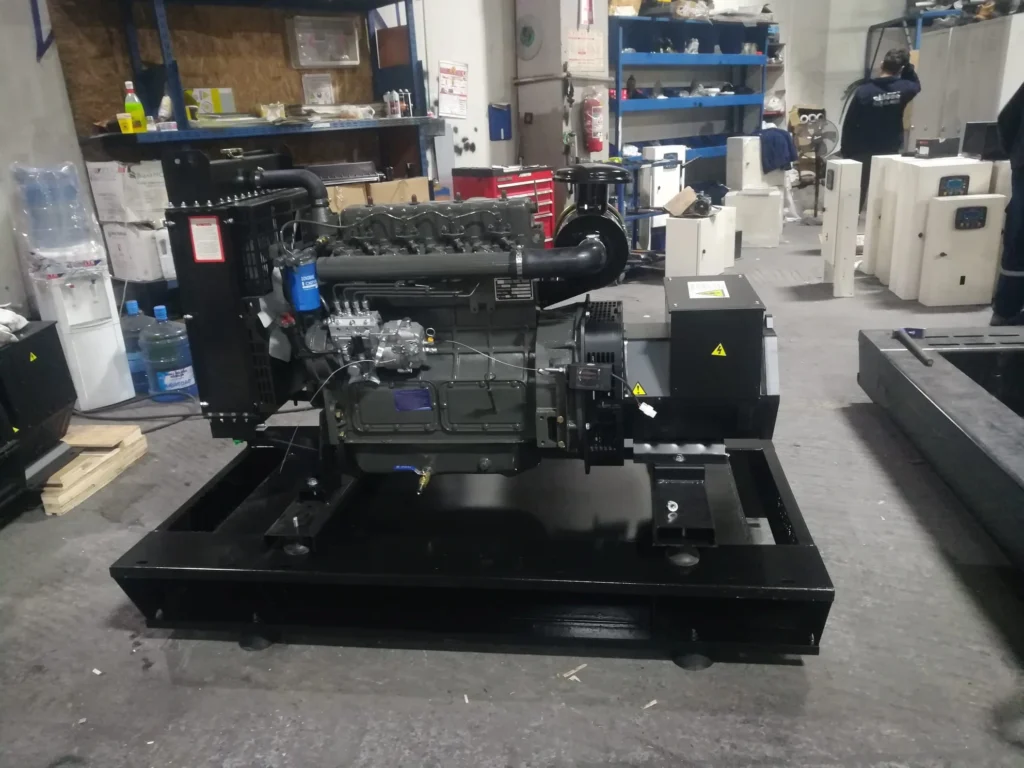
5.3- Engine: Diesel engine that rotates the alternator to generate electricity. Diesel engines used in our generators are long-life industrial type, 4-stroke, water-cooled, 3-4-6-8-10-12-16 cylinders, in-line or V-type cylinders, and with mechanical or electronic governor. Electrical system: According to the model and power of the engine, the electrical system voltage is 12 V or 24 V DC. Starter that provides the first movement to the engine, charging alternator, stop solenoid, actuator, fuel solenoid, electronic voltage regulator, control panel, control module, protection and alarm devices, sensors, switches, etc, are parts of electrical systems.
Lubrication system: The oil pump, oil filter, and oil cooler are the parts of the lubrication system. Changing engine oil and filter on time ensures efficiency and long-lasting of the engine. Recommended lubrication oil for diesel engines’ quality level API is CH / CI-4. SAE values of the oil to be used according to the ambient temperature are,
Every Season
15 °C / + 50 °C degrees ambient temperature SAE: 5W40 – 15W40
20 °C / + 40 °C degrees ambient temperature SAE: CI-4 10W30
Winter Season
30 °C / + 20 °C degrees ambient temperature SAE: 5W30
40 °C / + 0 °C degrees ambient temperature SAE: 0W30
Cooling system: Our generator’s engines are water-cooled. The cooling system consists of a radiator, fan, recirculating pump, and thermostat. When the engine is hot, the radiator cap should not be opened. Jacket water heater: While the engine is not working that is used to keep the engine body at a constant temperature in summer and winter. This type of heater work with external electricity.
Where the absence of a network (electricity), heaters working with diesel fuel are used as options. When the cooling system is empty, the engine jacket water heater must not be operated.
Filters
Filters: Our generator’s engines have a changeable air filter, oil filter, fuel filter, and water filter (option). Sensor and alarm switches: brand oil and temperature sensor/alarm switches are used in our generators. Battery: The battery feeds the starter that provides the first movement of the engine.
That’s why the battery is one of the most important parts of a generator. If the battery has been discharged do not start the generator. Therefore it must be checked frequently. While the generator is not running, the battery is charged by a charger which is located in the automatic control panel. While generator is running, the battery is charged by a charging alternator which is a part of the engine.
The batteries that are being used in our generators, are lead acid type and have different amperage and voltage (12 V or 24 V DC) depending on the generator’s power and model. Two units of 12 V batteries are used in 24 V systems.
When connecting the battery cables, firstly the positive (+) terminal and secondly the negative (-) terminal must be connected. When disconnecting the battery cables, firstly the negative (-) terminal and secondly the positive (+) terminal must be disconnected. Batteries emit explosive gas while charging. This is why approaching the battery with fire is dangerous.
Diesel Engine of the Generators
“EMS Power Machines” uses diesel engines that are manufactured with the latest technology, in accordance with ISO3046 standards, and designed for generator sets. The diesel engines used; are designed for low fuel consumption, with 4-stroke type, direct injection, with all needed limiting and level sensors, with diesel electronic or mechanical type governor mounted on the fuel pump for sensitive speed adjustment or regulation.
The engines used, may have oil, air, or water-type cooling systems, depending on customer request and the diesel engine. There are also oil, fuel, and air filters that are designed for heavy operation conditions, which provide the engine with a long lifetime with high performance. All the equipment that is needed for the diesel engine for operating safely and reliably, is provided along with the generator set.
EMS Power Machines can provide a base frame fuel tank or free-standing fuel tank dependent on the model preferences of the customer. Larger sets require free-standing fuel tanks due to the need for high fuel capacity. Fuel tanks are manufactured of plate steel or other suitable materials. Teksan ensures that the fuel tanks are all manufactured in accordance with relevant standards. EMS Power Machines fuel tanks are equipped with:
Filling cap
Tank ventilation
Fuel outlet valve
Fuel return connections
Tank drainage plug
Sediment trapping section
Level gauge pipe
Float switches (Optional)
Automatic filling (Optional)
It is highly recommended to install a fuel filter and/or a water separator on the outlet line of these fuel tanks.
Engine Brands of Diesel Generators for Sale
Perkins Engines
Cummins Engines
Ricardo Engines
Baudoin Engines
Shanghai Dongfeng Engines
Volvo Engines
Yangdong Engines
We use any of the above-mentioned diesel engines for the production of our diesel generators according to the customers’ requests.
Perkins engines are manufactured in the UK and are very common in the generator production market.
75 KVA Generator with Ricardo Engine
Ricardo engines are manufactured in China and have a very high market share in the generator manufacturing market.
Base Frame of the Generators
The base frame on which the generator set is placed has been manufactured using proper steel plates or special profiles based on the necessary dynamic, static, and vibration calculations in order for providing high resistance. EMS Power Machines produces the base frames for all ranges in accordance with international standards.
Base Frame of the Generators
The base frame of a generator, often referred to as the generator skid or chassis, is a crucial structural component that provides support, stability, and a foundation for the entire generator set. It plays a key role in ensuring the proper functioning, safety, and longevity of the generator. Here are some key aspects related to the base frame of generators:
Functions and Features
Support Structure:
The base frame serves as the primary support structure for the generator set, providing a stable foundation to hold all the components together.
Engine and Alternator Mounting:
The engine and alternator, the two main components of a generator set, are securely mounted on the base frame. Proper alignment and secure mounting are essential for efficient operation and to minimize vibrations.
Vibration Isolation:
Many base frames incorporate features to isolate vibrations produced during the operation of the generator. This helps reduce noise and ensures that vibrations do not impact the performance or structural integrity of the generator.
Fuel Tank Support:
In some generator sets, the fuel tank is integrated into or mounted on the base frame. This provides a secure and stable location for the fuel tank.
Cooling System Support:
The cooling system components, such as radiators and cooling fans, are often mounted on or integrated into the base frame to ensure proper airflow and cooling.
Lifting Points:
Base frames are designed with lifting points or provisions for lifting equipment. This facilitates ease of transportation, installation, and maintenance of the generator set.
Weatherproofing:
Depending on the design, the base frame may provide some level of protection against environmental elements, such as rain and dust, to ensure the longevity of the generator set.
Accessibility:
The base frame is designed to allow easy access to key components for maintenance and service tasks. This includes access panels and doors for routine inspections and repairs.
Corrosion Resistance:
Base frames are often constructed from materials that offer corrosion resistance to withstand environmental conditions and ensure a longer service life.
Considerations
Material Selection:
Base frames are commonly made of steel, but the type and quality of the steel used can vary. The choice of materials depends on factors such as environmental conditions, weight considerations, and corrosion resistance.
Size and Dimensions:
The size and dimensions of the base frame are determined by the overall size of the generator set. It should provide adequate space for all components and ensure proper ventilation.
Site Conditions:
The design of the base frame should consider the specific site conditions where the generator will be installed. This includes factors such as seismic requirements, soil conditions, and available space.
Transportation:
The base frame design should facilitate ease of transportation, considering factors such as size, weight, and lifting points.
Regulatory Compliance:
The design and construction of the base frame should comply with relevant safety and construction standards set by regulatory authorities.
The base frame is a critical element in the overall design and functionality of a generator set. Its design and construction should align with the specific requirements of the generator and the intended application. Manufacturers often provide detailed specifications for the base frame in the generator set documentation. When selecting or installing a generator set, it’s important to follow the manufacturer’s guidelines and consider any site-specific requirements.
Vibration Isolators
Vibration isolators, also known as vibration mounts or isolating mounts, are components used in diesel generators to reduce the transmission of vibrations and noise generated during the operation of the engine. These isolators play a crucial role in enhancing the overall performance, stability, and comfort of the generator set. Here are key aspects related to the vibration isolators of diesel generators:
Functions and Features
Vibration Reduction:
The primary function of vibration isolators is to reduce the transmission of vibrations generated by the diesel engine to the surrounding structure. This helps minimize the impact of vibrations on adjacent equipment and structures.
Noise Reduction:
In addition to reducing vibrations, isolators also contribute to noise reduction. They help isolate the generator set from its surroundings, preventing the transmission of noise to nearby areas.
Component Protection:
Vibration isolators protect various components of the generator set, including the engine, alternator, and other critical parts, from the potentially damaging effects of excessive vibrations.
Structural Integrity:
By reducing vibrations, isolators contribute to maintaining the structural integrity of the generator set and the surrounding infrastructure. Excessive vibrations can lead to wear and tear on components and may compromise the overall stability of the generator.
Isolation from External Vibrations:
Isolators not only prevent the transmission of internal vibrations but also isolate the generator set from external vibrations, such as those from nearby machinery or environmental factors.
Adjustability:
Some vibration isolators are designed to be adjustable, allowing for fine-tuning to achieve optimal vibration isolation based on the specific operating conditions and requirements.
Types of Vibration Isolators
Spring Mounts:
Spring mounts use metal springs to isolate vibrations. They are effective in reducing both high and low-frequency vibrations.
Rubber Mounts:
Rubber mounts, or elastomeric mounts, use rubber or other elastomeric materials to absorb and dampen vibrations. They are effective for isolating high-frequency vibrations.
Air Springs:
Air springs use compressed air to provide isolation. They are effective in isolating low-frequency vibrations and are often used in large and heavy machinery.
Viscous Dampers:
Viscous dampers use hydraulic fluid to absorb and dissipate vibrations. They are effective in isolating both high and low-frequency vibrations.
Active Isolation Systems:
Active isolation systems use sensors and actuators to actively counteract vibrations in real-time. These systems can provide dynamic and adaptive vibration control.
Considerations
Application Specifics:
The selection of vibration isolators should consider the specific application, environmental conditions, and the frequency spectrum of vibrations generated by the diesel generator.
Load Capacity:
The isolators should be selected based on the load capacity of the generator set to ensure proper support and isolation.
Installation and Maintenance:
Proper installation and regular maintenance of the vibration isolators are crucial to ensure their effectiveness over time.
Regulatory Compliance:
Compliance with relevant safety and regulatory standards should be considered when selecting vibration isolators.
Manufacturer Recommendations:
Follow the manufacturer’s recommendations for the type and specification of vibration isolators suitable for a particular generator model.
Vibration isolators are integral components that contribute to the smooth and reliable operation of diesel generators while minimizing the impact on surrounding structures and environments. When selecting or maintaining vibration isolators, it’s essential to consider the specific requirements of the generator set and follow the guidelines provided by the generator manufacturer.
Vibration insulators are used in order to decrease the negative effects of vibrations caused by the rotational movement of the engine and alternator. These insulators which also prevent the vibration to be transferred from the base frame to the ground, are placed between the engine/alternator and the base frame. Specially chosen vibration isolators are mounted between the engine, alternator, and base frame. Alternatively, in bigger generator sets, vibration isolators are mounted between the base frame and floor.
Exhaust System and Silencer
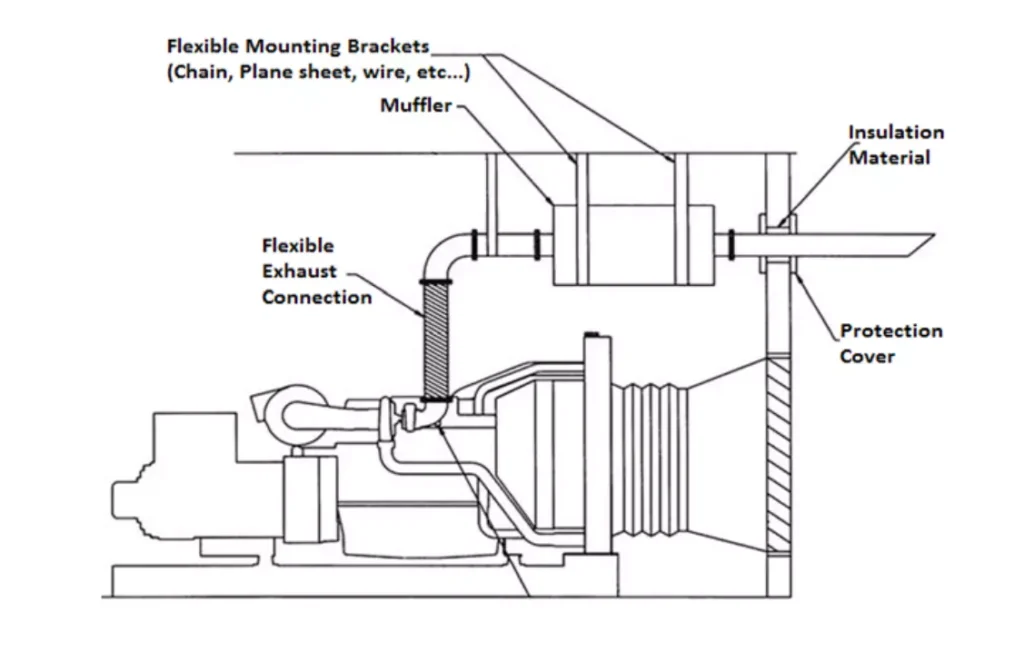
An exhaust system should be designed to decrease the noise coming from the exhaust manifold and dispel the exhaust gases into the atmosphere. The exhaust system consists of a flexible compensator that absorbs vibration and expansion, steel pipes, bend, silencer, and mounting equipment. Further details on exhaust systems can be found in the “Installation” section of this manual.
Exhaust System and Silencer of Generators
The exhaust system and silencer of a diesel generator play a crucial role in managing and reducing the noise and emissions produced during the operation of the generator. Here are key aspects related to the exhaust system and silencer of diesel generators:
Exhaust System
Exhaust Manifold:
The exhaust manifold collects exhaust gases from the engine cylinders and directs them to the exhaust system.
Turbocharger (if applicable):
In some diesel generators, especially those with larger engines, a turbocharger may be used to increase the efficiency of exhaust gas evacuation.
Piping:
Exhaust piping carries the hot gases from the engine to the other components of the exhaust system. It is designed to withstand high temperatures and is often insulated to prevent heat dissipation.
After-Treatment Devices:
Modern diesel generators often incorporate after-treatment devices such as diesel particulate filters (DPF) and selective catalytic reduction (SCR) systems to reduce emissions and comply with environmental regulations.
Silencer
Purpose:
The silencer, or muffler, is designed to reduce the noise generated by the exhaust gases as they exit the generator. It helps in creating a more tolerable and quieter operating environment.
Design:
Silencers are typically designed with sound-absorbing materials and internal baffles to attenuate and dissipate sound energy. The design may vary based on the specific noise reduction requirements.
Inlet and Outlet:
Silencers have inlet and outlet ports that are connected to the exhaust piping. The exhaust gases enter the silencer through the inlet and exit through the outlet.
Materials:
Silencers are constructed using materials that can withstand high temperatures and corrosion, given the harsh environment of exhaust gases.
Resonators (if applicable):
Some silencers may incorporate resonators to further dampen specific frequencies of sound and enhance noise reduction.
Spark Arrestor (if applicable):
In certain applications, especially in environments where the risk of fire is a concern, a spark arrestor may be included in the silencer to prevent sparks from exiting the exhaust.
Considerations
Noise Regulations:
Compliance with local noise regulations is a critical consideration when selecting or designing the exhaust system and silencer. Different regions may have specific noise level requirements that need to be met.
Emission Regulations:
Ensure that the exhaust system, including any after-treatment devices, complies with emissions regulations applicable to the generator’s location.
Engine Efficiency:
The design of the exhaust system should not compromise the efficiency of the engine. It should allow for proper evacuation of exhaust gases without causing backpressure.
Maintenance:
Regular inspection and maintenance of the exhaust system and silencer are essential to ensure proper functioning and longevity. This includes checking for leaks, corrosion, and damage.
Installation:
Proper installation of the exhaust system and silencer is crucial for optimal performance. Consider factors such as proper clearances, support structures, and heat dissipation.
Manufacturer Recommendations:
Follow the recommendations provided by the generator manufacturer regarding the selection, installation, and maintenance of the exhaust system and silencer.
The exhaust system and silencer are critical components that contribute to the safe and environmentally friendly operation of diesel generators. When selecting or maintaining these components, it’s important to consider both regulatory requirements and the specific operational needs of the generator. Consulting with the generator manufacturer or a qualified professional can help ensure that the exhaust system is designed and maintained to meet the necessary standards.
Control System
The control system of a diesel generator is a crucial component that governs and manages the operation of the generator set. It includes a range of components and features designed to monitor, control, and protect the generator during various operating conditions. Here are key aspects related to the control system of diesel generators:
Components of the Control System
Control Panel:
The control panel is the interface through which operators interact with the generator. It typically includes displays, buttons, switches, and indicators for monitoring and controlling various parameters.
Controller:
The controller is the central processing unit responsible for monitoring and regulating the generator’s functions. It may be a microprocessor-based controller that processes data from sensors and issues commands to different components.
Sensors:
Various sensors are deployed throughout the generator to measure critical parameters such as engine speed, oil pressure, coolant temperature, voltage, and current. These sensors provide real-time data to the controller.
Automatic Voltage Regulator (AVR):
The AVR is responsible for maintaining a stable and consistent voltage output from the generator. It adjusts the excitation current to the generator’s alternator to control the voltage level.
Engine Control Module (ECM):
The ECM monitors and controls the diesel engine’s operation. It manages fuel injection, air intake, exhaust emissions, and other parameters to optimize engine performance and efficiency.
Governor:
The governor regulates the speed of the engine by controlling the fuel injection. It helps maintain a constant speed under varying loads.
Protection System:
The protection system safeguards the generator against abnormal conditions such as overloading, overheating, low oil pressure, and over-speeding. It can initiate automatic shutdowns to prevent damage.
Data Logging and Communication:
Some control systems feature data logging capabilities to record operational data over time. Communication interfaces may allow for remote monitoring and control.
Features and Functions
Start/Stop Control:
The control system initiates the start and stop sequences of the generator based on manual or automatic commands.
Load Sharing (Parallel Operation):
In parallel operation scenarios where multiple generators are connected, the control system ensures proper load sharing and synchronization.
Synchronization:
The control system facilitates synchronization when connecting the generator to an electrical grid or other generators, ensuring a seamless connection without disturbances.
Emergency Shutdown:
The control system includes emergency shutdown features that can be triggered in response to critical faults or unsafe conditions to protect the generator.
Remote Monitoring and Control:
Advanced control systems may allow remote monitoring and control of the generator, providing real-time information and the ability to make adjustments from a distance.
Diagnostic and Fault Analysis:
The control system can diagnose faults, provide alerts or alarms, and perform self-diagnostics to aid in troubleshooting and maintenance.
Considerations
Compatibility:
Ensure that the control system is compatible with the generator set and any additional components, especially if the generator is part of a larger power system.
Scalability:
Consider the scalability of the control system to accommodate future upgrades or additions to the generator system.
User Interface:
Evaluate the user interface of the control panel for ease of use and accessibility, especially for operators who need to monitor and manage the generator.
Integration with Power Systems:
If the generator is part of a larger power distribution system, ensure that the control system can seamlessly integrate with other power management components.
Training and Documentation:
Adequate training and documentation should be provided for operators to effectively use and troubleshoot the control system.
The control system is a critical aspect of diesel generators, ensuring reliable and efficient operation while providing essential protection features. When selecting a generator, it’s important to understand the capabilities of the control system and how well it aligns with the specific requirements of the intended application. Manufacturers typically provide detailed specifications and documentation related to the control system for each generator model.
Various control systems are developed for ensuring the protection of the generator set against failures, load transfers, and the reliability of the operation of the generator set. Control system designs can vary according to the customer requirements and assembling requirements. The main types of control systems are Manual, Automatic, Standby, and Parallel working systems.
All control systems are mounted on steel panels containing a lockable door for easy reaching and service. Further technical information about the control systems of the generator sets can be found in the “Control Systems” section of this manual and the manual of the controller.
Installation of Generators
The installation of generators is a critical process that involves several steps to ensure proper functionality, safety, and compliance with regulations. Whether installing a standby generator for backup power or a prime power generator for continuous operation, following best practices is essential. Here is a general guide for the installation of generators:
1. Site Selection
Regulatory Compliance:
Ensure compliance with local building codes, zoning regulations, and environmental requirements. Obtain any necessary permits before starting the installation.
Space and Clearance:
Select a location with sufficient space for the generator and its accessories. Allow for proper clearance around the generator for maintenance and ventilation.
Ventilation:
Ensure adequate ventilation to dissipate heat generated by the generator. Generators typically require space for air intake and exhaust.
Accessibility:
Choose a location that allows easy access for installation, maintenance, and potential repairs. Consider factors such as crane access and pathways for transporting equipment.
2. Foundation and Mounting
Foundation Construction:
Prepare a stable foundation for the generator. The foundation should be level, sturdy, and capable of supporting the generator’s weight.
Vibration Isolation:
If applicable, install vibration isolators or mounts to minimize the transmission of vibrations from the generator to the foundation and surrounding structures.
Anchor the Generator:
Anchor the generator securely to the foundation to prevent movement or shifting during operation or external forces.
3. Electrical Connections
Transfer Switch Installation:
Install an automatic transfer switch (ATS) to facilitate seamless switching between the main power source and the generator during power outages.
Wiring:
Connect the generator to the electrical distribution system following local electrical codes and regulations. Ensure proper sizing of conductors and adherence to safety standards.
Grounding:
Establish proper grounding for the generator as per electrical codes. A grounding electrode system helps ensure safety and proper functioning.
Voltage Configuration:
Verify that the generator’s voltage configuration matches the requirements of the connected loads. Adjust settings if necessary.
4. Fuel System
Fuel Storage:
If the generator has an internal fuel tank, ensure it is filled with the appropriate fuel. For external fuel tanks, connect and test the fuel supply system.
Fuel Quality:
Ensure that the fuel supply meets the specifications recommended by the generator manufacturer. Use clean and high-quality fuel.
5. Exhaust System
Exhaust Piping:
Install the exhaust piping in compliance with local codes and regulations. Ensure proper venting of exhaust gases away from occupied spaces.
Silencer Installation:
If a silencer is included, install it in the exhaust system to reduce noise emissions. Follow the manufacturer’s recommendations for placement and installation.
6. Control System
Control Panel Wiring:
Connect the control panel to the generator and ensure proper wiring. Verify the functionality of control features such as start/stop, monitoring, and protection systems.
Testing:
Conduct thorough testing of the control system to ensure all functions operate as intended. Test automatic start/stop sequences, alarms, and safety shutdowns.
7. Commissioning and Testing
Load Testing:
Conduct load tests to ensure the generator can handle the expected loads. Verify the generator’s performance under varying load conditions.
System Integration:
Integrate the generator into the overall power system. If multiple generators are used, ensure proper synchronization and load sharing.
Commissioning Procedures:
Follow the commissioning procedures provided by the generator manufacturer. This may include adjusting settings, verifying alarms, and ensuring all systems are operational.
8. Documentation
As-Built Documentation:
Prepare as-built documentation that includes detailed drawings, specifications, and records of the installation. This documentation is valuable for future maintenance and reference.
Operation and Maintenance Manuals:
Provide the end user with comprehensive operation and maintenance manuals. Include information on routine maintenance, troubleshooting, and emergency procedures.
9. Training
Operator Training:
Provide training for operators on how to start, stop, and operate the generator safely. Ensure they are familiar with the control panel and understand basic troubleshooting procedures.
Maintenance Training:
Train maintenance personnel on routine maintenance tasks, including oil changes, filter replacements, and inspections. Emphasize the importance of following the manufacturer’s maintenance schedule.
10. Compliance
Final Inspection:
Conduct a final inspection to ensure compliance with all applicable codes, regulations, and safety standards.
Certifications:
Obtain any necessary certifications or approvals from local authorities or regulatory bodies.
Record Keeping:
Keep detailed records of the installation, testing, and commissioning processes. This documentation may be required for compliance audits and warranty support.
11. Ongoing Monitoring and Maintenance
Monitoring Systems:
Implement continuous monitoring systems for key parameters, such as fuel levels, oil pressure, and coolant temperature. Consider remote monitoring options for quick response to issues.
Scheduled Maintenance:
Establish a scheduled maintenance program and adhere to the manufacturer’s recommendations. Regular maintenance is essential for the reliability and longevity of the generator.
Emergency Response Plan:
Develop and communicate an emergency response plan outlining procedures to follow in the event of a generator malfunction or failure.
Conclusion
The installation of generators is a multifaceted process that requires careful planning, attention to detail, and compliance with various standards and regulations. Collaboration with experienced professionals, including electrical engineers, mechanical contractors, and generator technicians, can contribute to a successful installation. Additionally, consulting with the generator manufacturer and following their guidelines is essential to ensure optimal performance and longevity of the generator system.
The selection and preparation of the location where the generator set will be placed is the most important step of installation. So please make sure that the generator set is installed at a place that is selected and prepared fully in conformity with the instructions in this manual.
Also, remember that you can call us for any further information or confirmation about this issue. If the generator will be placed on an upper floor, not the basement or ground, the responsibility of static load distribution belongs to the customer. The customer should get approval from an authority about this issue before installation.
Environmental Conditions
Install the generator set in such a place that it will not be directly exposed to harsh environmental conditions such as rain, snow, hail, flood, humidity, excessive sunlight, extremely low or high temperature, dust, soil, sand or wind. The place where the generator set will be installed must be, clean, dry, well illuminated and ventilated, free of corrosive or conductive pollutant substances like dust, lint, smoke, oil vapor, exhaust smoke, etc…
Be sure to leave enough blank space around the generator set, in order to ease future maintenance or repair activities Remember that it can be necessary to disassemble the main parts like the engine, alternator, or base frame in some cases. The base ground where the generator will be settled must be clean dry and must have a good drainage system. Put the generator set in such a place that nobody unauthorized can access it, or at least take necessary precautions about it.
Place generator sets in such places that they will not be affected by the operation of any other machines. Do not install or run the generator set at any place that has any possibility of risk in terms of safety of operation. Also, provide the necessary precautions (canopy option) or protections against bad weather conditions if it will be placed outside.
The doors of the room that the generator set will be placed in, must be at enough size for the main parts (engine, alternator, radiator, etc…) to pass through. Also, ventilation windows can be built portable or mobile for this purpose.
Diesel Generator
A diesel generator is a device that converts diesel fuel into electricity. Diesel generators are typically used as backup power sources in the event of a power outage, but they can also be used as primary power sources in remote areas where there is no grid electricity available.
Diesel generators work by using a diesel engine to turn a generator. The diesel engine burns diesel fuel to create mechanical energy, which is then converted into electrical energy by the generator.
Diesel generators are available in a variety of sizes and power outputs. Some diesel generators are small enough to be portable, while others are large enough to power entire buildings or communities.
Diesel generators are a reliable and efficient way to generate electricity. They are also relatively easy to operate and maintain.
Here are some examples of where diesel generators are used:
Hospitals and other critical facilities: Diesel generators are used to provide backup power in hospitals, data centers, and other critical facilities. This ensures that these facilities continue to operate even in the event of a power outage.
Construction sites: Diesel generators are used to provide power for construction tools and equipment at construction sites. This allows construction work to continue even in remote areas where there is no grid electricity available.
Emergency services: Diesel generators are used to provide power for emergency services, such as ambulances and fire trucks. This ensures that these services can continue to operate even in the event of a power outage.
Remote areas: Diesel generators are used to provide primary power in remote areas where there is no grid electricity available. This allows people living in these areas to have access to electricity for lighting, cooking, and other essential needs.
Diesel generators are a valuable tool for generating electricity in a variety of situations. They are reliable, efficient, and easy to operate and maintain.
Diesel Generator Outputs
The output of a diesel generator is measured in kilowatts (kW). The output of a diesel generator is limited by the size and power of the diesel engine that it uses. Diesel generators are available in a variety of sizes and power outputs, ranging from small portable generators that produce a few kW of power to large industrial generators that produce thousands of kW of power.
The output of a diesel generator is also affected by a number of other factors, including:
Fuel quality: The quality of the diesel fuel used in a generator can affect its output. Lower quality diesel fuel can produce less power and can also damage the generator.
Air quality: The quality of the air that the generator is operating in can also affect its output. Operating a generator in thin air or in hot weather can reduce its output.
Maintenance: Proper maintenance of a diesel generator is essential to ensure its optimal performance. A generator that is not properly maintained may produce less power and may also be more likely to break down.
Here are some examples of the power outputs of different types of diesel generators:
Small portable generator: 1-5 kW
Medium-sized generator: 5-10 kW
Large generator: 10-100 kW
Industrial generator: 100 kW and up
The power output of a diesel generator is an important factor to consider when choosing a generator for a particular application. The generator should have enough power output to meet the needs of the devices and appliances that will be connected to it.
It is also important to note that the power output of a diesel generator is not the same as its efficiency. The efficiency of a diesel generator is the percentage of the fuel energy that is converted into electrical energy. A more efficient generator will produce more electrical energy for a given amount of fuel.
Diesel Generators
Diesel generators are a type of backup or standby power source that uses a diesel engine to generate electricity. These generators are widely used in various applications where a reliable and continuous power supply is crucial. Here are key aspects related to diesel generators:
Components of Diesel Generators
Diesel Engine:
The diesel engine is the primary component responsible for converting diesel fuel into mechanical energy. This mechanical energy is then used to turn a generator to produce electricity.
Generator (Alternator):
The generator, or alternator, converts the mechanical energy from the diesel engine into electrical energy. It consists of a rotor and a stator, and as the rotor turns within the stator’s magnetic field, it induces an electric current.
Fuel System:
The fuel system stores and delivers diesel fuel to the engine for combustion. It typically includes a fuel tank, fuel pump, and fuel injectors.
Cooling System:
Diesel generators have a cooling system to maintain optimal operating temperatures. This system may include a radiator, cooling fans, and a water or air cooling mechanism.
Exhaust System:
The exhaust system is responsible for expelling the combustion gases produced during the diesel engine’s operation. It usually includes a muffler and may incorporate emission control devices.
Control Panel:
The control panel houses the generator’s control and monitoring systems. It allows operators to start or stop the generator, monitor performance, and sometimes control other parameters such as voltage and frequency.
Voltage Regulator:
The voltage regulator maintains a stable output voltage by adjusting the excitation current to the generator’s rotor.
Battery Charger:
Diesel generators often have a battery or set of batteries to start the engine. A battery charger ensures that the batteries remain charged and ready to start the generator when needed.
Automatic Transfer Switch (ATS):
An ATS is a crucial component for standby generators. It automatically switches the electrical load from the main power source to the generator when it detects a power outage and vice versa when the main power is restored.
Working Principle:
Combustion: Diesel fuel is injected into the combustion chamber, and the heat generated by the compression of air ignites the fuel.
Mechanical Energy: The combustion process produces high-pressure gases that expand, creating mechanical energy. This energy is used to rotate the engine’s crankshaft.
Electricity Generation: The rotating crankshaft is connected to the generator, causing it to spin. As the generator’s rotor rotates within the stator, it induces an electric current, generating electricity.
Applications:
Emergency Power:
Diesel generators are commonly used for emergency backup power in critical facilities such as hospitals, data centers, and telecommunications facilities.
Construction Sites:
They are used on construction sites to power tools and equipment where a reliable grid connection may not be available.
Industrial Facilities:
Diesel generators provide backup power for industrial plants and manufacturing facilities to prevent production disruptions.
Remote Locations:
In remote or off-grid locations, where a stable power supply from the grid is not feasible, diesel generators can provide a reliable source of electricity.
Mining Operations:
Diesel generators are often used in mining operations to power equipment in remote and rugged environments.
Agriculture:
Farms may use diesel generators to power irrigation systems, machinery, and other agricultural equipment.
Advantages:
Fuel Availability:
Diesel fuel is widely available, making diesel generators suitable for various locations.
Fuel Efficiency:
Diesel generators are known for their fuel efficiency, providing a cost-effective solution for standby power.
Durability:
Diesel generators are generally robust and durable, capable of handling heavy loads and providing long service life.
High Torque:
Diesel engines provide high torque, making them suitable for applications with varying load conditions.
Limitations:
Noise and Emissions:
Diesel generators can be noisy, and their combustion process produces emissions. However, advancements in technology have led to quieter and more environmentally friendly models.
Maintenance:
Regular maintenance is essential to ensure the proper functioning of diesel generators.
Initial Cost:
Diesel generators may have a higher upfront cost compared to some other types of generators.
Diesel generators are a reliable and widely used solution for providing backup or primary power in various settings. The choice of a diesel generator depends on factors such as power requirements, environmental considerations, and the specific needs of the application.
Diesel generators are machines that convert the chemical energy of diesel fuel into mechanical energy, which is then used to generate electricity. They are a popular choice for a variety of applications, including prime power for remote locations, backup power for businesses, and emergency power for hospitals and other critical infrastructure.
Diesel generators are available in a wide range of sizes, from small portable generators that can be used to power a few appliances to large stationary generators that can power entire buildings or even small towns.
Diesel generators are typically powered by four-stroke diesel engines. Diesel engines are known for their reliability and fuel efficiency, making them a good choice for applications where long-term operation is required.
Diesel generators work by burning diesel fuel in the engine, which drives a generator to produce electricity. The electricity generated by the generator can then be used to power lights, appliances, and other electrical devices.
Diesel generators are a valuable source of backup power in the event of a power outage. They can also be used as a primary source of power in remote locations where there is no access to the electrical grid.
Here are some of the benefits of using a diesel generator:
Reliable: Diesel generators are very reliable and can operate for long periods of time without any problems.
Fuel-efficient: Diesel generators are fuel-efficient, which can save you money on operating costs.
Durable: Diesel generators are built to last and can withstand harsh operating conditions.
Versatile: Diesel generators can be used in a variety of applications, from prime power for remote locations to backup power for businesses and critical infrastructure.
If you are considering purchasing a diesel generator, be sure to do your research and choose a generator that is the right size and type for your needs. You should also consider the cost of fuel and maintenance when making your decision.
EMS Power Machines
We design, manufacture and assembly Power Machines such as – diesel generators, electric motors, vibration motors, pumps, steam engines and steam turbines
EMS Power Machines is a global power engineering company, one of the five world leaders in the industry in terms of installed equipment. The companies included in the company have been operating in the energy market for more than 60 years.
EMS Power Machines manufactures steam turbines, gas turbines, hydroelectric turbines, generators, and other power equipment for thermal, nuclear, and hydroelectric power plants, as well as for various industries, transport, and marine energy.
EMS Power Machines is a major player in the global power industry, and its equipment is used in power plants all over the world. The company has a strong track record of innovation, and it is constantly developing new and improved technologies.
Here are some examples of Power Machines’ products and services:
Steam turbines for thermal and nuclear power plants
Gas turbines for combined cycle power plants and industrial applications
Hydroelectric turbines for hydroelectric power plants
Generators for all types of power plants
Boilers for thermal power plants
Condensers for thermal power plants
Reheaters for thermal power plants
Air preheaters for thermal power plants
Feedwater pumps for thermal power plants
Control systems for power plants
Maintenance and repair services for power plants
EMS Power Machines is committed to providing its customers with high-quality products and services. The company has a strong reputation for reliability and innovation. Power Machines is a leading provider of power equipment and services, and it plays a vital role in the global power industry.
EMS Power Machines, which began in 1961 as a small factory of electric motors, has become a leading global supplier of electronic products for different segments. The search for excellence has resulted in the diversification of the business, adding to the electric motors products which provide from power generation to more efficient means of use.
We supply Second-hand Diesel Generators for Sale. Good condition. Spare parts warranty. High-quality diesel engines and low prices. Free Consultation.
Second-hand Diesel Generators for Sale
Second-hand diesel generators are generators that have been previously owned and used by someone else. They are sold as used equipment, usually at a lower price than a new generator of the same make and model. Here are some key factors to consider if you are thinking about purchasing a second-hand diesel generator:
Advantages of Second-hand Diesel Generators:
Lower cost: One of the primary advantages of a second-hand diesel generator is that it is generally less expensive than a new generator of the same make and model. This can be a significant cost savings for those on a tight budget or who do not need the latest technology or features.
Availability: Used diesel generators are often readily available in the market. If you need a generator quickly, purchasing a second-hand diesel generator can be a convenient and fast option.
Proven performance: A second-hand diesel generator has already been in use and has a proven track record of performance, which can provide reassurance that the generator will continue to operate reliably.
Disadvantages of Second-hand Diesel Generators:
Condition: The condition of a second-hand diesel generator may be unknown or questionable, which can make it difficult to predict future performance or reliability. It’s important to carefully inspect the generator and its components before purchasing to ensure that it is in good condition.
Lifespan: Second-hand diesel generators may have already reached the end of their useful life, or may have significant wear and tear that could shorten their lifespan.
Warranty: Second-hand diesel generators typically do not come with a warranty or guarantee, which means that any repairs or maintenance required will be the responsibility of the buyer.
Maintenance: A used diesel generator may require more maintenance than a new generator, which can add to the overall cost of ownership.
Overall, purchasing a second-hand diesel generator can be a good option if you are on a tight budget, need a generator quickly, or are looking for a reliable backup power source. However, it’s important to carefully consider the condition of the generator, its lifespan, and the cost of maintenance before making a purchase decision.
Why would you buy one?
There are several reasons why you might choose to buy a second-hand diesel generator:
Lower cost: As mentioned earlier, one of the primary advantages of a second-hand diesel generator is that it is generally less expensive than a new generator of the same make and model. If you have a limited budget, purchasing a used generator can be a cost-effective option.
Availability: Second-hand diesel generators are often readily available in the market. If you need a generator quickly, purchasing a used generator can be a convenient and fast option.
Backup power: A second-hand diesel generator can be a reliable backup power source in case of power outages or other emergencies. If you live in an area with frequent power outages, a used generator can provide peace of mind and ensure that you always have access to electricity.
Temporary power needs: If you have a temporary power need, such as for a construction site or outdoor event, a second-hand diesel generator can be a cost-effective option for providing temporary power.
Environmental concerns: Some people choose to purchase a second-hand diesel generator for environmental reasons. By reusing a generator that has already been manufactured, you can reduce the environmental impact of new manufacturing.
Overall, purchasing a second-hand diesel generator can be a good option if you are looking for a reliable backup power source or temporary power solution, or if you are on a tight budget. However, it’s important to carefully consider the condition of the generator and its overall cost of ownership before making a purchase decision.
Advantages and Disadvantages
Advantages of Second-hand Diesel Generators:
Cost savings: One of the main advantages of purchasing a second-hand diesel generator is the cost savings. Used generators are generally less expensive than new ones, which makes them an attractive option for those on a tight budget or looking to save money.
Availability: Used diesel generators are often readily available in the market. If you need a generator quickly, purchasing a second-hand diesel generator can be a convenient and fast option.
Proven performance: A second-hand diesel generator has already been in use and has a proven track record of performance, which can provide reassurance that the generator will continue to operate reliably.
Reduced environmental impact: Reusing a generator that has already been manufactured reduces the environmental impact of new manufacturing.
Disadvantages of Second-hand Diesel Generators:
Condition: The condition of a second-hand diesel generator may be unknown or questionable, which can make it difficult to predict future performance or reliability. It’s important to carefully inspect the generator and its components before purchasing to ensure that it is in good condition.
Lifespan: Second-hand diesel generators may have already reached the end of their useful life, or may have significant wear and tear that could shorten their lifespan.
Warranty: Second-hand diesel generators typically do not come with a warranty or guarantee, which means that any repairs or maintenance required will be the responsibility of the buyer.
Maintenance: A used diesel generator may require more maintenance than a new generator, which can add to the overall cost of ownership.
Compatibility: Second-hand diesel generators may not be compatible with your specific needs, especially if you require a generator with specific power output or features.
Overall, purchasing a second-hand diesel generator can be a good option for those looking to save money or reduce their environmental impact. However, it’s important to carefully consider the condition of the generator, its lifespan, and the cost of maintenance before making a purchase decision.
Diesel Engine of the Generators
“EMS Power Machines” uses diesel engines that are manufactured with the latest technology, in accordance with ISO3046 standards, and designed for generator sets. The diesel engines used; are designed for low fuel consumption, with 4-stroke type, direct injection, with all needed limiting and level sensors, with diesel electronic or mechanical type governor mounted on the fuel pump for sensitive speed adjustment or regulation.
The engines used, may have oil, air, or water-type cooling systems, depending on customer request and the diesel engine. There are also oil, fuel, and air filters that are designed for heavy operation conditions, which provide the engine with a long lifetime with high performance. All the equipment that is needed for the diesel engine for operating safely and reliably, is provided along with the generator set.
EMS Power Machines can provide a base frame fuel tank or free-standing fuel tank dependent on the model preferences of the customer. Larger sets require free-standing fuel tanks due to the need for high fuel capacity. Fuel tanks are manufactured of plate steel or other suitable materials. Teksan ensures that the fuel tanks are all manufactured in accordance with relevant standards. EMS Power Machines fuel tanks are equipped with:
Filling cap
Tank ventilation
Fuel outlet valve
Fuel return connections
Tank drainage plug
Sediment trapping section
Level gauge pipe
Float switches (Optional)
Automatic filling (Optional)
It is highly recommended to install a fuel filter and/or a water separator on the outlet line of these fuel tanks.
Engine Brands of Diesel Generators for Sale
Perkins Engines
Cummins Engines
Ricardo Engines
Baudoin Engines
Shanghai Dongfeng Engines
Volvo Engines
Yangdong Engines
We use any of the above-mentioned diesel engines for the production of our diesel generators according to the customers’ requests.
Perkins engines are manufactured in the UK and are very common in the generator production market.
75 KVA Generator with Ricardo Engine
Ricardo engines are manufactured in China and have a very high market share in the generator manufacturing market.
Base Frame of the Generators
The base frame on which the generator set is placed has been manufactured using proper steel plates or special profiles based on the necessary dynamic, static, and vibration calculations in order for providing high resistance. EMS Power Machines produces the base frames for all ranges in accordance with international standards.
Base Frame of the Generators
The base frame of a generator, often referred to as the generator skid or chassis, is a crucial structural component that provides support, stability, and a foundation for the entire generator set. It plays a key role in ensuring the proper functioning, safety, and longevity of the generator. Here are some key aspects related to the base frame of generators:
Functions and Features
Support Structure:
The base frame serves as the primary support structure for the generator set, providing a stable foundation to hold all the components together.
Engine and Alternator Mounting:
The engine and alternator, the two main components of a generator set, are securely mounted on the base frame. Proper alignment and secure mounting are essential for efficient operation and to minimize vibrations.
Vibration Isolation:
Many base frames incorporate features to isolate vibrations produced during the operation of the generator. This helps reduce noise and ensures that vibrations do not impact the performance or structural integrity of the generator.
Fuel Tank Support:
In some generator sets, the fuel tank is integrated into or mounted on the base frame. This provides a secure and stable location for the fuel tank.
Cooling System Support:
The cooling system components, such as radiators and cooling fans, are often mounted on or integrated into the base frame to ensure proper airflow and cooling.
Lifting Points:
Base frames are designed with lifting points or provisions for lifting equipment. This facilitates ease of transportation, installation, and maintenance of the generator set.
Weatherproofing:
Depending on the design, the base frame may provide some level of protection against environmental elements, such as rain and dust, to ensure the longevity of the generator set.
Accessibility:
The base frame is designed to allow easy access to key components for maintenance and service tasks. This includes access panels and doors for routine inspections and repairs.
Corrosion Resistance:
Base frames are often constructed from materials that offer corrosion resistance to withstand environmental conditions and ensure a longer service life.
Considerations
Material Selection:
Base frames are commonly made of steel, but the type and quality of the steel used can vary. The choice of materials depends on factors such as environmental conditions, weight considerations, and corrosion resistance.
Size and Dimensions:
The size and dimensions of the base frame are determined by the overall size of the generator set. It should provide adequate space for all components and ensure proper ventilation.
Site Conditions:
The design of the base frame should consider the specific site conditions where the generator will be installed. This includes factors such as seismic requirements, soil conditions, and available space.
Transportation:
The base frame design should facilitate ease of transportation, considering factors such as size, weight, and lifting points.
Regulatory Compliance:
The design and construction of the base frame should comply with relevant safety and construction standards set by regulatory authorities.
The base frame is a critical element in the overall design and functionality of a generator set. Its design and construction should align with the specific requirements of the generator and the intended application. Manufacturers often provide detailed specifications for the base frame in the generator set documentation. When selecting or installing a generator set, it’s important to follow the manufacturer’s guidelines and consider any site-specific requirements.
Vibration Isolators
Vibration isolators, also known as vibration mounts or isolating mounts, are components used in diesel generators to reduce the transmission of vibrations and noise generated during the operation of the engine. These isolators play a crucial role in enhancing the overall performance, stability, and comfort of the generator set. Here are key aspects related to the vibration isolators of diesel generators:
Functions and Features
Vibration Reduction:
The primary function of vibration isolators is to reduce the transmission of vibrations generated by the diesel engine to the surrounding structure. This helps minimize the impact of vibrations on adjacent equipment and structures.
Noise Reduction:
In addition to reducing vibrations, isolators also contribute to noise reduction. They help isolate the generator set from its surroundings, preventing the transmission of noise to nearby areas.
Component Protection:
Vibration isolators protect various components of the generator set, including the engine, alternator, and other critical parts, from the potentially damaging effects of excessive vibrations.
Structural Integrity:
By reducing vibrations, isolators contribute to maintaining the structural integrity of the generator set and the surrounding infrastructure. Excessive vibrations can lead to wear and tear on components and may compromise the overall stability of the generator.
Isolation from External Vibrations:
Isolators not only prevent the transmission of internal vibrations but also isolate the generator set from external vibrations, such as those from nearby machinery or environmental factors.
Adjustability:
Some vibration isolators are designed to be adjustable, allowing for fine-tuning to achieve optimal vibration isolation based on the specific operating conditions and requirements.
Types of Vibration Isolators
Spring Mounts:
Spring mounts use metal springs to isolate vibrations. They are effective in reducing both high and low-frequency vibrations.
Rubber Mounts:
Rubber mounts, or elastomeric mounts, use rubber or other elastomeric materials to absorb and dampen vibrations. They are effective for isolating high-frequency vibrations.
Air Springs:
Air springs use compressed air to provide isolation. They are effective in isolating low-frequency vibrations and are often used in large and heavy machinery.
Viscous Dampers:
Viscous dampers use hydraulic fluid to absorb and dissipate vibrations. They are effective in isolating both high and low-frequency vibrations.
Active Isolation Systems:
Active isolation systems use sensors and actuators to actively counteract vibrations in real-time. These systems can provide dynamic and adaptive vibration control.
Considerations
Application Specifics:
The selection of vibration isolators should consider the specific application, environmental conditions, and the frequency spectrum of vibrations generated by the diesel generator.
Load Capacity:
The isolators should be selected based on the load capacity of the generator set to ensure proper support and isolation.
Installation and Maintenance:
Proper installation and regular maintenance of the vibration isolators are crucial to ensure their effectiveness over time.
Regulatory Compliance:
Compliance with relevant safety and regulatory standards should be considered when selecting vibration isolators.
Manufacturer Recommendations:
Follow the manufacturer’s recommendations for the type and specification of vibration isolators suitable for a particular generator model.
Vibration isolators are integral components that contribute to the smooth and reliable operation of diesel generators while minimizing the impact on surrounding structures and environments. When selecting or maintaining vibration isolators, it’s essential to consider the specific requirements of the generator set and follow the guidelines provided by the generator manufacturer.
Vibration insulators are used in order to decrease the negative effects of vibrations caused by the rotational movement of the engine and alternator. These insulators which also prevent the vibration to be transferred from the base frame to the ground, are placed between the engine/alternator and the base frame. Specially chosen vibration isolators are mounted between the engine, alternator, and base frame. Alternatively, in bigger generator sets, vibration isolators are mounted between the base frame and floor.
Exhaust System and Silencer
An exhaust system should be designed to decrease the noise coming from the exhaust manifold and dispel the exhaust gases into the atmosphere. The exhaust system consists of a flexible compensator that absorbs vibration and expansion, steel pipes, bend, silencer, and mounting equipment. Further details on exhaust systems can be found in the “Installation” section of this manual.
Exhaust System and Silencer of Generators
The exhaust system and silencer of a diesel generator play a crucial role in managing and reducing the noise and emissions produced during the operation of the generator. Here are key aspects related to the exhaust system and silencer of diesel generators:
Exhaust System
Exhaust Manifold:
The exhaust manifold collects exhaust gases from the engine cylinders and directs them to the exhaust system.
Turbocharger (if applicable):
In some diesel generators, especially those with larger engines, a turbocharger may be used to increase the efficiency of exhaust gas evacuation.
Piping:
Exhaust piping carries the hot gases from the engine to the other components of the exhaust system. It is designed to withstand high temperatures and is often insulated to prevent heat dissipation.
After-Treatment Devices:
Modern diesel generators often incorporate after-treatment devices such as diesel particulate filters (DPF) and selective catalytic reduction (SCR) systems to reduce emissions and comply with environmental regulations.
Silencer
Purpose:
The silencer, or muffler, is designed to reduce the noise generated by the exhaust gases as they exit the generator. It helps in creating a more tolerable and quieter operating environment.
Design:
Silencers are typically designed with sound-absorbing materials and internal baffles to attenuate and dissipate sound energy. The design may vary based on the specific noise reduction requirements.
Inlet and Outlet:
Silencers have inlet and outlet ports that are connected to the exhaust piping. The exhaust gases enter the silencer through the inlet and exit through the outlet.
Materials:
Silencers are constructed using materials that can withstand high temperatures and corrosion, given the harsh environment of exhaust gases.
Resonators (if applicable):
Some silencers may incorporate resonators to further dampen specific frequencies of sound and enhance noise reduction.
Spark Arrestor (if applicable):
In certain applications, especially in environments where the risk of fire is a concern, a spark arrestor may be included in the silencer to prevent sparks from exiting the exhaust.
Considerations
Noise Regulations:
Compliance with local noise regulations is a critical consideration when selecting or designing the exhaust system and silencer. Different regions may have specific noise level requirements that need to be met.
Emission Regulations:
Ensure that the exhaust system, including any after-treatment devices, complies with emissions regulations applicable to the generator’s location.
Engine Efficiency:
The design of the exhaust system should not compromise the efficiency of the engine. It should allow for proper evacuation of exhaust gases without causing backpressure.
Maintenance:
Regular inspection and maintenance of the exhaust system and silencer are essential to ensure proper functioning and longevity. This includes checking for leaks, corrosion, and damage.
Installation:
Proper installation of the exhaust system and silencer is crucial for optimal performance. Consider factors such as proper clearances, support structures, and heat dissipation.
Manufacturer Recommendations:
Follow the recommendations provided by the generator manufacturer regarding the selection, installation, and maintenance of the exhaust system and silencer.
The exhaust system and silencer are critical components that contribute to the safe and environmentally friendly operation of diesel generators. When selecting or maintaining these components, it’s important to consider both regulatory requirements and the specific operational needs of the generator. Consulting with the generator manufacturer or a qualified professional can help ensure that the exhaust system is designed and maintained to meet the necessary standards.
Control System
The control system of a diesel generator is a crucial component that governs and manages the operation of the generator set. It includes a range of components and features designed to monitor, control, and protect the generator during various operating conditions. Here are key aspects related to the control system of diesel generators:
Components of the Control System
Control Panel:
The control panel is the interface through which operators interact with the generator. It typically includes displays, buttons, switches, and indicators for monitoring and controlling various parameters.
Controller:
The controller is the central processing unit responsible for monitoring and regulating the generator’s functions. It may be a microprocessor-based controller that processes data from sensors and issues commands to different components.
Sensors:
Various sensors are deployed throughout the generator to measure critical parameters such as engine speed, oil pressure, coolant temperature, voltage, and current. These sensors provide real-time data to the controller.
Automatic Voltage Regulator (AVR):
The AVR is responsible for maintaining a stable and consistent voltage output from the generator. It adjusts the excitation current to the generator’s alternator to control the voltage level.
Engine Control Module (ECM):
The ECM monitors and controls the diesel engine’s operation. It manages fuel injection, air intake, exhaust emissions, and other parameters to optimize engine performance and efficiency.
Governor:
The governor regulates the speed of the engine by controlling the fuel injection. It helps maintain a constant speed under varying loads.
Protection System:
The protection system safeguards the generator against abnormal conditions such as overloading, overheating, low oil pressure, and over-speeding. It can initiate automatic shutdowns to prevent damage.
Data Logging and Communication:
Some control systems feature data logging capabilities to record operational data over time. Communication interfaces may allow for remote monitoring and control.
Features and Functions
Start/Stop Control:
The control system initiates the start and stop sequences of the generator based on manual or automatic commands.
Load Sharing (Parallel Operation):
In parallel operation scenarios where multiple generators are connected, the control system ensures proper load sharing and synchronization.
Synchronization:
The control system facilitates synchronization when connecting the generator to an electrical grid or other generators, ensuring a seamless connection without disturbances.
Emergency Shutdown:
The control system includes emergency shutdown features that can be triggered in response to critical faults or unsafe conditions to protect the generator.
Remote Monitoring and Control:
Advanced control systems may allow remote monitoring and control of the generator, providing real-time information and the ability to make adjustments from a distance.
Diagnostic and Fault Analysis:
The control system can diagnose faults, provide alerts or alarms, and perform self-diagnostics to aid in troubleshooting and maintenance.
Considerations
Compatibility:
Ensure that the control system is compatible with the generator set and any additional components, especially if the generator is part of a larger power system.
Scalability:
Consider the scalability of the control system to accommodate future upgrades or additions to the generator system.
User Interface:
Evaluate the user interface of the control panel for ease of use and accessibility, especially for operators who need to monitor and manage the generator.
Integration with Power Systems:
If the generator is part of a larger power distribution system, ensure that the control system can seamlessly integrate with other power management components.
Training and Documentation:
Adequate training and documentation should be provided for operators to effectively use and troubleshoot the control system.
The control system is a critical aspect of diesel generators, ensuring reliable and efficient operation while providing essential protection features. When selecting a generator, it’s important to understand the capabilities of the control system and how well it aligns with the specific requirements of the intended application. Manufacturers typically provide detailed specifications and documentation related to the control system for each generator model.
Various control systems are developed for ensuring the protection of the generator set against failures, load transfers, and the reliability of the operation of the generator set. Control system designs can vary according to the customer requirements and assembling requirements. The main types of control systems are Manual, Automatic, Standby, and Parallel working systems.
All control systems are mounted on steel panels containing a lockable door for easy reaching and service. Further technical information about the control systems of the generator sets can be found in the “Control Systems” section of this manual and the manual of the controller.
Installation of Generators
The installation of generators is a critical process that involves several steps to ensure proper functionality, safety, and compliance with regulations. Whether installing a standby generator for backup power or a prime power generator for continuous operation, following best practices is essential. Here is a general guide for the installation of generators:
1. Site Selection
Regulatory Compliance:
Ensure compliance with local building codes, zoning regulations, and environmental requirements. Obtain any necessary permits before starting the installation.
Space and Clearance:
Select a location with sufficient space for the generator and its accessories. Allow for proper clearance around the generator for maintenance and ventilation.
Ventilation:
Ensure adequate ventilation to dissipate heat generated by the generator. Generators typically require space for air intake and exhaust.
Accessibility:
Choose a location that allows easy access for installation, maintenance, and potential repairs. Consider factors such as crane access and pathways for transporting equipment.
2. Foundation and Mounting
Foundation Construction:
Prepare a stable foundation for the generator. The foundation should be level, sturdy, and capable of supporting the generator’s weight.
Vibration Isolation:
If applicable, install vibration isolators or mounts to minimize the transmission of vibrations from the generator to the foundation and surrounding structures.
Anchor the Generator:
Anchor the generator securely to the foundation to prevent movement or shifting during operation or external forces.
3. Electrical Connections
Transfer Switch Installation:
Install an automatic transfer switch (ATS) to facilitate seamless switching between the main power source and the generator during power outages.
Wiring:
Connect the generator to the electrical distribution system following local electrical codes and regulations. Ensure proper sizing of conductors and adherence to safety standards.
Grounding:
Establish proper grounding for the generator as per electrical codes. A grounding electrode system helps ensure safety and proper functioning.
Voltage Configuration:
Verify that the generator’s voltage configuration matches the requirements of the connected loads. Adjust settings if necessary.
4. Fuel System
Fuel Storage:
If the generator has an internal fuel tank, ensure it is filled with the appropriate fuel. For external fuel tanks, connect and test the fuel supply system.
Fuel Quality:
Ensure that the fuel supply meets the specifications recommended by the generator manufacturer. Use clean and high-quality fuel.
5. Exhaust System
Exhaust Piping:
Install the exhaust piping in compliance with local codes and regulations. Ensure proper venting of exhaust gases away from occupied spaces.
Silencer Installation:
If a silencer is included, install it in the exhaust system to reduce noise emissions. Follow the manufacturer’s recommendations for placement and installation.
6. Control System
Control Panel Wiring:
Connect the control panel to the generator and ensure proper wiring. Verify the functionality of control features such as start/stop, monitoring, and protection systems.
Testing:
Conduct thorough testing of the control system to ensure all functions operate as intended. Test automatic start/stop sequences, alarms, and safety shutdowns.
7. Commissioning and Testing
Load Testing:
Conduct load tests to ensure the generator can handle the expected loads. Verify the generator’s performance under varying load conditions.
System Integration:
Integrate the generator into the overall power system. If multiple generators are used, ensure proper synchronization and load sharing.
Commissioning Procedures:
Follow the commissioning procedures provided by the generator manufacturer. This may include adjusting settings, verifying alarms, and ensuring all systems are operational.
8. Documentation
As-Built Documentation:
Prepare as-built documentation that includes detailed drawings, specifications, and records of the installation. This documentation is valuable for future maintenance and reference.
Operation and Maintenance Manuals:
Provide the end user with comprehensive operation and maintenance manuals. Include information on routine maintenance, troubleshooting, and emergency procedures.
9. Training
Operator Training:
Provide training for operators on how to start, stop, and operate the generator safely. Ensure they are familiar with the control panel and understand basic troubleshooting procedures.
Maintenance Training:
Train maintenance personnel on routine maintenance tasks, including oil changes, filter replacements, and inspections. Emphasize the importance of following the manufacturer’s maintenance schedule.
10. Compliance
Final Inspection:
Conduct a final inspection to ensure compliance with all applicable codes, regulations, and safety standards.
Certifications:
Obtain any necessary certifications or approvals from local authorities or regulatory bodies.
Record Keeping:
Keep detailed records of the installation, testing, and commissioning processes. This documentation may be required for compliance audits and warranty support.
11. Ongoing Monitoring and Maintenance
Monitoring Systems:
Implement continuous monitoring systems for key parameters, such as fuel levels, oil pressure, and coolant temperature. Consider remote monitoring options for quick response to issues.
Scheduled Maintenance:
Establish a scheduled maintenance program and adhere to the manufacturer’s recommendations. Regular maintenance is essential for the reliability and longevity of the generator.
Emergency Response Plan:
Develop and communicate an emergency response plan outlining procedures to follow in the event of a generator malfunction or failure.
Conclusion
The installation of generators is a multifaceted process that requires careful planning, attention to detail, and compliance with various standards and regulations. Collaboration with experienced professionals, including electrical engineers, mechanical contractors, and generator technicians, can contribute to a successful installation. Additionally, consulting with the generator manufacturer and following their guidelines is essential to ensure optimal performance and longevity of the generator system.
The selection and preparation of the location where the generator set will be placed is the most important step of installation. So please make sure that the generator set is installed at a place that is selected and prepared fully in conformity with the instructions in this manual.
Also, remember that you can call us for any further information or confirmation about this issue. If the generator will be placed on an upper floor, not the basement or ground, the responsibility of static load distribution belongs to the customer. The customer should get approval from an authority about this issue before installation.
Environmental Conditions
Install the generator set in such a place that it will not be directly exposed to harsh environmental conditions such as rain, snow, hail, flood, humidity, excessive sunlight, extremely low or high temperature, dust, soil, sand or wind. The place where the generator set will be installed must be, clean, dry, well illuminated and ventilated, free of corrosive or conductive pollutant substances like dust, lint, smoke, oil vapor, exhaust smoke, etc…
Be sure to leave enough blank space around the generator set, in order to ease future maintenance or repair activities Remember that it can be necessary to disassemble the main parts like the engine, alternator, or base frame in some cases. The base ground where the generator will be settled must be clean dry and must have a good drainage system. Put the generator set in such a place that nobody unauthorized can access it, or at least take necessary precautions about it.
Place generator sets in such places that they will not be affected by the operation of any other machines. Do not install or run the generator set at any place that has any possibility of risk in terms of safety of operation. Also, provide the necessary precautions (canopy option) or protections against bad weather conditions if it will be placed outside.
The doors of the room that the generator set will be placed in, must be at enough size for the main parts (engine, alternator, radiator, etc…) to pass through. Also, ventilation windows can be built portable or mobile for this purpose.
Diesel Generator
A diesel generator is a device that converts diesel fuel into electricity. Diesel generators are typically used as backup power sources in the event of a power outage, but they can also be used as primary power sources in remote areas where there is no grid electricity available.
Diesel generators work by using a diesel engine to turn a generator. The diesel engine burns diesel fuel to create mechanical energy, which is then converted into electrical energy by the generator.
Diesel generators are available in a variety of sizes and power outputs. Some diesel generators are small enough to be portable, while others are large enough to power entire buildings or communities.
Diesel generators are a reliable and efficient way to generate electricity. They are also relatively easy to operate and maintain.
Here are some examples of where diesel generators are used:
Hospitals and other critical facilities: Diesel generators are used to provide backup power in hospitals, data centers, and other critical facilities. This ensures that these facilities continue to operate even in the event of a power outage.
Construction sites: Diesel generators are used to provide power for construction tools and equipment at construction sites. This allows construction work to continue even in remote areas where there is no grid electricity available.
Emergency services: Diesel generators are used to provide power for emergency services, such as ambulances and fire trucks. This ensures that these services can continue to operate even in the event of a power outage.
Remote areas: Diesel generators are used to provide primary power in remote areas where there is no grid electricity available. This allows people living in these areas to have access to electricity for lighting, cooking, and other essential needs.
Diesel generators are a valuable tool for generating electricity in a variety of situations. They are reliable, efficient, and easy to operate and maintain.
Diesel Generator Outputs
The output of a diesel generator is measured in kilowatts (kW). The output of a diesel generator is limited by the size and power of the diesel engine that it uses. Diesel generators are available in a variety of sizes and power outputs, ranging from small portable generators that produce a few kW of power to large industrial generators that produce thousands of kW of power.
The output of a diesel generator is also affected by a number of other factors, including:
Fuel quality: The quality of the diesel fuel used in a generator can affect its output. Lower quality diesel fuel can produce less power and can also damage the generator.
Air quality: The quality of the air that the generator is operating in can also affect its output. Operating a generator in thin air or in hot weather can reduce its output.
Maintenance: Proper maintenance of a diesel generator is essential to ensure its optimal performance. A generator that is not properly maintained may produce less power and may also be more likely to break down.
Here are some examples of the power outputs of different types of diesel generators:
Small portable generator: 1-5 kW
Medium-sized generator: 5-10 kW
Large generator: 10-100 kW
Industrial generator: 100 kW and up
The power output of a diesel generator is an important factor to consider when choosing a generator for a particular application. The generator should have enough power output to meet the needs of the devices and appliances that will be connected to it.
It is also important to note that the power output of a diesel generator is not the same as its efficiency. The efficiency of a diesel generator is the percentage of the fuel energy that is converted into electrical energy. A more efficient generator will produce more electrical energy for a given amount of fuel.
Diesel Generators
Diesel generators are a type of backup or standby power source that uses a diesel engine to generate electricity. These generators are widely used in various applications where a reliable and continuous power supply is crucial. Here are key aspects related to diesel generators:
Components of Diesel Generators
Diesel Engine:
The diesel engine is the primary component responsible for converting diesel fuel into mechanical energy. This mechanical energy is then used to turn a generator to produce electricity.
Generator (Alternator):
The generator, or alternator, converts the mechanical energy from the diesel engine into electrical energy. It consists of a rotor and a stator, and as the rotor turns within the stator’s magnetic field, it induces an electric current.
Fuel System:
The fuel system stores and delivers diesel fuel to the engine for combustion. It typically includes a fuel tank, fuel pump, and fuel injectors.
Cooling System:
Diesel generators have a cooling system to maintain optimal operating temperatures. This system may include a radiator, cooling fans, and a water or air cooling mechanism.
Exhaust System:
The exhaust system is responsible for expelling the combustion gases produced during the diesel engine’s operation. It usually includes a muffler and may incorporate emission control devices.
Control Panel:
The control panel houses the generator’s control and monitoring systems. It allows operators to start or stop the generator, monitor performance, and sometimes control other parameters such as voltage and frequency.
Voltage Regulator:
The voltage regulator maintains a stable output voltage by adjusting the excitation current to the generator’s rotor.
Battery Charger:
Diesel generators often have a battery or set of batteries to start the engine. A battery charger ensures that the batteries remain charged and ready to start the generator when needed.
Automatic Transfer Switch (ATS):
An ATS is a crucial component for standby generators. It automatically switches the electrical load from the main power source to the generator when it detects a power outage and vice versa when the main power is restored.
Working Principle:
Combustion: Diesel fuel is injected into the combustion chamber, and the heat generated by the compression of air ignites the fuel.
Mechanical Energy: The combustion process produces high-pressure gases that expand, creating mechanical energy. This energy is used to rotate the engine’s crankshaft.
Electricity Generation: The rotating crankshaft is connected to the generator, causing it to spin. As the generator’s rotor rotates within the stator, it induces an electric current, generating electricity.
Applications:
Emergency Power:
Diesel generators are commonly used for emergency backup power in critical facilities such as hospitals, data centers, and telecommunications facilities.
Construction Sites:
They are used on construction sites to power tools and equipment where a reliable grid connection may not be available.
Industrial Facilities:
Diesel generators provide backup power for industrial plants and manufacturing facilities to prevent production disruptions.
Remote Locations:
In remote or off-grid locations, where a stable power supply from the grid is not feasible, diesel generators can provide a reliable source of electricity.
Mining Operations:
Diesel generators are often used in mining operations to power equipment in remote and rugged environments.
Agriculture:
Farms may use diesel generators to power irrigation systems, machinery, and other agricultural equipment.
Advantages:
Fuel Availability:
Diesel fuel is widely available, making diesel generators suitable for various locations.
Fuel Efficiency:
Diesel generators are known for their fuel efficiency, providing a cost-effective solution for standby power.
Durability:
Diesel generators are generally robust and durable, capable of handling heavy loads and providing long service life.
High Torque:
Diesel engines provide high torque, making them suitable for applications with varying load conditions.
Limitations:
Noise and Emissions:
Diesel generators can be noisy, and their combustion process produces emissions. However, advancements in technology have led to quieter and more environmentally friendly models.
Maintenance:
Regular maintenance is essential to ensure the proper functioning of diesel generators.
Initial Cost:
Diesel generators may have a higher upfront cost compared to some other types of generators.
Diesel generators are a reliable and widely used solution for providing backup or primary power in various settings. The choice of a diesel generator depends on factors such as power requirements, environmental considerations, and the specific needs of the application.
Diesel generators are machines that convert the chemical energy of diesel fuel into mechanical energy, which is then used to generate electricity. They are a popular choice for a variety of applications, including prime power for remote locations, backup power for businesses, and emergency power for hospitals and other critical infrastructure.
Diesel generators are available in a wide range of sizes, from small portable generators that can be used to power a few appliances to large stationary generators that can power entire buildings or even small towns.
Diesel generators are typically powered by four-stroke diesel engines. Diesel engines are known for their reliability and fuel efficiency, making them a good choice for applications where long-term operation is required.
Diesel generators work by burning diesel fuel in the engine, which drives a generator to produce electricity. The electricity generated by the generator can then be used to power lights, appliances, and other electrical devices.
Diesel generators are a valuable source of backup power in the event of a power outage. They can also be used as a primary source of power in remote locations where there is no access to the electrical grid.
Here are some of the benefits of using a diesel generator:
Reliable: Diesel generators are very reliable and can operate for long periods of time without any problems.
Fuel-efficient: Diesel generators are fuel-efficient, which can save you money on operating costs.
Durable: Diesel generators are built to last and can withstand harsh operating conditions.
Versatile: Diesel generators can be used in a variety of applications, from prime power for remote locations to backup power for businesses and critical infrastructure.
If you are considering purchasing a diesel generator, be sure to do your research and choose a generator that is the right size and type for your needs. You should also consider the cost of fuel and maintenance when making your decision.
EMS Power Machines
We design, manufacture and assembly Power Machines such as – diesel generators, electric motors, vibration motors, pumps, steam engines and steam turbines
EMS Power Machines is a global power engineering company, one of the five world leaders in the industry in terms of installed equipment. The companies included in the company have been operating in the energy market for more than 60 years.
EMS Power Machines manufactures steam turbines, gas turbines, hydroelectric turbines, generators, and other power equipment for thermal, nuclear, and hydroelectric power plants, as well as for various industries, transport, and marine energy.
EMS Power Machines is a major player in the global power industry, and its equipment is used in power plants all over the world. The company has a strong track record of innovation, and it is constantly developing new and improved technologies.
Here are some examples of Power Machines’ products and services:
Steam turbines for thermal and nuclear power plants
Gas turbines for combined cycle power plants and industrial applications
Hydroelectric turbines for hydroelectric power plants
Generators for all types of power plants
Boilers for thermal power plants
Condensers for thermal power plants
Reheaters for thermal power plants
Air preheaters for thermal power plants
Feedwater pumps for thermal power plants
Control systems for power plants
Maintenance and repair services for power plants
EMS Power Machines is committed to providing its customers with high-quality products and services. The company has a strong reputation for reliability and innovation. Power Machines is a leading provider of power equipment and services, and it plays a vital role in the global power industry.
EMS Power Machines, which began in 1961 as a small factory of electric motors, has become a leading global supplier of electronic products for different segments. The search for excellence has resulted in the diversification of the business, adding to the electric motors products which provide from power generation to more efficient means of use.
We supply Used Silent Diesel Generators for Sale in UK. Quiet generators for sale from the manufacturer with high quality and low prices
Used Silent Diesel Generators for Sale in UK
Generator efficiency: To use a generator efficiently with low fuel consumption required to do the followings:
Timely maintenance
Quality fuel and oil use
Engine fuel injectors must be clean and regulated.
Having been the engine valve timing.
Not using generator in overload.
Replacing worn parts on the time.
Not using the generator below 35 % of the standby power.
Please read the engine manual for more information
5.4- Alternator: The alternator is equipment that generates electrical energy. Our alternators have an IP21 protection class, self-excited, self-regulated, and brushless.
Please read the alternator manual for more information.
5.5- Control Panel: The control panel executes the followings: provides the start and stop of the generator, controls the mains and generator voltages, protects the generator, and displays technical information to the user. The control panel consists of the control module, battery charger, emergency stop button, an audible and visible alarm, fuses, electrical wirings, etc.
Control Module: Our products are used as standard DATAKOM DKG309 control modules. The general features and usage of these modules are described below
The unit is a control and protection panel used in gen-sets. It shows the measured values on its displays. The unit is designed to provide user-friendliness for both the installer and the user. Programming is usually unnecessary, as the factory settings have been carefully selected to fit most applications. However programmable parameters allow complete control over the generating set. Programmed parameters are stored in a Non Volatile Memory and thus all information is retained even in the event of a complete loss of power.
Used Silent Diesel Generators for Sale in UK Alarms and Warnings
Alarms and Warnings: Alarms indicate an abnormal situation in the generating set are divided into 3 priority levels: 1- ALARMS: These are the most important fault conditions and causes:
The ALARM led to be on steadily,
The genset contactor to be released immediately,
The engine to be stopped immediately,
The genset contactor to be released immediately,
The Horn, Alarm, Alarm+Load_dump and Alarm+Load_dump+Warning digital outputs to operate, (if selected via the programming menu)
2- LOAD_DUMPS: These fault conditions cause:
The ALARM led to flash,
The genset contactor to be released immediately
The engine to be stopped after Cooldown period,
The Horn, Alarm+Load_dump and Alarm+Load_dump+Warning digital outputs to operate, (if selected via programming menu)
3-WARNINGS: These conditions cause:
The WARNING led to be on steadily,
The Horn and Alarm+Load_dump+Warning digital outputs to operate, (if selected via programming menu) If the ALARM MUTE button is pressed, the Horn output will be deactivated; however the existing alarms will persist and disable the operation of the genset. Alarms operate in a first occurring basis:
If an alarm is present, following alarms, load_dumps and warnings will not be accepted,
If a load_dump is present, following load_dumps and warnings will not be accepted,
If a warning is present, following warnings will not be accepted. Alarms may be of LATCHING type following programming. For latching alarms, even if the alarm condition is removed, the alarms will stay on and disable the operation of the genset. The existing alarms may be canceled by pressing one of the operating mode buttons (LOAD TEST / TEST / OFF / AUTO). Most of the alarms have programmable trip levels. See the programming chapter for adjustable alarm limits
Low Oil Pressure: Set if a signal is detected at the Low Oil Pressure Switch input or the oil pressure value measured from the sender is below the programmed limit. Warning and alarm limits are separately programmable for the oil pressure sender input. This fault will be monitored with Holdoff Timer delay after the engine is running. Also if the oil pressure switch is open at the beginning of a start attempt, then the engine will not be started and “Oil Pressure Exists!” information is displayed. When the oil pressure switch closes, normal operation will be resumed
High Temperature: Set if a signal is detected at the High-Temperature Switch input or the coolant temperature value measured from the sender is above the programmed limit. Warning and alarm limits are separately programmable for the temperature sender input
Low Temperature (warning) : Set if the coolant temperature value measured from the sender is blow the Engine Heating Temperature limit
Low Fuel: Set if a signal is detected at the low fuel level input or the the fuel level measured from the sender is below the programmed limit. Warning and alarm limits are separately programmable for the fuel level sender input.
Low Coolant Level: Set if a signal is detected at the low coolant level input. Rectifier Fail: Set if a signal is detected at the rectifier fail input. This input is only monitored when mains voltages are present.
Emergency Stop: Set if a signal is detected at the emergency stop input. Spare-1 / Spare-2: Set if a signal is detected from the related spare fault input.
Low Speed / High Speed: Set if the generator frequency is outside programmed limits. These faults will be monitored with Holdoff Timer delay after the engine is running. Low and high limits for warning and alarm are separately programmable. Another high frequency shutdown limit which is 12% above the high limit is always monitored and stops the engine immediately.
Start Fail (alarm): Set if the engine is not running after the programmed number of start attempts.
Stop Fail (warning): Set if the engine has not stopped before the expiration of the Stop Timer.
Overload (load_dump): Set if at least one of the genset phase currents goes over the Overcurrent Limit for Overload Timer. If currents goes below the limit before the expiration of the timer then no alarm will be set.
Excess Power (load_dump): Set if the genset power (KW) supplied to the load goes over the Excess Power limit for Overload Timer. If the power goes below the limit before the expiration of the timer then no alarm will be set.
Genset Low Voltage: Set if any of the generator phase voltages goes outside programmed limits for Overload Timer. This fault will be monitored with a holdoff timer delay after the engine is running.
Genset High Voltage: Set if any of the generator phase voltages goes outside programmed limits for Overload Timer. This fault will be monitored with a holdoff timer delay after the engine is running.
Low Battery Voltage (warning): Set if the battery voltage goes below the programmed limit. During engine cranking, this fault is not monitored.
High Battery Voltage: Set if the battery voltage goes above-programmed limits. Both warning and alarm levels for high battery voltage are programmable.
Charge: Set if a charge alternator failure (or broken belt) occurs. This fault condition may result to a warning or alarm following programming. Mains Phase Order Fail (warning): Set if the mains phase order checking is enabled, mains phases are present and mains phase order is reversed. This fault prevents the Mains Contactor to close.
Ecu Fail (warning): Set when an engine fault code is received from the ECU of the electronic engine. This fault will not cause an engine stop. If necessary, the engine will be stopped by the ECU.
Ecu Fail (alarm): Set if no information has been received during 3 seconds from the ECU of the electronic engine. This fault condition is only controlled if fuel is on.
Diesel Engine of the Generators
“EMS Power Machines” uses diesel engines that are manufactured with the latest technology, in accordance with ISO3046 standards, and designed for generator sets. The diesel engines used; are designed for low fuel consumption, with 4-stroke type, direct injection, with all needed limiting and level sensors, with diesel electronic or mechanical type governor mounted on the fuel pump for sensitive speed adjustment or regulation.
The engines used, may have oil, air, or water-type cooling systems, depending on customer request and the diesel engine. There are also oil, fuel, and air filters that are designed for heavy operation conditions, which provide the engine with a long lifetime with high performance. All the equipment that is needed for the diesel engine for operating safely and reliably, is provided along with the generator set.
EMS Power Machines can provide a base frame fuel tank or free-standing fuel tank dependent on the model preferences of the customer. Larger sets require free-standing fuel tanks due to the need for high fuel capacity. Fuel tanks are manufactured of plate steel or other suitable materials. Teksan ensures that the fuel tanks are all manufactured in accordance with relevant standards. EMS Power Machines fuel tanks are equipped with:
Filling cap
Tank ventilation
Fuel outlet valve
Fuel return connections
Tank drainage plug
Sediment trapping section
Level gauge pipe
Float switches (Optional)
Automatic filling (Optional)
It is highly recommended to install a fuel filter and/or a water separator on the outlet line of these fuel tanks.
Engine Brands of Diesel Generators for Sale
Perkins Engines
Cummins Engines
Ricardo Engines
Baudoin Engines
Shanghai Dongfeng Engines
Volvo Engines
Yangdong Engines
We use any of the above-mentioned diesel engines for the production of our diesel generators according to the customers’ requests.
Perkins engines are manufactured in the UK and are very common in the generator production market.
75 KVA Generator with Ricardo Engine
Ricardo engines are manufactured in China and have a very high market share in the generator manufacturing market.
Base Frame of the Generators
The base frame on which the generator set is placed has been manufactured using proper steel plates or special profiles based on the necessary dynamic, static, and vibration calculations in order for providing high resistance. EMS Power Machines produces the base frames for all ranges in accordance with international standards.
Base Frame of the Generators
The base frame of a generator, often referred to as the generator skid or chassis, is a crucial structural component that provides support, stability, and a foundation for the entire generator set. It plays a key role in ensuring the proper functioning, safety, and longevity of the generator. Here are some key aspects related to the base frame of generators:
Functions and Features
Support Structure:
The base frame serves as the primary support structure for the generator set, providing a stable foundation to hold all the components together.
Engine and Alternator Mounting:
The engine and alternator, the two main components of a generator set, are securely mounted on the base frame. Proper alignment and secure mounting are essential for efficient operation and to minimize vibrations.
Vibration Isolation:
Many base frames incorporate features to isolate vibrations produced during the operation of the generator. This helps reduce noise and ensures that vibrations do not impact the performance or structural integrity of the generator.
Fuel Tank Support:
In some generator sets, the fuel tank is integrated into or mounted on the base frame. This provides a secure and stable location for the fuel tank.
Cooling System Support:
The cooling system components, such as radiators and cooling fans, are often mounted on or integrated into the base frame to ensure proper airflow and cooling.
Lifting Points:
Base frames are designed with lifting points or provisions for lifting equipment. This facilitates ease of transportation, installation, and maintenance of the generator set.
Weatherproofing:
Depending on the design, the base frame may provide some level of protection against environmental elements, such as rain and dust, to ensure the longevity of the generator set.
Accessibility:
The base frame is designed to allow easy access to key components for maintenance and service tasks. This includes access panels and doors for routine inspections and repairs.
Corrosion Resistance:
Base frames are often constructed from materials that offer corrosion resistance to withstand environmental conditions and ensure a longer service life.
Considerations
Material Selection:
Base frames are commonly made of steel, but the type and quality of the steel used can vary. The choice of materials depends on factors such as environmental conditions, weight considerations, and corrosion resistance.
Size and Dimensions:
The size and dimensions of the base frame are determined by the overall size of the generator set. It should provide adequate space for all components and ensure proper ventilation.
Site Conditions:
The design of the base frame should consider the specific site conditions where the generator will be installed. This includes factors such as seismic requirements, soil conditions, and available space.
Transportation:
The base frame design should facilitate ease of transportation, considering factors such as size, weight, and lifting points.
Regulatory Compliance:
The design and construction of the base frame should comply with relevant safety and construction standards set by regulatory authorities.
The base frame is a critical element in the overall design and functionality of a generator set. Its design and construction should align with the specific requirements of the generator and the intended application. Manufacturers often provide detailed specifications for the base frame in the generator set documentation. When selecting or installing a generator set, it’s important to follow the manufacturer’s guidelines and consider any site-specific requirements.
Vibration Isolators
Vibration isolators, also known as vibration mounts or isolating mounts, are components used in diesel generators to reduce the transmission of vibrations and noise generated during the operation of the engine. These isolators play a crucial role in enhancing the overall performance, stability, and comfort of the generator set. Here are key aspects related to the vibration isolators of diesel generators:
Functions and Features
Vibration Reduction:
The primary function of vibration isolators is to reduce the transmission of vibrations generated by the diesel engine to the surrounding structure. This helps minimize the impact of vibrations on adjacent equipment and structures.
Noise Reduction:
In addition to reducing vibrations, isolators also contribute to noise reduction. They help isolate the generator set from its surroundings, preventing the transmission of noise to nearby areas.
Component Protection:
Vibration isolators protect various components of the generator set, including the engine, alternator, and other critical parts, from the potentially damaging effects of excessive vibrations.
Structural Integrity:
By reducing vibrations, isolators contribute to maintaining the structural integrity of the generator set and the surrounding infrastructure. Excessive vibrations can lead to wear and tear on components and may compromise the overall stability of the generator.
Isolation from External Vibrations:
Isolators not only prevent the transmission of internal vibrations but also isolate the generator set from external vibrations, such as those from nearby machinery or environmental factors.
Adjustability:
Some vibration isolators are designed to be adjustable, allowing for fine-tuning to achieve optimal vibration isolation based on the specific operating conditions and requirements.
Types of Vibration Isolators
Spring Mounts:
Spring mounts use metal springs to isolate vibrations. They are effective in reducing both high and low-frequency vibrations.
Rubber Mounts:
Rubber mounts, or elastomeric mounts, use rubber or other elastomeric materials to absorb and dampen vibrations. They are effective for isolating high-frequency vibrations.
Air Springs:
Air springs use compressed air to provide isolation. They are effective in isolating low-frequency vibrations and are often used in large and heavy machinery.
Viscous Dampers:
Viscous dampers use hydraulic fluid to absorb and dissipate vibrations. They are effective in isolating both high and low-frequency vibrations.
Active Isolation Systems:
Active isolation systems use sensors and actuators to actively counteract vibrations in real-time. These systems can provide dynamic and adaptive vibration control.
Considerations
Application Specifics:
The selection of vibration isolators should consider the specific application, environmental conditions, and the frequency spectrum of vibrations generated by the diesel generator.
Load Capacity:
The isolators should be selected based on the load capacity of the generator set to ensure proper support and isolation.
Installation and Maintenance:
Proper installation and regular maintenance of the vibration isolators are crucial to ensure their effectiveness over time.
Regulatory Compliance:
Compliance with relevant safety and regulatory standards should be considered when selecting vibration isolators.
Manufacturer Recommendations:
Follow the manufacturer’s recommendations for the type and specification of vibration isolators suitable for a particular generator model.
Vibration isolators are integral components that contribute to the smooth and reliable operation of diesel generators while minimizing the impact on surrounding structures and environments. When selecting or maintaining vibration isolators, it’s essential to consider the specific requirements of the generator set and follow the guidelines provided by the generator manufacturer.
Vibration insulators are used in order to decrease the negative effects of vibrations caused by the rotational movement of the engine and alternator. These insulators which also prevent the vibration to be transferred from the base frame to the ground, are placed between the engine/alternator and the base frame. Specially chosen vibration isolators are mounted between the engine, alternator, and base frame. Alternatively, in bigger generator sets, vibration isolators are mounted between the base frame and floor.
Exhaust System and Silencer
An exhaust system should be designed to decrease the noise coming from the exhaust manifold and dispel the exhaust gases into the atmosphere. The exhaust system consists of a flexible compensator that absorbs vibration and expansion, steel pipes, bend, silencer, and mounting equipment. Further details on exhaust systems can be found in the “Installation” section of this manual.
Exhaust System and Silencer of Generators
The exhaust system and silencer of a diesel generator play a crucial role in managing and reducing the noise and emissions produced during the operation of the generator. Here are key aspects related to the exhaust system and silencer of diesel generators:
Exhaust System
Exhaust Manifold:
The exhaust manifold collects exhaust gases from the engine cylinders and directs them to the exhaust system.
Turbocharger (if applicable):
In some diesel generators, especially those with larger engines, a turbocharger may be used to increase the efficiency of exhaust gas evacuation.
Piping:
Exhaust piping carries the hot gases from the engine to the other components of the exhaust system. It is designed to withstand high temperatures and is often insulated to prevent heat dissipation.
After-Treatment Devices:
Modern diesel generators often incorporate after-treatment devices such as diesel particulate filters (DPF) and selective catalytic reduction (SCR) systems to reduce emissions and comply with environmental regulations.
Silencer
Purpose:
The silencer, or muffler, is designed to reduce the noise generated by the exhaust gases as they exit the generator. It helps in creating a more tolerable and quieter operating environment.
Design:
Silencers are typically designed with sound-absorbing materials and internal baffles to attenuate and dissipate sound energy. The design may vary based on the specific noise reduction requirements.
Inlet and Outlet:
Silencers have inlet and outlet ports that are connected to the exhaust piping. The exhaust gases enter the silencer through the inlet and exit through the outlet.
Materials:
Silencers are constructed using materials that can withstand high temperatures and corrosion, given the harsh environment of exhaust gases.
Resonators (if applicable):
Some silencers may incorporate resonators to further dampen specific frequencies of sound and enhance noise reduction.
Spark Arrestor (if applicable):
In certain applications, especially in environments where the risk of fire is a concern, a spark arrestor may be included in the silencer to prevent sparks from exiting the exhaust.
Considerations
Noise Regulations:
Compliance with local noise regulations is a critical consideration when selecting or designing the exhaust system and silencer. Different regions may have specific noise level requirements that need to be met.
Emission Regulations:
Ensure that the exhaust system, including any after-treatment devices, complies with emissions regulations applicable to the generator’s location.
Engine Efficiency:
The design of the exhaust system should not compromise the efficiency of the engine. It should allow for proper evacuation of exhaust gases without causing backpressure.
Maintenance:
Regular inspection and maintenance of the exhaust system and silencer are essential to ensure proper functioning and longevity. This includes checking for leaks, corrosion, and damage.
Installation:
Proper installation of the exhaust system and silencer is crucial for optimal performance. Consider factors such as proper clearances, support structures, and heat dissipation.
Manufacturer Recommendations:
Follow the recommendations provided by the generator manufacturer regarding the selection, installation, and maintenance of the exhaust system and silencer.
The exhaust system and silencer are critical components that contribute to the safe and environmentally friendly operation of diesel generators. When selecting or maintaining these components, it’s important to consider both regulatory requirements and the specific operational needs of the generator. Consulting with the generator manufacturer or a qualified professional can help ensure that the exhaust system is designed and maintained to meet the necessary standards.
Control System
The control system of a diesel generator is a crucial component that governs and manages the operation of the generator set. It includes a range of components and features designed to monitor, control, and protect the generator during various operating conditions. Here are key aspects related to the control system of diesel generators:
Components of the Control System
Control Panel:
The control panel is the interface through which operators interact with the generator. It typically includes displays, buttons, switches, and indicators for monitoring and controlling various parameters.
Controller:
The controller is the central processing unit responsible for monitoring and regulating the generator’s functions. It may be a microprocessor-based controller that processes data from sensors and issues commands to different components.
Sensors:
Various sensors are deployed throughout the generator to measure critical parameters such as engine speed, oil pressure, coolant temperature, voltage, and current. These sensors provide real-time data to the controller.
Automatic Voltage Regulator (AVR):
The AVR is responsible for maintaining a stable and consistent voltage output from the generator. It adjusts the excitation current to the generator’s alternator to control the voltage level.
Engine Control Module (ECM):
The ECM monitors and controls the diesel engine’s operation. It manages fuel injection, air intake, exhaust emissions, and other parameters to optimize engine performance and efficiency.
Governor:
The governor regulates the speed of the engine by controlling the fuel injection. It helps maintain a constant speed under varying loads.
Protection System:
The protection system safeguards the generator against abnormal conditions such as overloading, overheating, low oil pressure, and over-speeding. It can initiate automatic shutdowns to prevent damage.
Data Logging and Communication:
Some control systems feature data logging capabilities to record operational data over time. Communication interfaces may allow for remote monitoring and control.
Features and Functions
Start/Stop Control:
The control system initiates the start and stop sequences of the generator based on manual or automatic commands.
Load Sharing (Parallel Operation):
In parallel operation scenarios where multiple generators are connected, the control system ensures proper load sharing and synchronization.
Synchronization:
The control system facilitates synchronization when connecting the generator to an electrical grid or other generators, ensuring a seamless connection without disturbances.
Emergency Shutdown:
The control system includes emergency shutdown features that can be triggered in response to critical faults or unsafe conditions to protect the generator.
Remote Monitoring and Control:
Advanced control systems may allow remote monitoring and control of the generator, providing real-time information and the ability to make adjustments from a distance.
Diagnostic and Fault Analysis:
The control system can diagnose faults, provide alerts or alarms, and perform self-diagnostics to aid in troubleshooting and maintenance.
Considerations
Compatibility:
Ensure that the control system is compatible with the generator set and any additional components, especially if the generator is part of a larger power system.
Scalability:
Consider the scalability of the control system to accommodate future upgrades or additions to the generator system.
User Interface:
Evaluate the user interface of the control panel for ease of use and accessibility, especially for operators who need to monitor and manage the generator.
Integration with Power Systems:
If the generator is part of a larger power distribution system, ensure that the control system can seamlessly integrate with other power management components.
Training and Documentation:
Adequate training and documentation should be provided for operators to effectively use and troubleshoot the control system.
The control system is a critical aspect of diesel generators, ensuring reliable and efficient operation while providing essential protection features. When selecting a generator, it’s important to understand the capabilities of the control system and how well it aligns with the specific requirements of the intended application. Manufacturers typically provide detailed specifications and documentation related to the control system for each generator model.
Various control systems are developed for ensuring the protection of the generator set against failures, load transfers, and the reliability of the operation of the generator set. Control system designs can vary according to the customer requirements and assembling requirements. The main types of control systems are Manual, Automatic, Standby, and Parallel working systems.
All control systems are mounted on steel panels containing a lockable door for easy reaching and service. Further technical information about the control systems of the generator sets can be found in the “Control Systems” section of this manual and the manual of the controller.
Installation of Generators
The installation of generators is a critical process that involves several steps to ensure proper functionality, safety, and compliance with regulations. Whether installing a standby generator for backup power or a prime power generator for continuous operation, following best practices is essential. Here is a general guide for the installation of generators:
1. Site Selection
Regulatory Compliance:
Ensure compliance with local building codes, zoning regulations, and environmental requirements. Obtain any necessary permits before starting the installation.
Space and Clearance:
Select a location with sufficient space for the generator and its accessories. Allow for proper clearance around the generator for maintenance and ventilation.
Ventilation:
Ensure adequate ventilation to dissipate heat generated by the generator. Generators typically require space for air intake and exhaust.
Accessibility:
Choose a location that allows easy access for installation, maintenance, and potential repairs. Consider factors such as crane access and pathways for transporting equipment.
2. Foundation and Mounting
Foundation Construction:
Prepare a stable foundation for the generator. The foundation should be level, sturdy, and capable of supporting the generator’s weight.
Vibration Isolation:
If applicable, install vibration isolators or mounts to minimize the transmission of vibrations from the generator to the foundation and surrounding structures.
Anchor the Generator:
Anchor the generator securely to the foundation to prevent movement or shifting during operation or external forces.
3. Electrical Connections
Transfer Switch Installation:
Install an automatic transfer switch (ATS) to facilitate seamless switching between the main power source and the generator during power outages.
Wiring:
Connect the generator to the electrical distribution system following local electrical codes and regulations. Ensure proper sizing of conductors and adherence to safety standards.
Grounding:
Establish proper grounding for the generator as per electrical codes. A grounding electrode system helps ensure safety and proper functioning.
Voltage Configuration:
Verify that the generator’s voltage configuration matches the requirements of the connected loads. Adjust settings if necessary.
4. Fuel System
Fuel Storage:
If the generator has an internal fuel tank, ensure it is filled with the appropriate fuel. For external fuel tanks, connect and test the fuel supply system.
Fuel Quality:
Ensure that the fuel supply meets the specifications recommended by the generator manufacturer. Use clean and high-quality fuel.
5. Exhaust System
Exhaust Piping:
Install the exhaust piping in compliance with local codes and regulations. Ensure proper venting of exhaust gases away from occupied spaces.
Silencer Installation:
If a silencer is included, install it in the exhaust system to reduce noise emissions. Follow the manufacturer’s recommendations for placement and installation.
6. Control System
Control Panel Wiring:
Connect the control panel to the generator and ensure proper wiring. Verify the functionality of control features such as start/stop, monitoring, and protection systems.
Testing:
Conduct thorough testing of the control system to ensure all functions operate as intended. Test automatic start/stop sequences, alarms, and safety shutdowns.
7. Commissioning and Testing
Load Testing:
Conduct load tests to ensure the generator can handle the expected loads. Verify the generator’s performance under varying load conditions.
System Integration:
Integrate the generator into the overall power system. If multiple generators are used, ensure proper synchronization and load sharing.
Commissioning Procedures:
Follow the commissioning procedures provided by the generator manufacturer. This may include adjusting settings, verifying alarms, and ensuring all systems are operational.
8. Documentation
As-Built Documentation:
Prepare as-built documentation that includes detailed drawings, specifications, and records of the installation. This documentation is valuable for future maintenance and reference.
Operation and Maintenance Manuals:
Provide the end user with comprehensive operation and maintenance manuals. Include information on routine maintenance, troubleshooting, and emergency procedures.
9. Training
Operator Training:
Provide training for operators on how to start, stop, and operate the generator safely. Ensure they are familiar with the control panel and understand basic troubleshooting procedures.
Maintenance Training:
Train maintenance personnel on routine maintenance tasks, including oil changes, filter replacements, and inspections. Emphasize the importance of following the manufacturer’s maintenance schedule.
10. Compliance
Final Inspection:
Conduct a final inspection to ensure compliance with all applicable codes, regulations, and safety standards.
Certifications:
Obtain any necessary certifications or approvals from local authorities or regulatory bodies.
Record Keeping:
Keep detailed records of the installation, testing, and commissioning processes. This documentation may be required for compliance audits and warranty support.
11. Ongoing Monitoring and Maintenance
Monitoring Systems:
Implement continuous monitoring systems for key parameters, such as fuel levels, oil pressure, and coolant temperature. Consider remote monitoring options for quick response to issues.
Scheduled Maintenance:
Establish a scheduled maintenance program and adhere to the manufacturer’s recommendations. Regular maintenance is essential for the reliability and longevity of the generator.
Emergency Response Plan:
Develop and communicate an emergency response plan outlining procedures to follow in the event of a generator malfunction or failure.
Conclusion
The installation of generators is a multifaceted process that requires careful planning, attention to detail, and compliance with various standards and regulations. Collaboration with experienced professionals, including electrical engineers, mechanical contractors, and generator technicians, can contribute to a successful installation. Additionally, consulting with the generator manufacturer and following their guidelines is essential to ensure optimal performance and longevity of the generator system.
The selection and preparation of the location where the generator set will be placed is the most important step of installation. So please make sure that the generator set is installed at a place that is selected and prepared fully in conformity with the instructions in this manual.
Also, remember that you can call us for any further information or confirmation about this issue. If the generator will be placed on an upper floor, not the basement or ground, the responsibility of static load distribution belongs to the customer. The customer should get approval from an authority about this issue before installation.
Environmental Conditions
Install the generator set in such a place that it will not be directly exposed to harsh environmental conditions such as rain, snow, hail, flood, humidity, excessive sunlight, extremely low or high temperature, dust, soil, sand or wind. The place where the generator set will be installed must be, clean, dry, well illuminated and ventilated, free of corrosive or conductive pollutant substances like dust, lint, smoke, oil vapor, exhaust smoke, etc…
Be sure to leave enough blank space around the generator set, in order to ease future maintenance or repair activities Remember that it can be necessary to disassemble the main parts like the engine, alternator, or base frame in some cases. The base ground where the generator will be settled must be clean dry and must have a good drainage system. Put the generator set in such a place that nobody unauthorized can access it, or at least take necessary precautions about it.
Place generator sets in such places that they will not be affected by the operation of any other machines. Do not install or run the generator set at any place that has any possibility of risk in terms of safety of operation. Also, provide the necessary precautions (canopy option) or protections against bad weather conditions if it will be placed outside.
The doors of the room that the generator set will be placed in, must be at enough size for the main parts (engine, alternator, radiator, etc…) to pass through. Also, ventilation windows can be built portable or mobile for this purpose.
Diesel Generator
A diesel generator is a device that converts diesel fuel into electricity. Diesel generators are typically used as backup power sources in the event of a power outage, but they can also be used as primary power sources in remote areas where there is no grid electricity available.
Diesel generators work by using a diesel engine to turn a generator. The diesel engine burns diesel fuel to create mechanical energy, which is then converted into electrical energy by the generator.
Diesel generators are available in a variety of sizes and power outputs. Some diesel generators are small enough to be portable, while others are large enough to power entire buildings or communities.
Diesel generators are a reliable and efficient way to generate electricity. They are also relatively easy to operate and maintain.
Here are some examples of where diesel generators are used:
Hospitals and other critical facilities: Diesel generators are used to provide backup power in hospitals, data centers, and other critical facilities. This ensures that these facilities continue to operate even in the event of a power outage.
Construction sites: Diesel generators are used to provide power for construction tools and equipment at construction sites. This allows construction work to continue even in remote areas where there is no grid electricity available.
Emergency services: Diesel generators are used to provide power for emergency services, such as ambulances and fire trucks. This ensures that these services can continue to operate even in the event of a power outage.
Remote areas: Diesel generators are used to provide primary power in remote areas where there is no grid electricity available. This allows people living in these areas to have access to electricity for lighting, cooking, and other essential needs.
Diesel generators are a valuable tool for generating electricity in a variety of situations. They are reliable, efficient, and easy to operate and maintain.
Diesel Generator Outputs
The output of a diesel generator is measured in kilowatts (kW). The output of a diesel generator is limited by the size and power of the diesel engine that it uses. Diesel generators are available in a variety of sizes and power outputs, ranging from small portable generators that produce a few kW of power to large industrial generators that produce thousands of kW of power.
The output of a diesel generator is also affected by a number of other factors, including:
Fuel quality: The quality of the diesel fuel used in a generator can affect its output. Lower quality diesel fuel can produce less power and can also damage the generator.
Air quality: The quality of the air that the generator is operating in can also affect its output. Operating a generator in thin air or in hot weather can reduce its output.
Maintenance: Proper maintenance of a diesel generator is essential to ensure its optimal performance. A generator that is not properly maintained may produce less power and may also be more likely to break down.
Here are some examples of the power outputs of different types of diesel generators:
Small portable generator: 1-5 kW
Medium-sized generator: 5-10 kW
Large generator: 10-100 kW
Industrial generator: 100 kW and up
The power output of a diesel generator is an important factor to consider when choosing a generator for a particular application. The generator should have enough power output to meet the needs of the devices and appliances that will be connected to it.
It is also important to note that the power output of a diesel generator is not the same as its efficiency. The efficiency of a diesel generator is the percentage of the fuel energy that is converted into electrical energy. A more efficient generator will produce more electrical energy for a given amount of fuel.
Diesel Generators
Diesel generators are a type of backup or standby power source that uses a diesel engine to generate electricity. These generators are widely used in various applications where a reliable and continuous power supply is crucial. Here are key aspects related to diesel generators:
Components of Diesel Generators
Diesel Engine:
The diesel engine is the primary component responsible for converting diesel fuel into mechanical energy. This mechanical energy is then used to turn a generator to produce electricity.
Generator (Alternator):
The generator, or alternator, converts the mechanical energy from the diesel engine into electrical energy. It consists of a rotor and a stator, and as the rotor turns within the stator’s magnetic field, it induces an electric current.
Fuel System:
The fuel system stores and delivers diesel fuel to the engine for combustion. It typically includes a fuel tank, fuel pump, and fuel injectors.
Cooling System:
Diesel generators have a cooling system to maintain optimal operating temperatures. This system may include a radiator, cooling fans, and a water or air cooling mechanism.
Exhaust System:
The exhaust system is responsible for expelling the combustion gases produced during the diesel engine’s operation. It usually includes a muffler and may incorporate emission control devices.
Control Panel:
The control panel houses the generator’s control and monitoring systems. It allows operators to start or stop the generator, monitor performance, and sometimes control other parameters such as voltage and frequency.
Voltage Regulator:
The voltage regulator maintains a stable output voltage by adjusting the excitation current to the generator’s rotor.
Battery Charger:
Diesel generators often have a battery or set of batteries to start the engine. A battery charger ensures that the batteries remain charged and ready to start the generator when needed.
Automatic Transfer Switch (ATS):
An ATS is a crucial component for standby generators. It automatically switches the electrical load from the main power source to the generator when it detects a power outage and vice versa when the main power is restored.
Working Principle:
Combustion: Diesel fuel is injected into the combustion chamber, and the heat generated by the compression of air ignites the fuel.
Mechanical Energy: The combustion process produces high-pressure gases that expand, creating mechanical energy. This energy is used to rotate the engine’s crankshaft.
Electricity Generation: The rotating crankshaft is connected to the generator, causing it to spin. As the generator’s rotor rotates within the stator, it induces an electric current, generating electricity.
Applications:
Emergency Power:
Diesel generators are commonly used for emergency backup power in critical facilities such as hospitals, data centers, and telecommunications facilities.
Construction Sites:
They are used on construction sites to power tools and equipment where a reliable grid connection may not be available.
Industrial Facilities:
Diesel generators provide backup power for industrial plants and manufacturing facilities to prevent production disruptions.
Remote Locations:
In remote or off-grid locations, where a stable power supply from the grid is not feasible, diesel generators can provide a reliable source of electricity.
Mining Operations:
Diesel generators are often used in mining operations to power equipment in remote and rugged environments.
Agriculture:
Farms may use diesel generators to power irrigation systems, machinery, and other agricultural equipment.
Advantages:
Fuel Availability:
Diesel fuel is widely available, making diesel generators suitable for various locations.
Fuel Efficiency:
Diesel generators are known for their fuel efficiency, providing a cost-effective solution for standby power.
Durability:
Diesel generators are generally robust and durable, capable of handling heavy loads and providing long service life.
High Torque:
Diesel engines provide high torque, making them suitable for applications with varying load conditions.
Limitations:
Noise and Emissions:
Diesel generators can be noisy, and their combustion process produces emissions. However, advancements in technology have led to quieter and more environmentally friendly models.
Maintenance:
Regular maintenance is essential to ensure the proper functioning of diesel generators.
Initial Cost:
Diesel generators may have a higher upfront cost compared to some other types of generators.
Diesel generators are a reliable and widely used solution for providing backup or primary power in various settings. The choice of a diesel generator depends on factors such as power requirements, environmental considerations, and the specific needs of the application.
Diesel generators are machines that convert the chemical energy of diesel fuel into mechanical energy, which is then used to generate electricity. They are a popular choice for a variety of applications, including prime power for remote locations, backup power for businesses, and emergency power for hospitals and other critical infrastructure.
Diesel generators are available in a wide range of sizes, from small portable generators that can be used to power a few appliances to large stationary generators that can power entire buildings or even small towns.
Diesel generators are typically powered by four-stroke diesel engines. Diesel engines are known for their reliability and fuel efficiency, making them a good choice for applications where long-term operation is required.
Diesel generators work by burning diesel fuel in the engine, which drives a generator to produce electricity. The electricity generated by the generator can then be used to power lights, appliances, and other electrical devices.
Diesel generators are a valuable source of backup power in the event of a power outage. They can also be used as a primary source of power in remote locations where there is no access to the electrical grid.
Here are some of the benefits of using a diesel generator:
Reliable: Diesel generators are very reliable and can operate for long periods of time without any problems.
Fuel-efficient: Diesel generators are fuel-efficient, which can save you money on operating costs.
Durable: Diesel generators are built to last and can withstand harsh operating conditions.
Versatile: Diesel generators can be used in a variety of applications, from prime power for remote locations to backup power for businesses and critical infrastructure.
If you are considering purchasing a diesel generator, be sure to do your research and choose a generator that is the right size and type for your needs. You should also consider the cost of fuel and maintenance when making your decision.
EMS Power Machines
We design, manufacture and assembly Power Machines such as – diesel generators, electric motors, vibration motors, pumps, steam engines and steam turbines
EMS Power Machines is a global power engineering company, one of the five world leaders in the industry in terms of installed equipment. The companies included in the company have been operating in the energy market for more than 60 years.
EMS Power Machines manufactures steam turbines, gas turbines, hydroelectric turbines, generators, and other power equipment for thermal, nuclear, and hydroelectric power plants, as well as for various industries, transport, and marine energy.
EMS Power Machines is a major player in the global power industry, and its equipment is used in power plants all over the world. The company has a strong track record of innovation, and it is constantly developing new and improved technologies.
Here are some examples of Power Machines’ products and services:
Steam turbines for thermal and nuclear power plants
Gas turbines for combined cycle power plants and industrial applications
Hydroelectric turbines for hydroelectric power plants
Generators for all types of power plants
Boilers for thermal power plants
Condensers for thermal power plants
Reheaters for thermal power plants
Air preheaters for thermal power plants
Feedwater pumps for thermal power plants
Control systems for power plants
Maintenance and repair services for power plants
EMS Power Machines is committed to providing its customers with high-quality products and services. The company has a strong reputation for reliability and innovation. Power Machines is a leading provider of power equipment and services, and it plays a vital role in the global power industry.
EMS Power Machines, which began in 1961 as a small factory of electric motors, has become a leading global supplier of electronic products for different segments. The search for excellence has resulted in the diversification of the business, adding to the electric motors products which provide from power generation to more efficient means of use.
We manufacture Quiet & Silent Diesel Generator UK for industry and home use. High quality & low price & 2 years guarantee & Free consultation.
Silent Diesel Generator UK
Modes of Operation: The modes of operation are selected by pushing the front panel keys. Changing the operation mode while the genset is running will result into a behavior suitable for the new operating mode.
For example, if the LOAD TEST mode is selected when genset is running at TEST mode, then the genset will take the load. STOP: In this mode, the mains contactor will be energized if mains phase voltages are within the programmed limits. The engine will be stopped. AUTO: It is used for genset and mains automatic transfer.
If at least one of the mains phase voltages is outside limits, the mains contactor will be deactivated.The diesel will be started for programmed times after the preheat timer. When the engine runs, the crank relay will be immediately deactivated. The engine will run without load during engine heating period. After this, if alternator phase voltages and frequency are within limits, then the unit will wait for the Silent Diesel Generator UK contactor period and the generator contactor will be energized.
When all the mains phase voltages are within the limits, the engine will continue to run for the mains waiting period. At the end of this period the Silent Diesel Generator UK contactor is deactivated and the mains contactor will be energized. If a cooldown period is given, the generator will continue to run during cooldown period. At the end of the period, the fuel solenoid will be de-energized and the diesel will stop. The unit will be ready for the next mains failure.
If the operation of the genset is disabled by the weekly schedule, then the AUTO led will flash, and the operation of the genset will be as in the OFF mode. RUN: It is used to test the generator when the mains are on, or keep the Silent Diesel Generator UK running in the emergency backup mode. The operation of the generator is similar to the AUTO mode, but the mains contactor will not be deactivated if the mains are not off. If the mains are off, mains contactor will be deactivated and the generator contactor will be activated.
When the mains are on again, a changeover to the mains will be made, but the engine will be kept running unless another mode is selected. To stop the engine, select AUTO or OFF mode. TEST: It is used to test the genset under load. Once this mode is selected, the engine will run and the load will be transferred to the genset. The genset will feed the load indefinitely unless another mode is selected.
Battery Charger: The battery charger is an electronic device that charges the battery with energy received from the network/mains in cases where long-term nonoperation of the generator. It keeps the appropriate value of the battery voltage. 5.6- Circuit Breaker Panel: It is located at the bottom of the control panel. Thermal-magnetic circuit breaker prevents damage to the alternator by opening the circuit, in case of excessive current drawing from the generator.
The thermal-magnetic circuit breaker can cut the energy of the power cables manually by setting to the OFF position . Power and control cable connections are made between the circuit breaker panel and the transfer panel.
5.7- Transfer Panel: It allows to transfer the electrical load from the grid / mains to the generator under the control of control panel. Thus, when electricity came, running the generator is prevented conflicts with the network. Two contactors or motorized circuit breaker are located in transfer panel. Power and control cable wiring connections are made between generator and transfer panel.
5.8- Exhaust System: Used for the purpose of ejecting the gases and the heat comes from engine to the outside and reducing the engine noise. Muffler and fittings are industrial type for open generators and are given as disassembled together with the generator. Residential exhaust system is used in canopied generators and is mounted inside the canopy.
5.9- Sound Proof Canopy: Used for to protecting the generator from external factors and reducing the sound of generator. Our canopies has been designed to ensure the safe and efficient operation of the generator and also is aimed at ease of use and maintenance. Against corrosion and painted with electrostatic powder paint.
5.10- Heaters: In addition to the jacket water heater is described in the engine section, if requested by our customers as options, the anti-humidity heater for alternator, engine oil sump heater and fuel tank heaters can be fitted to our generators.
5.11- Fuel Transfer Pump: Used with the aim of transfering the fuel from the external fuel tank to the generator’s own fuel tank automatically. Control of the fuel transfer pump is made by control panel.
6- STARTING UP THE GENERATOR Before starting up the generator:
Please check the generator by eye. Make sure that there is no fuel, oil, water leaking and broken, cracked, loose parts. Any warnings and alarms should not be displayed on the control module. If you think you have a problem related with generator, do not operate the generator without eliminating the problem.
There should be no foreign substances around and on the generator that may be fall down and taken by radiator fan.
Please check the oil level. The oil level should be close to the maximum level.
Please check the coolant level. Water level should be 2 cm from the radiator cover.
Please check the coolant antifreeze ratio which shall be in accordance with the winter conditions.
Please check that there is not a situation that will prevent the generator air intake and outlet .
Please be sure that air filter is clean.
Make sure the battery cable is tightened.
For the generators will be used in automatic mode, the output circuit breaker must be in the ON position.
For the generator will be used in manual mode, while starting the generator output circuit breaker should be in the OFF position after that it should be brought to the ON position before loading the generator.
Check that the emergency stop button is not pressed . If it is pressed, unscrew the hold.
Starting up the generator:
For the generator will be used in automatic mode, press the AUTO button on the control module and observe that the LED on the button is lighting. After the this procedure, the generator is ready to run and will be operated automatically when electricity fails. The generator will stop automatically when electricity comes back. There is no need for further action.
For the generator will be used in manual mode, firstly be sure that generator is not connected to the load, press the RUN button on the control module and observe that the LED on the button is lighting and generator is running. After warming up the generator, bringing the output output circuit breaker in the ON position and power the load. After starting up the generator:
Please check whether there is a strange noise except the sound of the engine.
Please check whether excessive vibration on generator.
Please check that there are no leaks in the fuel, oil and cooling system.
Please check for leaks in the exhaust system. ( At the first runing, black smoke could be out for 2-3 seconds )
Please check that the output voltages of the generator are phase – phase as 400 V, phase – neutral as 230 V and the frequency as 50 Hz ( + – 2%). Please stop the generator and call the service, if an extreme deviation can be read in one of the phase voltage or absence of voltage or abnormal frequency. 7- PERIODIC MAINTENANCE TABLE Please follow the instructions in the periodic maintenance table for reliability and longevity of your generator. Please record the procedures and history
Daily or every 25 hours controls and procedures :
Please visually check the automatic control and transfer panels, if you determine the followings, inform the technical service which was installed the generator: a burning smell, color change at the cables, abnormal sounds .
Please check that there is no fuel, oil, and coolant leakages from engine. Please add the oil and cooling water, if they are insufficient.
Please check the engine fan blades, the tension of the fan belt and charge alternator belt.
Please check the battery charge level.
Please check the fuel level. If necessary fill the fuel. While generator is in operation, running out of fuel makes the engine suck the air and stop. Even after refilling the generator may run harder. For this reason, please check the fuel level frequently.
Please check that jacket water heater is on and no water leakage.
Please check the alternator output voltage between phases is about 400/230 V – 50Hz.
Please check frequently whether exhaust gas leakage where the generator is running in closed environments.
Please check that the doors of sound proof canopy and transfer panel are locked.
Please check whether control module gives alarm. Do not operate the generator before removing the reason of the alarm. Weekly or every 50 hours controls and procedures :
Please do the following checks in addition to the daily checks.
Please check for leakages in the fuel suction and return hoses, if needed, tighten clamps.
Please check for leakages in the cooling system hoses, if needed, tighten clamps.
Please check the air filter connections. Be sure that front of the air intake and oulet louvers of canopy or generator room is not closed by foreign things / materials etc.
Please check for leakages in the exhaust system. Be sure that when generator running, exhaust rain cover sould be open and after stoping, should be closed.
Please check for the alternator, intake vents are open and no an abnormal noise coming.
Please observe the operation of the transfer panel under load. Check whether an unusual sound, a color change and a smell at cables. Each 3 months or every 100 hours controls and procedures :
Please do the following checks in addition to the weekly checks.
Please check air filter pollution indicator ( if available).
Please check the tightness of the bolts which connect the engine, alternator and radiator to the chassis.
Please check the tightness of the canopy lifting eyebolts. Each 6 months or every 200 hours controls and procedures :
Please do the following checks in addition to the 3 months checks.
Please change the engine oil and oil filter.
Please change the fuel filter and drain the contaminated fuel and water accumulated at the bottom of the fuel tank.
Please check the ratio of the coolant antifreeze .
Please change the water filter (if any) .
Please check the fan blades, lubricate bearings, and tighten the screws.
Please check the tightness of bolts of the vibration dampers which connects the generator to the chassis.
Please check the exhaust system fasteners .
Please clean the engine and alternator with pressurized air.
Please check the control and transfer panel control wirings.
Each 12 months or every 1000 hours controls and procedures :
Please do the following checks in addition to the 6 months checks.
Please check the valve adjustments.
Please check the injector adjustments.
Please check the water pump.
Please replace the air filter.
Please check the suction and discharge sections of the radiator and clean the pads with pressurized air.
Please check the magnetic pick up ( if available) and it’s connections. Each 24 months or every 2000 hours controls and procedures :
Please do the following checks in addition to the 12 months checks.
The following settings can be made by techical service.
Please check the turbocharger .
Please make the controls and adjustments described in engine instruction manual.
Please make the controls and adjustments described in alternator instruction manual.
Diesel Engine of the Generators
“EMS Power Machines” uses diesel engines that are manufactured with the latest technology, in accordance with ISO3046 standards, and designed for generator sets. The diesel engines used; are designed for low fuel consumption, with 4-stroke type, direct injection, with all needed limiting and level sensors, with diesel electronic or mechanical type governor mounted on the fuel pump for sensitive speed adjustment or regulation.
The engines used, may have oil, air, or water-type cooling systems, depending on customer request and the diesel engine. There are also oil, fuel, and air filters that are designed for heavy operation conditions, which provide the engine with a long lifetime with high performance. All the equipment that is needed for the diesel engine for operating safely and reliably, is provided along with the generator set.
EMS Power Machines can provide a base frame fuel tank or free-standing fuel tank dependent on the model preferences of the customer. Larger sets require free-standing fuel tanks due to the need for high fuel capacity. Fuel tanks are manufactured of plate steel or other suitable materials. Teksan ensures that the fuel tanks are all manufactured in accordance with relevant standards. EMS Power Machines fuel tanks are equipped with:
Filling cap
Tank ventilation
Fuel outlet valve
Fuel return connections
Tank drainage plug
Sediment trapping section
Level gauge pipe
Float switches (Optional)
Automatic filling (Optional)
It is highly recommended to install a fuel filter and/or a water separator on the outlet line of these fuel tanks.
Engine Brands of Diesel Generators for Sale
Perkins Engines
Cummins Engines
Ricardo Engines
Baudoin Engines
Shanghai Dongfeng Engines
Volvo Engines
Yangdong Engines
We use any of the above-mentioned diesel engines for the production of our diesel generators according to the customers’ requests.
Perkins engines are manufactured in the UK and are very common in the generator production market.
75 KVA Generator with Ricardo Engine
Ricardo engines are manufactured in China and have a very high market share in the generator manufacturing market.
Base Frame of the Generators
The base frame on which the generator set is placed has been manufactured using proper steel plates or special profiles based on the necessary dynamic, static, and vibration calculations in order for providing high resistance. EMS Power Machines produces the base frames for all ranges in accordance with international standards.
Base Frame of the Generators
The base frame of a generator, often referred to as the generator skid or chassis, is a crucial structural component that provides support, stability, and a foundation for the entire generator set. It plays a key role in ensuring the proper functioning, safety, and longevity of the generator. Here are some key aspects related to the base frame of generators:
Functions and Features
Support Structure:
The base frame serves as the primary support structure for the generator set, providing a stable foundation to hold all the components together.
Engine and Alternator Mounting:
The engine and alternator, the two main components of a generator set, are securely mounted on the base frame. Proper alignment and secure mounting are essential for efficient operation and to minimize vibrations.
Vibration Isolation:
Many base frames incorporate features to isolate vibrations produced during the operation of the generator. This helps reduce noise and ensures that vibrations do not impact the performance or structural integrity of the generator.
Fuel Tank Support:
In some generator sets, the fuel tank is integrated into or mounted on the base frame. This provides a secure and stable location for the fuel tank.
Cooling System Support:
The cooling system components, such as radiators and cooling fans, are often mounted on or integrated into the base frame to ensure proper airflow and cooling.
Lifting Points:
Base frames are designed with lifting points or provisions for lifting equipment. This facilitates ease of transportation, installation, and maintenance of the generator set.
Weatherproofing:
Depending on the design, the base frame may provide some level of protection against environmental elements, such as rain and dust, to ensure the longevity of the generator set.
Accessibility:
The base frame is designed to allow easy access to key components for maintenance and service tasks. This includes access panels and doors for routine inspections and repairs.
Corrosion Resistance:
Base frames are often constructed from materials that offer corrosion resistance to withstand environmental conditions and ensure a longer service life.
Considerations
Material Selection:
Base frames are commonly made of steel, but the type and quality of the steel used can vary. The choice of materials depends on factors such as environmental conditions, weight considerations, and corrosion resistance.
Size and Dimensions:
The size and dimensions of the base frame are determined by the overall size of the generator set. It should provide adequate space for all components and ensure proper ventilation.
Site Conditions:
The design of the base frame should consider the specific site conditions where the generator will be installed. This includes factors such as seismic requirements, soil conditions, and available space.
Transportation:
The base frame design should facilitate ease of transportation, considering factors such as size, weight, and lifting points.
Regulatory Compliance:
The design and construction of the base frame should comply with relevant safety and construction standards set by regulatory authorities.
The base frame is a critical element in the overall design and functionality of a generator set. Its design and construction should align with the specific requirements of the generator and the intended application. Manufacturers often provide detailed specifications for the base frame in the generator set documentation. When selecting or installing a generator set, it’s important to follow the manufacturer’s guidelines and consider any site-specific requirements.
Vibration Isolators
Vibration isolators, also known as vibration mounts or isolating mounts, are components used in diesel generators to reduce the transmission of vibrations and noise generated during the operation of the engine. These isolators play a crucial role in enhancing the overall performance, stability, and comfort of the generator set. Here are key aspects related to the vibration isolators of diesel generators:
Functions and Features
Vibration Reduction:
The primary function of vibration isolators is to reduce the transmission of vibrations generated by the diesel engine to the surrounding structure. This helps minimize the impact of vibrations on adjacent equipment and structures.
Noise Reduction:
In addition to reducing vibrations, isolators also contribute to noise reduction. They help isolate the generator set from its surroundings, preventing the transmission of noise to nearby areas.
Component Protection:
Vibration isolators protect various components of the generator set, including the engine, alternator, and other critical parts, from the potentially damaging effects of excessive vibrations.
Structural Integrity:
By reducing vibrations, isolators contribute to maintaining the structural integrity of the generator set and the surrounding infrastructure. Excessive vibrations can lead to wear and tear on components and may compromise the overall stability of the generator.
Isolation from External Vibrations:
Isolators not only prevent the transmission of internal vibrations but also isolate the generator set from external vibrations, such as those from nearby machinery or environmental factors.
Adjustability:
Some vibration isolators are designed to be adjustable, allowing for fine-tuning to achieve optimal vibration isolation based on the specific operating conditions and requirements.
Types of Vibration Isolators
Spring Mounts:
Spring mounts use metal springs to isolate vibrations. They are effective in reducing both high and low-frequency vibrations.
Rubber Mounts:
Rubber mounts, or elastomeric mounts, use rubber or other elastomeric materials to absorb and dampen vibrations. They are effective for isolating high-frequency vibrations.
Air Springs:
Air springs use compressed air to provide isolation. They are effective in isolating low-frequency vibrations and are often used in large and heavy machinery.
Viscous Dampers:
Viscous dampers use hydraulic fluid to absorb and dissipate vibrations. They are effective in isolating both high and low-frequency vibrations.
Active Isolation Systems:
Active isolation systems use sensors and actuators to actively counteract vibrations in real-time. These systems can provide dynamic and adaptive vibration control.
Considerations
Application Specifics:
The selection of vibration isolators should consider the specific application, environmental conditions, and the frequency spectrum of vibrations generated by the diesel generator.
Load Capacity:
The isolators should be selected based on the load capacity of the generator set to ensure proper support and isolation.
Installation and Maintenance:
Proper installation and regular maintenance of the vibration isolators are crucial to ensure their effectiveness over time.
Regulatory Compliance:
Compliance with relevant safety and regulatory standards should be considered when selecting vibration isolators.
Manufacturer Recommendations:
Follow the manufacturer’s recommendations for the type and specification of vibration isolators suitable for a particular generator model.
Vibration isolators are integral components that contribute to the smooth and reliable operation of diesel generators while minimizing the impact on surrounding structures and environments. When selecting or maintaining vibration isolators, it’s essential to consider the specific requirements of the generator set and follow the guidelines provided by the generator manufacturer.
Vibration insulators are used in order to decrease the negative effects of vibrations caused by the rotational movement of the engine and alternator. These insulators which also prevent the vibration to be transferred from the base frame to the ground, are placed between the engine/alternator and the base frame. Specially chosen vibration isolators are mounted between the engine, alternator, and base frame. Alternatively, in bigger generator sets, vibration isolators are mounted between the base frame and floor.
Exhaust System and Silencer
An exhaust system should be designed to decrease the noise coming from the exhaust manifold and dispel the exhaust gases into the atmosphere. The exhaust system consists of a flexible compensator that absorbs vibration and expansion, steel pipes, bend, silencer, and mounting equipment. Further details on exhaust systems can be found in the “Installation” section of this manual.
Exhaust System and Silencer of Generators
The exhaust system and silencer of a diesel generator play a crucial role in managing and reducing the noise and emissions produced during the operation of the generator. Here are key aspects related to the exhaust system and silencer of diesel generators:
Exhaust System
Exhaust Manifold:
The exhaust manifold collects exhaust gases from the engine cylinders and directs them to the exhaust system.
Turbocharger (if applicable):
In some diesel generators, especially those with larger engines, a turbocharger may be used to increase the efficiency of exhaust gas evacuation.
Piping:
Exhaust piping carries the hot gases from the engine to the other components of the exhaust system. It is designed to withstand high temperatures and is often insulated to prevent heat dissipation.
After-Treatment Devices:
Modern diesel generators often incorporate after-treatment devices such as diesel particulate filters (DPF) and selective catalytic reduction (SCR) systems to reduce emissions and comply with environmental regulations.
Silencer
Purpose:
The silencer, or muffler, is designed to reduce the noise generated by the exhaust gases as they exit the generator. It helps in creating a more tolerable and quieter operating environment.
Design:
Silencers are typically designed with sound-absorbing materials and internal baffles to attenuate and dissipate sound energy. The design may vary based on the specific noise reduction requirements.
Inlet and Outlet:
Silencers have inlet and outlet ports that are connected to the exhaust piping. The exhaust gases enter the silencer through the inlet and exit through the outlet.
Materials:
Silencers are constructed using materials that can withstand high temperatures and corrosion, given the harsh environment of exhaust gases.
Resonators (if applicable):
Some silencers may incorporate resonators to further dampen specific frequencies of sound and enhance noise reduction.
Spark Arrestor (if applicable):
In certain applications, especially in environments where the risk of fire is a concern, a spark arrestor may be included in the silencer to prevent sparks from exiting the exhaust.
Considerations
Noise Regulations:
Compliance with local noise regulations is a critical consideration when selecting or designing the exhaust system and silencer. Different regions may have specific noise level requirements that need to be met.
Emission Regulations:
Ensure that the exhaust system, including any after-treatment devices, complies with emissions regulations applicable to the generator’s location.
Engine Efficiency:
The design of the exhaust system should not compromise the efficiency of the engine. It should allow for proper evacuation of exhaust gases without causing backpressure.
Maintenance:
Regular inspection and maintenance of the exhaust system and silencer are essential to ensure proper functioning and longevity. This includes checking for leaks, corrosion, and damage.
Installation:
Proper installation of the exhaust system and silencer is crucial for optimal performance. Consider factors such as proper clearances, support structures, and heat dissipation.
Manufacturer Recommendations:
Follow the recommendations provided by the generator manufacturer regarding the selection, installation, and maintenance of the exhaust system and silencer.
The exhaust system and silencer are critical components that contribute to the safe and environmentally friendly operation of diesel generators. When selecting or maintaining these components, it’s important to consider both regulatory requirements and the specific operational needs of the generator. Consulting with the generator manufacturer or a qualified professional can help ensure that the exhaust system is designed and maintained to meet the necessary standards.
Control System
The control system of a diesel generator is a crucial component that governs and manages the operation of the generator set. It includes a range of components and features designed to monitor, control, and protect the generator during various operating conditions. Here are key aspects related to the control system of diesel generators:
Components of the Control System
Control Panel:
The control panel is the interface through which operators interact with the generator. It typically includes displays, buttons, switches, and indicators for monitoring and controlling various parameters.
Controller:
The controller is the central processing unit responsible for monitoring and regulating the generator’s functions. It may be a microprocessor-based controller that processes data from sensors and issues commands to different components.
Sensors:
Various sensors are deployed throughout the generator to measure critical parameters such as engine speed, oil pressure, coolant temperature, voltage, and current. These sensors provide real-time data to the controller.
Automatic Voltage Regulator (AVR):
The AVR is responsible for maintaining a stable and consistent voltage output from the generator. It adjusts the excitation current to the generator’s alternator to control the voltage level.
Engine Control Module (ECM):
The ECM monitors and controls the diesel engine’s operation. It manages fuel injection, air intake, exhaust emissions, and other parameters to optimize engine performance and efficiency.
Governor:
The governor regulates the speed of the engine by controlling the fuel injection. It helps maintain a constant speed under varying loads.
Protection System:
The protection system safeguards the generator against abnormal conditions such as overloading, overheating, low oil pressure, and over-speeding. It can initiate automatic shutdowns to prevent damage.
Data Logging and Communication:
Some control systems feature data logging capabilities to record operational data over time. Communication interfaces may allow for remote monitoring and control.
Features and Functions
Start/Stop Control:
The control system initiates the start and stop sequences of the generator based on manual or automatic commands.
Load Sharing (Parallel Operation):
In parallel operation scenarios where multiple generators are connected, the control system ensures proper load sharing and synchronization.
Synchronization:
The control system facilitates synchronization when connecting the generator to an electrical grid or other generators, ensuring a seamless connection without disturbances.
Emergency Shutdown:
The control system includes emergency shutdown features that can be triggered in response to critical faults or unsafe conditions to protect the generator.
Remote Monitoring and Control:
Advanced control systems may allow remote monitoring and control of the generator, providing real-time information and the ability to make adjustments from a distance.
Diagnostic and Fault Analysis:
The control system can diagnose faults, provide alerts or alarms, and perform self-diagnostics to aid in troubleshooting and maintenance.
Considerations
Compatibility:
Ensure that the control system is compatible with the generator set and any additional components, especially if the generator is part of a larger power system.
Scalability:
Consider the scalability of the control system to accommodate future upgrades or additions to the generator system.
User Interface:
Evaluate the user interface of the control panel for ease of use and accessibility, especially for operators who need to monitor and manage the generator.
Integration with Power Systems:
If the generator is part of a larger power distribution system, ensure that the control system can seamlessly integrate with other power management components.
Training and Documentation:
Adequate training and documentation should be provided for operators to effectively use and troubleshoot the control system.
The control system is a critical aspect of diesel generators, ensuring reliable and efficient operation while providing essential protection features. When selecting a generator, it’s important to understand the capabilities of the control system and how well it aligns with the specific requirements of the intended application. Manufacturers typically provide detailed specifications and documentation related to the control system for each generator model.
Various control systems are developed for ensuring the protection of the generator set against failures, load transfers, and the reliability of the operation of the generator set. Control system designs can vary according to the customer requirements and assembling requirements. The main types of control systems are Manual, Automatic, Standby, and Parallel working systems.
All control systems are mounted on steel panels containing a lockable door for easy reaching and service. Further technical information about the control systems of the generator sets can be found in the “Control Systems” section of this manual and the manual of the controller.
Installation of Generators
The installation of generators is a critical process that involves several steps to ensure proper functionality, safety, and compliance with regulations. Whether installing a standby generator for backup power or a prime power generator for continuous operation, following best practices is essential. Here is a general guide for the installation of generators:
1. Site Selection
Regulatory Compliance:
Ensure compliance with local building codes, zoning regulations, and environmental requirements. Obtain any necessary permits before starting the installation.
Space and Clearance:
Select a location with sufficient space for the generator and its accessories. Allow for proper clearance around the generator for maintenance and ventilation.
Ventilation:
Ensure adequate ventilation to dissipate heat generated by the generator. Generators typically require space for air intake and exhaust.
Accessibility:
Choose a location that allows easy access for installation, maintenance, and potential repairs. Consider factors such as crane access and pathways for transporting equipment.
2. Foundation and Mounting
Foundation Construction:
Prepare a stable foundation for the generator. The foundation should be level, sturdy, and capable of supporting the generator’s weight.
Vibration Isolation:
If applicable, install vibration isolators or mounts to minimize the transmission of vibrations from the generator to the foundation and surrounding structures.
Anchor the Generator:
Anchor the generator securely to the foundation to prevent movement or shifting during operation or external forces.
3. Electrical Connections
Transfer Switch Installation:
Install an automatic transfer switch (ATS) to facilitate seamless switching between the main power source and the generator during power outages.
Wiring:
Connect the generator to the electrical distribution system following local electrical codes and regulations. Ensure proper sizing of conductors and adherence to safety standards.
Grounding:
Establish proper grounding for the generator as per electrical codes. A grounding electrode system helps ensure safety and proper functioning.
Voltage Configuration:
Verify that the generator’s voltage configuration matches the requirements of the connected loads. Adjust settings if necessary.
4. Fuel System
Fuel Storage:
If the generator has an internal fuel tank, ensure it is filled with the appropriate fuel. For external fuel tanks, connect and test the fuel supply system.
Fuel Quality:
Ensure that the fuel supply meets the specifications recommended by the generator manufacturer. Use clean and high-quality fuel.
5. Exhaust System
Exhaust Piping:
Install the exhaust piping in compliance with local codes and regulations. Ensure proper venting of exhaust gases away from occupied spaces.
Silencer Installation:
If a silencer is included, install it in the exhaust system to reduce noise emissions. Follow the manufacturer’s recommendations for placement and installation.
6. Control System
Control Panel Wiring:
Connect the control panel to the generator and ensure proper wiring. Verify the functionality of control features such as start/stop, monitoring, and protection systems.
Testing:
Conduct thorough testing of the control system to ensure all functions operate as intended. Test automatic start/stop sequences, alarms, and safety shutdowns.
7. Commissioning and Testing
Load Testing:
Conduct load tests to ensure the generator can handle the expected loads. Verify the generator’s performance under varying load conditions.
System Integration:
Integrate the generator into the overall power system. If multiple generators are used, ensure proper synchronization and load sharing.
Commissioning Procedures:
Follow the commissioning procedures provided by the generator manufacturer. This may include adjusting settings, verifying alarms, and ensuring all systems are operational.
8. Documentation
As-Built Documentation:
Prepare as-built documentation that includes detailed drawings, specifications, and records of the installation. This documentation is valuable for future maintenance and reference.
Operation and Maintenance Manuals:
Provide the end user with comprehensive operation and maintenance manuals. Include information on routine maintenance, troubleshooting, and emergency procedures.
9. Training
Operator Training:
Provide training for operators on how to start, stop, and operate the generator safely. Ensure they are familiar with the control panel and understand basic troubleshooting procedures.
Maintenance Training:
Train maintenance personnel on routine maintenance tasks, including oil changes, filter replacements, and inspections. Emphasize the importance of following the manufacturer’s maintenance schedule.
10. Compliance
Final Inspection:
Conduct a final inspection to ensure compliance with all applicable codes, regulations, and safety standards.
Certifications:
Obtain any necessary certifications or approvals from local authorities or regulatory bodies.
Record Keeping:
Keep detailed records of the installation, testing, and commissioning processes. This documentation may be required for compliance audits and warranty support.
11. Ongoing Monitoring and Maintenance
Monitoring Systems:
Implement continuous monitoring systems for key parameters, such as fuel levels, oil pressure, and coolant temperature. Consider remote monitoring options for quick response to issues.
Scheduled Maintenance:
Establish a scheduled maintenance program and adhere to the manufacturer’s recommendations. Regular maintenance is essential for the reliability and longevity of the generator.
Emergency Response Plan:
Develop and communicate an emergency response plan outlining procedures to follow in the event of a generator malfunction or failure.
Conclusion
The installation of generators is a multifaceted process that requires careful planning, attention to detail, and compliance with various standards and regulations. Collaboration with experienced professionals, including electrical engineers, mechanical contractors, and generator technicians, can contribute to a successful installation. Additionally, consulting with the generator manufacturer and following their guidelines is essential to ensure optimal performance and longevity of the generator system.
The selection and preparation of the location where the generator set will be placed is the most important step of installation. So please make sure that the generator set is installed at a place that is selected and prepared fully in conformity with the instructions in this manual.
Also, remember that you can call us for any further information or confirmation about this issue. If the generator will be placed on an upper floor, not the basement or ground, the responsibility of static load distribution belongs to the customer. The customer should get approval from an authority about this issue before installation.
Environmental Conditions
Install the generator set in such a place that it will not be directly exposed to harsh environmental conditions such as rain, snow, hail, flood, humidity, excessive sunlight, extremely low or high temperature, dust, soil, sand or wind. The place where the generator set will be installed must be, clean, dry, well illuminated and ventilated, free of corrosive or conductive pollutant substances like dust, lint, smoke, oil vapor, exhaust smoke, etc…
Be sure to leave enough blank space around the generator set, in order to ease future maintenance or repair activities Remember that it can be necessary to disassemble the main parts like the engine, alternator, or base frame in some cases. The base ground where the generator will be settled must be clean dry and must have a good drainage system. Put the generator set in such a place that nobody unauthorized can access it, or at least take necessary precautions about it.
Place generator sets in such places that they will not be affected by the operation of any other machines. Do not install or run the generator set at any place that has any possibility of risk in terms of safety of operation. Also, provide the necessary precautions (canopy option) or protections against bad weather conditions if it will be placed outside.
The doors of the room that the generator set will be placed in, must be at enough size for the main parts (engine, alternator, radiator, etc…) to pass through. Also, ventilation windows can be built portable or mobile for this purpose.
Diesel Generator
A diesel generator is a device that converts diesel fuel into electricity. Diesel generators are typically used as backup power sources in the event of a power outage, but they can also be used as primary power sources in remote areas where there is no grid electricity available.
Diesel generators work by using a diesel engine to turn a generator. The diesel engine burns diesel fuel to create mechanical energy, which is then converted into electrical energy by the generator.
Diesel generators are available in a variety of sizes and power outputs. Some diesel generators are small enough to be portable, while others are large enough to power entire buildings or communities.
Diesel generators are a reliable and efficient way to generate electricity. They are also relatively easy to operate and maintain.
Here are some examples of where diesel generators are used:
Hospitals and other critical facilities: Diesel generators are used to provide backup power in hospitals, data centers, and other critical facilities. This ensures that these facilities continue to operate even in the event of a power outage.
Construction sites: Diesel generators are used to provide power for construction tools and equipment at construction sites. This allows construction work to continue even in remote areas where there is no grid electricity available.
Emergency services: Diesel generators are used to provide power for emergency services, such as ambulances and fire trucks. This ensures that these services can continue to operate even in the event of a power outage.
Remote areas: Diesel generators are used to provide primary power in remote areas where there is no grid electricity available. This allows people living in these areas to have access to electricity for lighting, cooking, and other essential needs.
Diesel generators are a valuable tool for generating electricity in a variety of situations. They are reliable, efficient, and easy to operate and maintain.
Diesel Generator Outputs
The output of a diesel generator is measured in kilowatts (kW). The output of a diesel generator is limited by the size and power of the diesel engine that it uses. Diesel generators are available in a variety of sizes and power outputs, ranging from small portable generators that produce a few kW of power to large industrial generators that produce thousands of kW of power.
The output of a diesel generator is also affected by a number of other factors, including:
Fuel quality: The quality of the diesel fuel used in a generator can affect its output. Lower quality diesel fuel can produce less power and can also damage the generator.
Air quality: The quality of the air that the generator is operating in can also affect its output. Operating a generator in thin air or in hot weather can reduce its output.
Maintenance: Proper maintenance of a diesel generator is essential to ensure its optimal performance. A generator that is not properly maintained may produce less power and may also be more likely to break down.
Here are some examples of the power outputs of different types of diesel generators:
Small portable generator: 1-5 kW
Medium-sized generator: 5-10 kW
Large generator: 10-100 kW
Industrial generator: 100 kW and up
The power output of a diesel generator is an important factor to consider when choosing a generator for a particular application. The generator should have enough power output to meet the needs of the devices and appliances that will be connected to it.
It is also important to note that the power output of a diesel generator is not the same as its efficiency. The efficiency of a diesel generator is the percentage of the fuel energy that is converted into electrical energy. A more efficient generator will produce more electrical energy for a given amount of fuel.
Diesel Generators
Diesel generators are a type of backup or standby power source that uses a diesel engine to generate electricity. These generators are widely used in various applications where a reliable and continuous power supply is crucial. Here are key aspects related to diesel generators:
Components of Diesel Generators
Diesel Engine:
The diesel engine is the primary component responsible for converting diesel fuel into mechanical energy. This mechanical energy is then used to turn a generator to produce electricity.
Generator (Alternator):
The generator, or alternator, converts the mechanical energy from the diesel engine into electrical energy. It consists of a rotor and a stator, and as the rotor turns within the stator’s magnetic field, it induces an electric current.
Fuel System:
The fuel system stores and delivers diesel fuel to the engine for combustion. It typically includes a fuel tank, fuel pump, and fuel injectors.
Cooling System:
Diesel generators have a cooling system to maintain optimal operating temperatures. This system may include a radiator, cooling fans, and a water or air cooling mechanism.
Exhaust System:
The exhaust system is responsible for expelling the combustion gases produced during the diesel engine’s operation. It usually includes a muffler and may incorporate emission control devices.
Control Panel:
The control panel houses the generator’s control and monitoring systems. It allows operators to start or stop the generator, monitor performance, and sometimes control other parameters such as voltage and frequency.
Voltage Regulator:
The voltage regulator maintains a stable output voltage by adjusting the excitation current to the generator’s rotor.
Battery Charger:
Diesel generators often have a battery or set of batteries to start the engine. A battery charger ensures that the batteries remain charged and ready to start the generator when needed.
Automatic Transfer Switch (ATS):
An ATS is a crucial component for standby generators. It automatically switches the electrical load from the main power source to the generator when it detects a power outage and vice versa when the main power is restored.
Working Principle:
Combustion: Diesel fuel is injected into the combustion chamber, and the heat generated by the compression of air ignites the fuel.
Mechanical Energy: The combustion process produces high-pressure gases that expand, creating mechanical energy. This energy is used to rotate the engine’s crankshaft.
Electricity Generation: The rotating crankshaft is connected to the generator, causing it to spin. As the generator’s rotor rotates within the stator, it induces an electric current, generating electricity.
Applications:
Emergency Power:
Diesel generators are commonly used for emergency backup power in critical facilities such as hospitals, data centers, and telecommunications facilities.
Construction Sites:
They are used on construction sites to power tools and equipment where a reliable grid connection may not be available.
Industrial Facilities:
Diesel generators provide backup power for industrial plants and manufacturing facilities to prevent production disruptions.
Remote Locations:
In remote or off-grid locations, where a stable power supply from the grid is not feasible, diesel generators can provide a reliable source of electricity.
Mining Operations:
Diesel generators are often used in mining operations to power equipment in remote and rugged environments.
Agriculture:
Farms may use diesel generators to power irrigation systems, machinery, and other agricultural equipment.
Advantages:
Fuel Availability:
Diesel fuel is widely available, making diesel generators suitable for various locations.
Fuel Efficiency:
Diesel generators are known for their fuel efficiency, providing a cost-effective solution for standby power.
Durability:
Diesel generators are generally robust and durable, capable of handling heavy loads and providing long service life.
High Torque:
Diesel engines provide high torque, making them suitable for applications with varying load conditions.
Limitations:
Noise and Emissions:
Diesel generators can be noisy, and their combustion process produces emissions. However, advancements in technology have led to quieter and more environmentally friendly models.
Maintenance:
Regular maintenance is essential to ensure the proper functioning of diesel generators.
Initial Cost:
Diesel generators may have a higher upfront cost compared to some other types of generators.
Diesel generators are a reliable and widely used solution for providing backup or primary power in various settings. The choice of a diesel generator depends on factors such as power requirements, environmental considerations, and the specific needs of the application.
Diesel generators are machines that convert the chemical energy of diesel fuel into mechanical energy, which is then used to generate electricity. They are a popular choice for a variety of applications, including prime power for remote locations, backup power for businesses, and emergency power for hospitals and other critical infrastructure.
Diesel generators are available in a wide range of sizes, from small portable generators that can be used to power a few appliances to large stationary generators that can power entire buildings or even small towns.
Diesel generators are typically powered by four-stroke diesel engines. Diesel engines are known for their reliability and fuel efficiency, making them a good choice for applications where long-term operation is required.
Diesel generators work by burning diesel fuel in the engine, which drives a generator to produce electricity. The electricity generated by the generator can then be used to power lights, appliances, and other electrical devices.
Diesel generators are a valuable source of backup power in the event of a power outage. They can also be used as a primary source of power in remote locations where there is no access to the electrical grid.
Here are some of the benefits of using a diesel generator:
Reliable: Diesel generators are very reliable and can operate for long periods of time without any problems.
Fuel-efficient: Diesel generators are fuel-efficient, which can save you money on operating costs.
Durable: Diesel generators are built to last and can withstand harsh operating conditions.
Versatile: Diesel generators can be used in a variety of applications, from prime power for remote locations to backup power for businesses and critical infrastructure.
If you are considering purchasing a diesel generator, be sure to do your research and choose a generator that is the right size and type for your needs. You should also consider the cost of fuel and maintenance when making your decision.
EMS Power Machines
We design, manufacture and assembly Power Machines such as – diesel generators, electric motors, vibration motors, pumps, steam engines and steam turbines
EMS Power Machines is a global power engineering company, one of the five world leaders in the industry in terms of installed equipment. The companies included in the company have been operating in the energy market for more than 60 years.
EMS Power Machines manufactures steam turbines, gas turbines, hydroelectric turbines, generators, and other power equipment for thermal, nuclear, and hydroelectric power plants, as well as for various industries, transport, and marine energy.
EMS Power Machines is a major player in the global power industry, and its equipment is used in power plants all over the world. The company has a strong track record of innovation, and it is constantly developing new and improved technologies.
Here are some examples of Power Machines’ products and services:
Steam turbines for thermal and nuclear power plants
Gas turbines for combined cycle power plants and industrial applications
Hydroelectric turbines for hydroelectric power plants
Generators for all types of power plants
Boilers for thermal power plants
Condensers for thermal power plants
Reheaters for thermal power plants
Air preheaters for thermal power plants
Feedwater pumps for thermal power plants
Control systems for power plants
Maintenance and repair services for power plants
EMS Power Machines is committed to providing its customers with high-quality products and services. The company has a strong reputation for reliability and innovation. Power Machines is a leading provider of power equipment and services, and it plays a vital role in the global power industry.
EMS Power Machines, which began in 1961 as a small factory of electric motors, has become a leading global supplier of electronic products for different segments. The search for excellence has resulted in the diversification of the business, adding to the electric motors products which provide from power generation to more efficient means of use.
Get the best price from the best of Diesel Generator Manufacturers. We manufacture diesel generators for sale. High quality & low price & Free Consultation
The Diesel Engine for the Diesel Generator Manufacturers
According to different power levels, and considering the performance and advantage of different brands in the specific power scope, the unit selects different diesel motors.
The typical brands include Cummins, Deutz, Volvo, Perkins, Ricardo, etc The unit not only requires that the selected motor has excellent performance and high reliability but also pays special attention to its technological advance in the aspects of waste gas emission reduction, fuel consumption reduction, and noise control. The diesel motor has complete auxiliary facilities, including fan, water tank radiator, air cleaner, engine oil cleaner, diesel cleaner, oil-water separator (available in some models) and charge generator etc.
The automatic speed regulation system (mechanical or electronic type, intelligent electronic injection control system) can control the rotation speed of the diesel motor precisely and make sure the unit keeps a stable output frequency.
Additionally, except for a tiny minority of units with low power, other models and types are equipped with a turbocharging system to reduce the weight of the unit and improve the horsepower output. For the brand, model and specifications of the specific diesel motor, refer to the documentation package: Motor’s Operating Instructions. The Generator
The unit uses the world-class GELEC alternator. Or other world-famous brand alternators. The alternator has the following features:
IP22 Protection Grade
Diesel Generator Manufacturers
Four-pole brushless self-excited, IP22 protection grade (Marine IP23 protection grade). H-grade insulated steel housing structure makes sure the generator can run in a tough environment. The stator winding is of 2/3 short pitch, which can effectively inhibit the waveform distortion of the output voltage and reduce the magnetic field heating up.
The dynamic balancing test should be conducted before the rotor assembly, and the integral damping winding is set on the rotor to restrain the voltage oscillation under non-constant load, to ensure the superior steady state of the generator. The output power of the exciter rotor is output to the host rotor through the three-phase full-wave bridge rectifier, which is protected by a surge suppressor against the damage from the impact by short circuit or phase step in a parallel arrangement.
An automatic voltage regulator (AVR) can automatically reduce load to protect the generator. It allows one-time full-load exertion on the generator, and the steady voltage regulation can achieve ± 1% (can meet ± 0.5% at special request).
If the permanent magnet generator excitation (PMG) system is chosen, the generator will have a higher capacity to start and have interference resistance for the output voltage waveform distortion of the host stator generated by the nonlinear load (such as SCR DC motor, UPS, etc.). Telephone Influence Factor (TIF)< 50, Telephone Harmonic Factor (THF)<2%, brushless device, and high-quality AVR make sure small interference to the radio transmission.
General Characteristics
After you select the model, the volume, weight, power, and use type of this unit are known. According to your actual use requirements and the specific conditions of the control system and distribution system, you can establish the installation and implementation plan for the diesel generator unit.
Storage
https://www.youtube.com/watch?v=CHOCwPMhYFA
A view from our production and storage hall
For calculating the warranty term scientifically and meeting your desire of putting the unit into operation as soon as possible, it is suggested to install and test the unit once it arrives at the working site and assign a special personnel to be responsible for the operation and daily maintenance.
If the unit needs to be stored for some time due to some special reasons, a reasonable and feasible storage plan should be made according to the storage time. Long-time storage will impose a decisive adverse effect on the diesel motor and main alternating-current generator. It is essential to select the correct storage method.
The unit should be stored by steps, including cleaning the unit fully, keeping the unit dry and ventilated, replacing the new lubricating oil with proper quality, thoroughly draining the cooling liquid in the water tank and conducting antirust treatment on the unit etc.
During the storage, make sure that the unit is not bumped by the tree and other goods to avoid any damage. Besides, it is suggested to build a special independent warehouse. It is forbidden to place inflammable and explosive goods around the unit. Some firefighting measures must be taken, e.g. setting ABC fire extinguisher etc.
Caution with the Storage
To prevent the damp going into the main alternating-current generator coil and minimize the damp condensation that may reduce the generator’s insulation performance, even affect the unit’s serviceability, note to maintain the area around the generator dry or take some special measures (such as proper heating and dehumidifying device) to keep the coil always in the dry conditions.
The unit storage should avoid overheating, undercooling, or exposure to rain or sun, etc. The start battery used in this unit is a plumbic acid high-energy battery. Before testing and using the unit, it is suggested not to add electrolytes. If it has been added, not to charge it every 5-8 weeks to avoid damaging the battery or reducing its service life.
During storage, avoid direct exposure to the sun or rain. After the unit is stored for some time, before the installation and use, note to check whether the unit is damaged; whether the electrical devices are oxidized; whether all connecting parts become loose; whether the main generator’s coil still keeps dry; and whether the body surface is clean and dry. Take proper measures when necessary. Similarly, the above contents apply to the installation of the unit in the generator room, namely the basic requirements of the generator room.
Diesel Engine of the Generators
“EMS Power Machines” uses diesel engines that are manufactured with the latest technology, in accordance with ISO3046 standards, and designed for generator sets. The diesel engines used; are designed for low fuel consumption, with 4-stroke type, direct injection, with all needed limiting and level sensors, with diesel electronic or mechanical type governor mounted on the fuel pump for sensitive speed adjustment or regulation.
The engines used, may have oil, air, or water-type cooling systems, depending on customer request and the diesel engine. There are also oil, fuel, and air filters that are designed for heavy operation conditions, which provide the engine with a long lifetime with high performance. All the equipment that is needed for the diesel engine for operating safely and reliably, is provided along with the generator set.
EMS Power Machines can provide a base frame fuel tank or free-standing fuel tank dependent on the model preferences of the customer. Larger sets require free-standing fuel tanks due to the need for high fuel capacity. Fuel tanks are manufactured of plate steel or other suitable materials. Teksan ensures that the fuel tanks are all manufactured in accordance with relevant standards. EMS Power Machines fuel tanks are equipped with:
Filling cap
Tank ventilation
Fuel outlet valve
Fuel return connections
Tank drainage plug
Sediment trapping section
Level gauge pipe
Float switches (Optional)
Automatic filling (Optional)
It is highly recommended to install a fuel filter and/or a water separator on the outlet line of these fuel tanks.
Engine Brands of Diesel Generators for Sale
Perkins Engines
Cummins Engines
Ricardo Engines
Baudoin Engines
Shanghai Dongfeng Engines
Volvo Engines
Yangdong Engines
We use any of the above-mentioned diesel engines for the production of our diesel generators according to the customers’ requests.
Perkins engines are manufactured in the UK and are very common in the generator production market.
75 KVA Generator with Ricardo Engine
Ricardo engines are manufactured in China and have a very high market share in the generator manufacturing market.
Base Frame of the Generators
The base frame on which the generator set is placed has been manufactured using proper steel plates or special profiles based on the necessary dynamic, static, and vibration calculations in order for providing high resistance. EMS Power Machines produces the base frames for all ranges in accordance with international standards.
Base Frame of the Generators
The base frame of a generator, often referred to as the generator skid or chassis, is a crucial structural component that provides support, stability, and a foundation for the entire generator set. It plays a key role in ensuring the proper functioning, safety, and longevity of the generator. Here are some key aspects related to the base frame of generators:
Functions and Features
Support Structure:
The base frame serves as the primary support structure for the generator set, providing a stable foundation to hold all the components together.
Engine and Alternator Mounting:
The engine and alternator, the two main components of a generator set, are securely mounted on the base frame. Proper alignment and secure mounting are essential for efficient operation and to minimize vibrations.
Vibration Isolation:
Many base frames incorporate features to isolate vibrations produced during the operation of the generator. This helps reduce noise and ensures that vibrations do not impact the performance or structural integrity of the generator.
Fuel Tank Support:
In some generator sets, the fuel tank is integrated into or mounted on the base frame. This provides a secure and stable location for the fuel tank.
Cooling System Support:
The cooling system components, such as radiators and cooling fans, are often mounted on or integrated into the base frame to ensure proper airflow and cooling.
Lifting Points:
Base frames are designed with lifting points or provisions for lifting equipment. This facilitates ease of transportation, installation, and maintenance of the generator set.
Weatherproofing:
Depending on the design, the base frame may provide some level of protection against environmental elements, such as rain and dust, to ensure the longevity of the generator set.
Accessibility:
The base frame is designed to allow easy access to key components for maintenance and service tasks. This includes access panels and doors for routine inspections and repairs.
Corrosion Resistance:
Base frames are often constructed from materials that offer corrosion resistance to withstand environmental conditions and ensure a longer service life.
Considerations
Material Selection:
Base frames are commonly made of steel, but the type and quality of the steel used can vary. The choice of materials depends on factors such as environmental conditions, weight considerations, and corrosion resistance.
Size and Dimensions:
The size and dimensions of the base frame are determined by the overall size of the generator set. It should provide adequate space for all components and ensure proper ventilation.
Site Conditions:
The design of the base frame should consider the specific site conditions where the generator will be installed. This includes factors such as seismic requirements, soil conditions, and available space.
Transportation:
The base frame design should facilitate ease of transportation, considering factors such as size, weight, and lifting points.
Regulatory Compliance:
The design and construction of the base frame should comply with relevant safety and construction standards set by regulatory authorities.
The base frame is a critical element in the overall design and functionality of a generator set. Its design and construction should align with the specific requirements of the generator and the intended application. Manufacturers often provide detailed specifications for the base frame in the generator set documentation. When selecting or installing a generator set, it’s important to follow the manufacturer’s guidelines and consider any site-specific requirements.
Vibration Isolators
Vibration isolators, also known as vibration mounts or isolating mounts, are components used in diesel generators to reduce the transmission of vibrations and noise generated during the operation of the engine. These isolators play a crucial role in enhancing the overall performance, stability, and comfort of the generator set. Here are key aspects related to the vibration isolators of diesel generators:
Functions and Features
Vibration Reduction:
The primary function of vibration isolators is to reduce the transmission of vibrations generated by the diesel engine to the surrounding structure. This helps minimize the impact of vibrations on adjacent equipment and structures.
Noise Reduction:
In addition to reducing vibrations, isolators also contribute to noise reduction. They help isolate the generator set from its surroundings, preventing the transmission of noise to nearby areas.
Component Protection:
Vibration isolators protect various components of the generator set, including the engine, alternator, and other critical parts, from the potentially damaging effects of excessive vibrations.
Structural Integrity:
By reducing vibrations, isolators contribute to maintaining the structural integrity of the generator set and the surrounding infrastructure. Excessive vibrations can lead to wear and tear on components and may compromise the overall stability of the generator.
Isolation from External Vibrations:
Isolators not only prevent the transmission of internal vibrations but also isolate the generator set from external vibrations, such as those from nearby machinery or environmental factors.
Adjustability:
Some vibration isolators are designed to be adjustable, allowing for fine-tuning to achieve optimal vibration isolation based on the specific operating conditions and requirements.
Types of Vibration Isolators
Spring Mounts:
Spring mounts use metal springs to isolate vibrations. They are effective in reducing both high and low-frequency vibrations.
Rubber Mounts:
Rubber mounts, or elastomeric mounts, use rubber or other elastomeric materials to absorb and dampen vibrations. They are effective for isolating high-frequency vibrations.
Air Springs:
Air springs use compressed air to provide isolation. They are effective in isolating low-frequency vibrations and are often used in large and heavy machinery.
Viscous Dampers:
Viscous dampers use hydraulic fluid to absorb and dissipate vibrations. They are effective in isolating both high and low-frequency vibrations.
Active Isolation Systems:
Active isolation systems use sensors and actuators to actively counteract vibrations in real-time. These systems can provide dynamic and adaptive vibration control.
Considerations
Application Specifics:
The selection of vibration isolators should consider the specific application, environmental conditions, and the frequency spectrum of vibrations generated by the diesel generator.
Load Capacity:
The isolators should be selected based on the load capacity of the generator set to ensure proper support and isolation.
Installation and Maintenance:
Proper installation and regular maintenance of the vibration isolators are crucial to ensure their effectiveness over time.
Regulatory Compliance:
Compliance with relevant safety and regulatory standards should be considered when selecting vibration isolators.
Manufacturer Recommendations:
Follow the manufacturer’s recommendations for the type and specification of vibration isolators suitable for a particular generator model.
Vibration isolators are integral components that contribute to the smooth and reliable operation of diesel generators while minimizing the impact on surrounding structures and environments. When selecting or maintaining vibration isolators, it’s essential to consider the specific requirements of the generator set and follow the guidelines provided by the generator manufacturer.
Vibration insulators are used in order to decrease the negative effects of vibrations caused by the rotational movement of the engine and alternator. These insulators which also prevent the vibration to be transferred from the base frame to the ground, are placed between the engine/alternator and the base frame. Specially chosen vibration isolators are mounted between the engine, alternator, and base frame. Alternatively, in bigger generator sets, vibration isolators are mounted between the base frame and floor.
Exhaust System and Silencer
An exhaust system should be designed to decrease the noise coming from the exhaust manifold and dispel the exhaust gases into the atmosphere. The exhaust system consists of a flexible compensator that absorbs vibration and expansion, steel pipes, bend, silencer, and mounting equipment. Further details on exhaust systems can be found in the “Installation” section of this manual.
Exhaust System and Silencer of Generators
The exhaust system and silencer of a diesel generator play a crucial role in managing and reducing the noise and emissions produced during the operation of the generator. Here are key aspects related to the exhaust system and silencer of diesel generators:
Exhaust System
Exhaust Manifold:
The exhaust manifold collects exhaust gases from the engine cylinders and directs them to the exhaust system.
Turbocharger (if applicable):
In some diesel generators, especially those with larger engines, a turbocharger may be used to increase the efficiency of exhaust gas evacuation.
Piping:
Exhaust piping carries the hot gases from the engine to the other components of the exhaust system. It is designed to withstand high temperatures and is often insulated to prevent heat dissipation.
After-Treatment Devices:
Modern diesel generators often incorporate after-treatment devices such as diesel particulate filters (DPF) and selective catalytic reduction (SCR) systems to reduce emissions and comply with environmental regulations.
Silencer
Purpose:
The silencer, or muffler, is designed to reduce the noise generated by the exhaust gases as they exit the generator. It helps in creating a more tolerable and quieter operating environment.
Design:
Silencers are typically designed with sound-absorbing materials and internal baffles to attenuate and dissipate sound energy. The design may vary based on the specific noise reduction requirements.
Inlet and Outlet:
Silencers have inlet and outlet ports that are connected to the exhaust piping. The exhaust gases enter the silencer through the inlet and exit through the outlet.
Materials:
Silencers are constructed using materials that can withstand high temperatures and corrosion, given the harsh environment of exhaust gases.
Resonators (if applicable):
Some silencers may incorporate resonators to further dampen specific frequencies of sound and enhance noise reduction.
Spark Arrestor (if applicable):
In certain applications, especially in environments where the risk of fire is a concern, a spark arrestor may be included in the silencer to prevent sparks from exiting the exhaust.
Considerations
Noise Regulations:
Compliance with local noise regulations is a critical consideration when selecting or designing the exhaust system and silencer. Different regions may have specific noise level requirements that need to be met.
Emission Regulations:
Ensure that the exhaust system, including any after-treatment devices, complies with emissions regulations applicable to the generator’s location.
Engine Efficiency:
The design of the exhaust system should not compromise the efficiency of the engine. It should allow for proper evacuation of exhaust gases without causing backpressure.
Maintenance:
Regular inspection and maintenance of the exhaust system and silencer are essential to ensure proper functioning and longevity. This includes checking for leaks, corrosion, and damage.
Installation:
Proper installation of the exhaust system and silencer is crucial for optimal performance. Consider factors such as proper clearances, support structures, and heat dissipation.
Manufacturer Recommendations:
Follow the recommendations provided by the generator manufacturer regarding the selection, installation, and maintenance of the exhaust system and silencer.
The exhaust system and silencer are critical components that contribute to the safe and environmentally friendly operation of diesel generators. When selecting or maintaining these components, it’s important to consider both regulatory requirements and the specific operational needs of the generator. Consulting with the generator manufacturer or a qualified professional can help ensure that the exhaust system is designed and maintained to meet the necessary standards.
Control System
The control system of a diesel generator is a crucial component that governs and manages the operation of the generator set. It includes a range of components and features designed to monitor, control, and protect the generator during various operating conditions. Here are key aspects related to the control system of diesel generators:
Components of the Control System
Control Panel:
The control panel is the interface through which operators interact with the generator. It typically includes displays, buttons, switches, and indicators for monitoring and controlling various parameters.
Controller:
The controller is the central processing unit responsible for monitoring and regulating the generator’s functions. It may be a microprocessor-based controller that processes data from sensors and issues commands to different components.
Sensors:
Various sensors are deployed throughout the generator to measure critical parameters such as engine speed, oil pressure, coolant temperature, voltage, and current. These sensors provide real-time data to the controller.
Automatic Voltage Regulator (AVR):
The AVR is responsible for maintaining a stable and consistent voltage output from the generator. It adjusts the excitation current to the generator’s alternator to control the voltage level.
Engine Control Module (ECM):
The ECM monitors and controls the diesel engine’s operation. It manages fuel injection, air intake, exhaust emissions, and other parameters to optimize engine performance and efficiency.
Governor:
The governor regulates the speed of the engine by controlling the fuel injection. It helps maintain a constant speed under varying loads.
Protection System:
The protection system safeguards the generator against abnormal conditions such as overloading, overheating, low oil pressure, and over-speeding. It can initiate automatic shutdowns to prevent damage.
Data Logging and Communication:
Some control systems feature data logging capabilities to record operational data over time. Communication interfaces may allow for remote monitoring and control.
Features and Functions
Start/Stop Control:
The control system initiates the start and stop sequences of the generator based on manual or automatic commands.
Load Sharing (Parallel Operation):
In parallel operation scenarios where multiple generators are connected, the control system ensures proper load sharing and synchronization.
Synchronization:
The control system facilitates synchronization when connecting the generator to an electrical grid or other generators, ensuring a seamless connection without disturbances.
Emergency Shutdown:
The control system includes emergency shutdown features that can be triggered in response to critical faults or unsafe conditions to protect the generator.
Remote Monitoring and Control:
Advanced control systems may allow remote monitoring and control of the generator, providing real-time information and the ability to make adjustments from a distance.
Diagnostic and Fault Analysis:
The control system can diagnose faults, provide alerts or alarms, and perform self-diagnostics to aid in troubleshooting and maintenance.
Considerations
Compatibility:
Ensure that the control system is compatible with the generator set and any additional components, especially if the generator is part of a larger power system.
Scalability:
Consider the scalability of the control system to accommodate future upgrades or additions to the generator system.
User Interface:
Evaluate the user interface of the control panel for ease of use and accessibility, especially for operators who need to monitor and manage the generator.
Integration with Power Systems:
If the generator is part of a larger power distribution system, ensure that the control system can seamlessly integrate with other power management components.
Training and Documentation:
Adequate training and documentation should be provided for operators to effectively use and troubleshoot the control system.
The control system is a critical aspect of diesel generators, ensuring reliable and efficient operation while providing essential protection features. When selecting a generator, it’s important to understand the capabilities of the control system and how well it aligns with the specific requirements of the intended application. Manufacturers typically provide detailed specifications and documentation related to the control system for each generator model.
Various control systems are developed for ensuring the protection of the generator set against failures, load transfers, and the reliability of the operation of the generator set. Control system designs can vary according to the customer requirements and assembling requirements. The main types of control systems are Manual, Automatic, Standby, and Parallel working systems.
All control systems are mounted on steel panels containing a lockable door for easy reaching and service. Further technical information about the control systems of the generator sets can be found in the “Control Systems” section of this manual and the manual of the controller.
Installation of Generators
The installation of generators is a critical process that involves several steps to ensure proper functionality, safety, and compliance with regulations. Whether installing a standby generator for backup power or a prime power generator for continuous operation, following best practices is essential. Here is a general guide for the installation of generators:
1. Site Selection
Regulatory Compliance:
Ensure compliance with local building codes, zoning regulations, and environmental requirements. Obtain any necessary permits before starting the installation.
Space and Clearance:
Select a location with sufficient space for the generator and its accessories. Allow for proper clearance around the generator for maintenance and ventilation.
Ventilation:
Ensure adequate ventilation to dissipate heat generated by the generator. Generators typically require space for air intake and exhaust.
Accessibility:
Choose a location that allows easy access for installation, maintenance, and potential repairs. Consider factors such as crane access and pathways for transporting equipment.
2. Foundation and Mounting
Foundation Construction:
Prepare a stable foundation for the generator. The foundation should be level, sturdy, and capable of supporting the generator’s weight.
Vibration Isolation:
If applicable, install vibration isolators or mounts to minimize the transmission of vibrations from the generator to the foundation and surrounding structures.
Anchor the Generator:
Anchor the generator securely to the foundation to prevent movement or shifting during operation or external forces.
3. Electrical Connections
Transfer Switch Installation:
Install an automatic transfer switch (ATS) to facilitate seamless switching between the main power source and the generator during power outages.
Wiring:
Connect the generator to the electrical distribution system following local electrical codes and regulations. Ensure proper sizing of conductors and adherence to safety standards.
Grounding:
Establish proper grounding for the generator as per electrical codes. A grounding electrode system helps ensure safety and proper functioning.
Voltage Configuration:
Verify that the generator’s voltage configuration matches the requirements of the connected loads. Adjust settings if necessary.
4. Fuel System
Fuel Storage:
If the generator has an internal fuel tank, ensure it is filled with the appropriate fuel. For external fuel tanks, connect and test the fuel supply system.
Fuel Quality:
Ensure that the fuel supply meets the specifications recommended by the generator manufacturer. Use clean and high-quality fuel.
5. Exhaust System
Exhaust Piping:
Install the exhaust piping in compliance with local codes and regulations. Ensure proper venting of exhaust gases away from occupied spaces.
Silencer Installation:
If a silencer is included, install it in the exhaust system to reduce noise emissions. Follow the manufacturer’s recommendations for placement and installation.
6. Control System
Control Panel Wiring:
Connect the control panel to the generator and ensure proper wiring. Verify the functionality of control features such as start/stop, monitoring, and protection systems.
Testing:
Conduct thorough testing of the control system to ensure all functions operate as intended. Test automatic start/stop sequences, alarms, and safety shutdowns.
7. Commissioning and Testing
Load Testing:
Conduct load tests to ensure the generator can handle the expected loads. Verify the generator’s performance under varying load conditions.
System Integration:
Integrate the generator into the overall power system. If multiple generators are used, ensure proper synchronization and load sharing.
Commissioning Procedures:
Follow the commissioning procedures provided by the generator manufacturer. This may include adjusting settings, verifying alarms, and ensuring all systems are operational.
8. Documentation
As-Built Documentation:
Prepare as-built documentation that includes detailed drawings, specifications, and records of the installation. This documentation is valuable for future maintenance and reference.
Operation and Maintenance Manuals:
Provide the end user with comprehensive operation and maintenance manuals. Include information on routine maintenance, troubleshooting, and emergency procedures.
9. Training
Operator Training:
Provide training for operators on how to start, stop, and operate the generator safely. Ensure they are familiar with the control panel and understand basic troubleshooting procedures.
Maintenance Training:
Train maintenance personnel on routine maintenance tasks, including oil changes, filter replacements, and inspections. Emphasize the importance of following the manufacturer’s maintenance schedule.
10. Compliance
Final Inspection:
Conduct a final inspection to ensure compliance with all applicable codes, regulations, and safety standards.
Certifications:
Obtain any necessary certifications or approvals from local authorities or regulatory bodies.
Record Keeping:
Keep detailed records of the installation, testing, and commissioning processes. This documentation may be required for compliance audits and warranty support.
11. Ongoing Monitoring and Maintenance
Monitoring Systems:
Implement continuous monitoring systems for key parameters, such as fuel levels, oil pressure, and coolant temperature. Consider remote monitoring options for quick response to issues.
Scheduled Maintenance:
Establish a scheduled maintenance program and adhere to the manufacturer’s recommendations. Regular maintenance is essential for the reliability and longevity of the generator.
Emergency Response Plan:
Develop and communicate an emergency response plan outlining procedures to follow in the event of a generator malfunction or failure.
Conclusion
The installation of generators is a multifaceted process that requires careful planning, attention to detail, and compliance with various standards and regulations. Collaboration with experienced professionals, including electrical engineers, mechanical contractors, and generator technicians, can contribute to a successful installation. Additionally, consulting with the generator manufacturer and following their guidelines is essential to ensure optimal performance and longevity of the generator system.
The selection and preparation of the location where the generator set will be placed is the most important step of installation. So please make sure that the generator set is installed at a place that is selected and prepared fully in conformity with the instructions in this manual.
Also, remember that you can call us for any further information or confirmation about this issue. If the generator will be placed on an upper floor, not the basement or ground, the responsibility of static load distribution belongs to the customer. The customer should get approval from an authority about this issue before installation.
Environmental Conditions
Install the generator set in such a place that it will not be directly exposed to harsh environmental conditions such as rain, snow, hail, flood, humidity, excessive sunlight, extremely low or high temperature, dust, soil, sand or wind. The place where the generator set will be installed must be, clean, dry, well illuminated and ventilated, free of corrosive or conductive pollutant substances like dust, lint, smoke, oil vapor, exhaust smoke, etc…
Be sure to leave enough blank space around the generator set, in order to ease future maintenance or repair activities Remember that it can be necessary to disassemble the main parts like the engine, alternator, or base frame in some cases. The base ground where the generator will be settled must be clean dry and must have a good drainage system. Put the generator set in such a place that nobody unauthorized can access it, or at least take necessary precautions about it.
Place generator sets in such places that they will not be affected by the operation of any other machines. Do not install or run the generator set at any place that has any possibility of risk in terms of safety of operation. Also, provide the necessary precautions (canopy option) or protections against bad weather conditions if it will be placed outside.
The doors of the room that the generator set will be placed in, must be at enough size for the main parts (engine, alternator, radiator, etc…) to pass through. Also, ventilation windows can be built portable or mobile for this purpose.
Diesel Generator
A diesel generator is a device that converts diesel fuel into electricity. Diesel generators are typically used as backup power sources in the event of a power outage, but they can also be used as primary power sources in remote areas where there is no grid electricity available.
Diesel generators work by using a diesel engine to turn a generator. The diesel engine burns diesel fuel to create mechanical energy, which is then converted into electrical energy by the generator.
Diesel generators are available in a variety of sizes and power outputs. Some diesel generators are small enough to be portable, while others are large enough to power entire buildings or communities.
Diesel generators are a reliable and efficient way to generate electricity. They are also relatively easy to operate and maintain.
Here are some examples of where diesel generators are used:
Hospitals and other critical facilities: Diesel generators are used to provide backup power in hospitals, data centers, and other critical facilities. This ensures that these facilities continue to operate even in the event of a power outage.
Construction sites: Diesel generators are used to provide power for construction tools and equipment at construction sites. This allows construction work to continue even in remote areas where there is no grid electricity available.
Emergency services: Diesel generators are used to provide power for emergency services, such as ambulances and fire trucks. This ensures that these services can continue to operate even in the event of a power outage.
Remote areas: Diesel generators are used to provide primary power in remote areas where there is no grid electricity available. This allows people living in these areas to have access to electricity for lighting, cooking, and other essential needs.
Diesel generators are a valuable tool for generating electricity in a variety of situations. They are reliable, efficient, and easy to operate and maintain.
Diesel Generator Outputs
The output of a diesel generator is measured in kilowatts (kW). The output of a diesel generator is limited by the size and power of the diesel engine that it uses. Diesel generators are available in a variety of sizes and power outputs, ranging from small portable generators that produce a few kW of power to large industrial generators that produce thousands of kW of power.
The output of a diesel generator is also affected by a number of other factors, including:
Fuel quality: The quality of the diesel fuel used in a generator can affect its output. Lower quality diesel fuel can produce less power and can also damage the generator.
Air quality: The quality of the air that the generator is operating in can also affect its output. Operating a generator in thin air or in hot weather can reduce its output.
Maintenance: Proper maintenance of a diesel generator is essential to ensure its optimal performance. A generator that is not properly maintained may produce less power and may also be more likely to break down.
Here are some examples of the power outputs of different types of diesel generators:
Small portable generator: 1-5 kW
Medium-sized generator: 5-10 kW
Large generator: 10-100 kW
Industrial generator: 100 kW and up
The power output of a diesel generator is an important factor to consider when choosing a generator for a particular application. The generator should have enough power output to meet the needs of the devices and appliances that will be connected to it.
It is also important to note that the power output of a diesel generator is not the same as its efficiency. The efficiency of a diesel generator is the percentage of the fuel energy that is converted into electrical energy. A more efficient generator will produce more electrical energy for a given amount of fuel.
Diesel Generators
Diesel generators are a type of backup or standby power source that uses a diesel engine to generate electricity. These generators are widely used in various applications where a reliable and continuous power supply is crucial. Here are key aspects related to diesel generators:
Components of Diesel Generators
Diesel Engine:
The diesel engine is the primary component responsible for converting diesel fuel into mechanical energy. This mechanical energy is then used to turn a generator to produce electricity.
Generator (Alternator):
The generator, or alternator, converts the mechanical energy from the diesel engine into electrical energy. It consists of a rotor and a stator, and as the rotor turns within the stator’s magnetic field, it induces an electric current.
Fuel System:
The fuel system stores and delivers diesel fuel to the engine for combustion. It typically includes a fuel tank, fuel pump, and fuel injectors.
Cooling System:
Diesel generators have a cooling system to maintain optimal operating temperatures. This system may include a radiator, cooling fans, and a water or air cooling mechanism.
Exhaust System:
The exhaust system is responsible for expelling the combustion gases produced during the diesel engine’s operation. It usually includes a muffler and may incorporate emission control devices.
Control Panel:
The control panel houses the generator’s control and monitoring systems. It allows operators to start or stop the generator, monitor performance, and sometimes control other parameters such as voltage and frequency.
Voltage Regulator:
The voltage regulator maintains a stable output voltage by adjusting the excitation current to the generator’s rotor.
Battery Charger:
Diesel generators often have a battery or set of batteries to start the engine. A battery charger ensures that the batteries remain charged and ready to start the generator when needed.
Automatic Transfer Switch (ATS):
An ATS is a crucial component for standby generators. It automatically switches the electrical load from the main power source to the generator when it detects a power outage and vice versa when the main power is restored.
Working Principle:
Combustion: Diesel fuel is injected into the combustion chamber, and the heat generated by the compression of air ignites the fuel.
Mechanical Energy: The combustion process produces high-pressure gases that expand, creating mechanical energy. This energy is used to rotate the engine’s crankshaft.
Electricity Generation: The rotating crankshaft is connected to the generator, causing it to spin. As the generator’s rotor rotates within the stator, it induces an electric current, generating electricity.
Applications:
Emergency Power:
Diesel generators are commonly used for emergency backup power in critical facilities such as hospitals, data centers, and telecommunications facilities.
Construction Sites:
They are used on construction sites to power tools and equipment where a reliable grid connection may not be available.
Industrial Facilities:
Diesel generators provide backup power for industrial plants and manufacturing facilities to prevent production disruptions.
Remote Locations:
In remote or off-grid locations, where a stable power supply from the grid is not feasible, diesel generators can provide a reliable source of electricity.
Mining Operations:
Diesel generators are often used in mining operations to power equipment in remote and rugged environments.
Agriculture:
Farms may use diesel generators to power irrigation systems, machinery, and other agricultural equipment.
Advantages:
Fuel Availability:
Diesel fuel is widely available, making diesel generators suitable for various locations.
Fuel Efficiency:
Diesel generators are known for their fuel efficiency, providing a cost-effective solution for standby power.
Durability:
Diesel generators are generally robust and durable, capable of handling heavy loads and providing long service life.
High Torque:
Diesel engines provide high torque, making them suitable for applications with varying load conditions.
Limitations:
Noise and Emissions:
Diesel generators can be noisy, and their combustion process produces emissions. However, advancements in technology have led to quieter and more environmentally friendly models.
Maintenance:
Regular maintenance is essential to ensure the proper functioning of diesel generators.
Initial Cost:
Diesel generators may have a higher upfront cost compared to some other types of generators.
Diesel generators are a reliable and widely used solution for providing backup or primary power in various settings. The choice of a diesel generator depends on factors such as power requirements, environmental considerations, and the specific needs of the application.
Diesel generators are machines that convert the chemical energy of diesel fuel into mechanical energy, which is then used to generate electricity. They are a popular choice for a variety of applications, including prime power for remote locations, backup power for businesses, and emergency power for hospitals and other critical infrastructure.
Diesel generators are available in a wide range of sizes, from small portable generators that can be used to power a few appliances to large stationary generators that can power entire buildings or even small towns.
Diesel generators are typically powered by four-stroke diesel engines. Diesel engines are known for their reliability and fuel efficiency, making them a good choice for applications where long-term operation is required.
Diesel generators work by burning diesel fuel in the engine, which drives a generator to produce electricity. The electricity generated by the generator can then be used to power lights, appliances, and other electrical devices.
Diesel generators are a valuable source of backup power in the event of a power outage. They can also be used as a primary source of power in remote locations where there is no access to the electrical grid.
Here are some of the benefits of using a diesel generator:
Reliable: Diesel generators are very reliable and can operate for long periods of time without any problems.
Fuel-efficient: Diesel generators are fuel-efficient, which can save you money on operating costs.
Durable: Diesel generators are built to last and can withstand harsh operating conditions.
Versatile: Diesel generators can be used in a variety of applications, from prime power for remote locations to backup power for businesses and critical infrastructure.
If you are considering purchasing a diesel generator, be sure to do your research and choose a generator that is the right size and type for your needs. You should also consider the cost of fuel and maintenance when making your decision.
EMS Power Machines
We design, manufacture and assembly Power Machines such as – diesel generators, electric motors, vibration motors, pumps, steam engines and steam turbines
EMS Power Machines is a global power engineering company, one of the five world leaders in the industry in terms of installed equipment. The companies included in the company have been operating in the energy market for more than 60 years.
EMS Power Machines manufactures steam turbines, gas turbines, hydroelectric turbines, generators, and other power equipment for thermal, nuclear, and hydroelectric power plants, as well as for various industries, transport, and marine energy.
EMS Power Machines is a major player in the global power industry, and its equipment is used in power plants all over the world. The company has a strong track record of innovation, and it is constantly developing new and improved technologies.
Here are some examples of Power Machines’ products and services:
Steam turbines for thermal and nuclear power plants
Gas turbines for combined cycle power plants and industrial applications
Hydroelectric turbines for hydroelectric power plants
Generators for all types of power plants
Boilers for thermal power plants
Condensers for thermal power plants
Reheaters for thermal power plants
Air preheaters for thermal power plants
Feedwater pumps for thermal power plants
Control systems for power plants
Maintenance and repair services for power plants
EMS Power Machines is committed to providing its customers with high-quality products and services. The company has a strong reputation for reliability and innovation. Power Machines is a leading provider of power equipment and services, and it plays a vital role in the global power industry.
EMS Power Machines, which began in 1961 as a small factory of electric motors, has become a leading global supplier of electronic products for different segments. The search for excellence has resulted in the diversification of the business, adding to the electric motors products which provide from power generation to more efficient means of use.
What is the best vibration motor for the vibratory table? We manufacture vibration motors for the industry with high quality and low prices. Free Consultation
Vibration Motor for the Vibratory Table
Significant advancements have been made in bulk packaging systems that can handle numerous types of bags, pouches, bins, and crates. During the packaging and filling process, the settling and compaction of products into these various containers rely on a series of vibratory tables designed to handle numerous dry bulk materials.
Vibratory tables handle difficult material challenges, such as condensing, settling, densifying, de-airing, and packing. They are used by a host of companies, especially those that produce and sell spices, almonds, pet foods, plastic or biomass pellets, feed or grain materials, and even cement, sand, and fertilizer. A range of light, medium, and heavy-duty vibratory tables are available, depending on the specific material, application, and processing facility. The following are typical applications to include a vibratory table in a processing line:
Applications of Vibratory Tables
Flattening the cone or pile of material made from the filling station discharging into the center of the tote, box, Gaylord, or similar type packaging container.
Compacting and stabilizing bulk bags, flexible intermediate bulk containers (FIBCs), or super sacks for easier stacking and handling prior to storage or shipment.
Fully or semi-automating packaging lines by integrating with roller sections, gravity or chain-driven live roller (CDLR), or belt conveyors.
Filling, weighing, and compacting material.
Removing air bubbles in molds and casted products for improved structural and surface finish.
Lowering labor hours and costs for packaging and processing lines. There are multiple ways product compaction reduces operating costs at any facility. Typically, bulk material will compact down by 20% of its aerated state. Materials that normally fill five containers, for example, can be reduced to only four, saving on container and storage costs. Materials shipped or stored in an aerated state will eventually compact because of gravity or vibration in transit.
The result is dead space in the container. Compacting the material beforehand prevents container breakage, product loss, and/or contamination.
Also, when shipping on a cubic foot basis, vibrating compaction provides full utilization of container capacity. This allows for more products to be shipped in the same amount of space, saving money for the producer and customers.
Some materials can achieve 25% to 30% compaction if the vibration is applied correctly and the vibratory table is designed and sized correctly. What does this mean for a company using 10,000 Gaylords annually at a typical price of $30 a box? Packaging the same amount of product into 20% fewer boxes translates into an annual savings of $60,000.
Choosing the proper vibratory Table with the proper vibration motor
Choosing The Proper Vibratory Table
Basically, a table is designed to vibrate linearly in the vertical direction. From this very basic concept, there is a variety of table designs and variables to accomplish a customer’s goal, regardless of how simple or complex the objective is. Here are the most popular vibratory tables on the market: Flat-Deck Vibratory Table is the most widely used in compaction and densification applications.
The flat deck model is typically used to settle materials in cartons, kegs, bulk bags, or Gaylords, but other applications include setting castable refractories into molds and eliminating voids and air bubbles from the final molded product.
Variations to this design include the flat deck low profile vibratory table where lift height requirements are at a minimum. Also available is a flat deck vibratory weigh table where digital scales can weigh and control vibration automatically. This type of table with digital scales uses set points to control the start and stop of the fill device, as well as the vibration sequence.
Grid Top (or Grid Deck) Vibratory Table is used in automatic and semi-automatic packaging and filling lines in concert with roller conveyor systems. This table is installed under a hopper-type net weigher or bulk filling station. The empty box, carton, or drum is rolled into position over the grid top which is in the lowered position. Upon starting, the grid deck is raised by inflating air mounts and the load is elevated off the roller conveyor surface.
The contents are then compacted or settled inside the container. Upon completion of the vibrating cycle, the container is lowered back onto the conveyor and advanced to the next operation.
How To Choose The Best Vibrator for the Vibratory Table
Like its flat deck cousin, the grid top also is available in two other designs: the grid top low profile design saves space in compact areas, while the grid top vibratory weigh table features digital scale instruments that use set points to control the start and stop of the fill device and the vibration sequence. The Vibratory Belt Table simultaneously settles and packs the product before conveying it to a closing or sealing machine.
Gentle vibration along the belt ensures the efficient removal of voids and air pockets in containers, molds, or packaging without product damage. This belt table can also flatten bags before palletizing, without damaging the bags or their contents. There are two other vibratory tables mostly used in heavy industrial settings.
The Foundry Shake Out Table is a low-profile unit that handles extremely heavy loads. The open-bottom construction allows sand or other debris to pass through unobstructed. This heavy-duty table can handle up to 12,000 pounds and is mainly used in the foundry or mining industry.
Finally, the Live Beam Vibratory Table is used for the consolidation of concrete in large forms and molds or for uniform vibration of large containers such as shipping vessels. Beams are spaced apart to handle long and narrow, yet heavy loads. Each beam is mounted onto a series of heavy-duty rubber-in-compression molds for good stability and vibration isolation.
Practically every vibratory table on the market operates through linear vibration. Material placed on the table should vibrate straight up and down, provided the table is level, so the material does not ‘walk’ or move significantly from side to side. The proper selection of vibrators helps to keep the material centered on the tabletop and limits possible movement.
Heavier material responds best to high-frequency vibration and the resulting smaller stroke high-frequency vibrators produce. Lighter material or discrete parts often compact best with lower frequency vibration and the larger stroke they produce.
Manufacturers can build vibratory tables with air-cushioned pneumatic vibrators, rotary electric vibrators or even electromagnetic vibrators that best suit the frequency and force requirements. Companies like EMS Power Machines Vibrator offer more than 50 different rotary electric vibrator units, ranging from 900 vibrations per minute (VPM) to 1200, 1800, and 3600 VPM. Force outputs can range as low as 110 pounds of force (lbs) up to 40,700 lbf.
Air-cushioned piston vibrators can be used to address safety issues when working within hazardous environments. The vibrational direction is inherently linear and provides powerful vibration while using low air consumption during operation.
Force outputs of air-cushioned models can range as low as 150 pounds of force (lbs) up to 7,500 lbs. EMS Power Machines Vibrator uses an in-house testing lab as the basis for selecting the optimum combination of force and frequency. Material is sent to the lab so CVC technicians can determine compaction rates and process outcomes before deciding which vibratory table is needed.
Vibration Motors
Vibration Motors
We manufacture Vibration Motors for sale. Single and Three phase Vibration Motors for sale price from the manufacturer. Atex vibration motor manufacturer
Vibration motors are compact electric motors that generate vibrations or oscillations when energized. They are commonly used in a variety of applications where controlled vibration is required. Here’s an overview of vibration motors:
Components and Types:
Rotor:
The rotor is the rotating component of the motor that, when energized, causes the motor to vibrate.
Stator:
The stator is the stationary part of the motor that surrounds the rotor and provides the magnetic field necessary for the motor to operate.
Eccentric Weight (Vibrator):
Many vibration motors have an eccentric weight attached to the rotor. The eccentric weight’s off-center rotation creates an imbalance, leading to vibrations.
Rotor of the Vibration Motor
The rotor is a crucial component in various rotating machinery, such as electric motors, generators, turbines, and pumps. Its function and design can vary depending on the type of machinery it is part of. Here, I’ll provide a general overview of the rotor’s role in the context of electric motors, as this seems to be the most relevant to your previous inquiries.
Rotor in Electric Motors:
In the context of electric motors, the rotor is the rotating part of the motor that interacts with the stator, generating mechanical motion. There are two primary types of rotors in electric motors: squirrel-cage rotors and wound rotors.
Squirrel-Cage Rotor:
The squirrel-cage rotor is the most common type used in induction motors. It consists of laminated iron cores stacked together, and the conductors are typically aluminum or copper bars placed in slots on the iron cores. The ends of the conductors are shorted together by end rings, forming a closed loop.
When electric current flows through the stator windings, it creates a rotating magnetic field. This magnetic field induces a current in the rotor conductors due to electromagnetic induction. The interaction between the stator’s magnetic field and the rotor’s induced current produces torque, causing the rotor to turn and drive the mechanical load.
Wound Rotor:
The wound rotor, also known as a slip ring rotor, has a set of insulated coils or windings connected to slip rings on the rotor shaft. The slip rings allow external electrical connections to the rotor windings.
In operation, the wound rotor allows for external resistance to be connected to the rotor windings, enabling control of the motor’s speed and torque characteristics. This type of rotor is often used in applications where precise control over the motor’s performance is required.
Key Characteristics:
Material:
Rotor cores are typically made of laminated sheets of magnetic material (such as iron or steel) to reduce eddy current losses.
Construction:
The rotor construction can vary based on the motor type. In squirrel-cage rotors, conductive bars are embedded in the core, while wound rotors have coils or windings.
Rotation:
The rotor rotates within the stator’s magnetic field, creating mechanical motion. The rotational speed is influenced by the frequency and amplitude of the electric current in the stator.
Torque Production:
The primary function of the rotor is to generate torque by interacting with the stator’s magnetic field. This torque is responsible for driving the mechanical load connected to the motor.
Control (Wound Rotor):
In wound rotor motors, the external connections to the slip rings allow for additional control over the motor’s performance, including speed and torque regulation.
Applications:
Rotors are found in various types of electric motors used in a wide range of applications, including:
Induction Motors: Squirrel-cage rotors are commonly used in induction motors for applications like pumps, fans, and compressors.
Synchronous Motors: Rotors in synchronous motors maintain synchrony with the stator’s rotating magnetic field, making them suitable for applications where precise speed control is required.
Wound Rotor Motors: These are used in applications requiring adjustable speed and torque characteristics, such as in large industrial drives.
Understanding the characteristics and types of rotors is essential in designing electric motors for specific applications, tailoring their performance to meet the requirements of different industries.
Stator of the Vibration Motor
The stator is a key component in electric motors, generators, and other rotating machinery. It serves as the stationary part of the machine, providing a magnetic field that interacts with the rotor to generate motion or electricity. Here, I’ll provide an overview of the stator in the context of electric motors:
Role of the Stator in Electric Motors:
Magnetic Field Generation:
The primary function of the stator is to generate a magnetic field when electric current flows through its windings. This magnetic field is essential for the operation of the motor.
Interaction with the Rotor:
The stator’s magnetic field interacts with the rotor (the rotating part of the motor), creating a force that produces mechanical motion. This motion is harnessed to drive various applications, such as turning a fan, pumping water, or propelling a vehicle.
Stator Windings:
The stator typically consists of a core made of laminated iron sheets to reduce eddy current losses. The stator windings, usually made of copper or aluminum, are wound around the core. The arrangement of these windings determines the motor’s characteristics.
Key Components and Characteristics:
Laminated Core:
The stator core is often made up of laminated sheets of magnetic material (such as iron or steel) to minimize energy losses due to eddy currents.
Stator Windings:
Copper or aluminum conductors are wound around the stator core to form coils. The configuration and connection of these windings influence the motor’s performance.
Number of Poles:
The number of poles in the stator refers to the number of magnetic poles created by the stator windings. The pole configuration affects the motor’s speed and torque characteristics.
Three-Phase System:
In many industrial applications, especially in larger motors, the stator windings are configured as a three-phase system. Three-phase motors are common due to their efficiency and smoother operation.
Types of Stators:
Squirrel-Cage Stator:
In squirrel-cage induction motors, the stator windings create a rotating magnetic field. The interaction between this field and the rotor’s conductive bars induces currents in the rotor, producing torque.
Wound Stator:
Some motors, especially those designed for specific control applications, have wound stators. These motors allow for external control over the stator windings, influencing the motor’s speed and torque characteristics.
Applications
Stators are integral to a wide range of electric motor applications, including:
Induction Motors: In squirrel-cage induction motors, the stator’s rotating magnetic field induces currents in the rotor, generating torque for applications such as fans, pumps, and compressors.
Synchronous Motors: Stators in synchronous motors maintain synchrony with the power supply frequency, making them suitable for applications requiring precise speed control.
Wound Rotor Motors: Motors with wound stators provide additional control over speed and torque, making them suitable for industrial processes that require adjustable motor performance.
Three-Phase Motors: Stators configured as three-phase systems are prevalent in industrial and commercial applications due to their efficiency and balanced power distribution.
The design and configuration of the stator are critical factors in determining the performance characteristics of an electric motor. Engineers carefully consider these factors to tailor motors for specific applications, ensuring optimal efficiency and functionality.
Eccentric Weight (Vibrator) of a Vibration Motor
The eccentric weight, also known as a vibrator or unbalance weight, is a crucial component in vibration motors. It plays a key role in generating vibrations by introducing an imbalance in the motor’s rotational movement. Here’s how the eccentric weight functions in a vibration motor:
Function and Operation
Imbalance Creation:
The eccentric weight is intentionally placed off-center on the motor’s rotating shaft. This off-center positioning creates an imbalance in the motor’s rotation.
Centrifugal Force:
As the motor rotates, the eccentric weight generates a centrifugal force due to its off-center position. This force creates an imbalance in the distribution of mass, leading to vibrations.
Vibration Generation:
The imbalance induced by the eccentric weight causes the motor to vibrate as it rotates. These vibrations are then transferred to the device or surface to which the motor is attached.
Adjustment for Desired Vibrations:
The size and position of the eccentric weight can be adjusted to control the amplitude and frequency of the vibrations produced by the motor. This allows for customization based on the specific requirements of the application.
Applications
Vibration motors with eccentric weights are commonly used in various applications where controlled vibrations are desired. Some common applications include:
Haptic Feedback in Devices:
Vibration motors with eccentric weights are frequently used in smartphones, tablets, and other electronic devices to provide haptic feedback during touch interactions or notifications.
Gaming Controllers:
Gaming controllers often incorporate vibration motors to enhance the gaming experience by providing tactile feedback during specific in-game events.
Wearable Devices:
Smartwatches and fitness trackers may use vibration motors with eccentric weights to deliver notifications and alerts to the wearer.
Industrial Equipment:
Vibration motors are used in industrial equipment for tasks such as compacting soil, conveying materials, and facilitating sieving processes.
Medical Devices:
Some medical devices use vibration motors for various applications, including alerting users or providing feedback.
Automotive Applications:
Vibration motors can be found in automobiles for haptic feedback in infotainment systems, alerting drivers, and enhancing the user experience.
Consumer Electronics:
Beyond smartphones, vibration motors with eccentric weights find applications in a range of consumer electronics, such as handheld gaming devices and remote controls.
Considerations
Amplitude and Frequency:
The amplitude (intensity) and frequency (speed) of vibrations produced by the motor depend on factors such as the size and positioning of the eccentric weight.
Power Consumption:
The power consumption of a vibration motor is an important consideration, especially in battery-powered devices.
Durability and Lifespan:
The durability and lifespan of the motor, including the eccentric weight, are crucial, especially in applications where the motor is subjected to frequent use.
Control Options:
Some vibration motors with eccentric weights come with control options to adjust vibration patterns or synchronize with specific events.
The eccentric weight is a design feature that allows vibration motors to efficiently generate controlled vibrations, making them versatile components in a variety of applications. The selection of a vibration motor with the appropriate eccentric weight characteristics depends on the specific requirements of the application.
Operating Principle
Rotational Movement:
When the motor is powered, the rotor (sometimes with an eccentric weight) starts to rotate.
Centrifugal Force:
The eccentricity in the rotor’s rotation creates a centrifugal force, leading to an imbalance in the system.
Vibration Generation:
The imbalance causes the motor to vibrate, producing oscillations that can be felt externally.
Types of Vibration Motors:
Coin or Flat Motors:
These motors are small, flat, and coin-shaped. They are commonly used in mobile phones, pagers, and other portable electronic devices.
Cylinder Motors:
These motors have a cylindrical shape and are often used in applications where a more extended vibration pattern is required.
Pancake Motors:
Pancake motors are thin and flat, similar to coin motors but with a larger diameter. They are suitable for applications requiring a larger vibrating surface.
Brushed Motors:
Traditional brushed DC motors can be used as vibration motors by attaching an eccentric weight. However, specialized vibration motors are more common for this purpose.
Brushless Motors:
Brushless vibration motors use electronic commutation and are known for their reliability and longer lifespan compared to brushed motors.
Applications:
Haptic Feedback in Devices:
Vibration motors are commonly used in smartphones, tablets, and other electronic devices to provide haptic feedback, such as during touchscreen interactions.
Gaming Controllers:
Vibration motors enhance the gaming experience by providing tactile feedback during specific in-game events.
Wearable Devices:
Smartwatches and fitness trackers often incorporate vibration motors to deliver notifications and alerts to the wearer.
Industrial Equipment:
Vibration motors are used in industrial equipment for tasks such as compacting soil, conveying materials, and facilitating sieving processes.
Medical Devices:
Some medical devices use vibration motors for various applications, including alerting users or providing feedback.
Automotive Applications:
Vibration motors are used in automobiles for haptic feedback in infotainment systems, alerting drivers, and enhancing the user experience.
Consumer Electronics:
Beyond smartphones, vibration motors find applications in a range of consumer electronics, such as handheld gaming devices and remote controls.
Vibrating Conveyors:
In industrial settings, vibration motors are employed in vibrating conveyors for material handling.
Alert Systems:
Vibration motors are used in alert systems, such as in alarms and pagers, where silent notifications are required.
Considerations:
Amplitude and Frequency:
The amplitude (intensity) and frequency (speed) of vibrations generated by the motor can be crucial, depending on the application.
Power Consumption:
The power consumption of a vibration motor is an important consideration, especially in battery-powered devices.
Durability and Lifespan:
The durability and lifespan of the motor are crucial, especially in applications where the motor is subjected to frequent use.
Control Options:
Some vibration motors come with control options to adjust vibration patterns or synchronize with specific events.
Vibration motors are versatile components used in a wide range of applications to provide tactile feedback, alert users, or facilitate various mechanical processes. The selection of a vibration motor depends on the specific requirements of the application.
Vibration motors are compact electric motors used to generate vibrations in a wide range of industrial and commercial applications. These motors consist of a rotor with an eccentric weight attached to it. When the motor rotates, the weight generates a centrifugal force, causing the motor to vibrate. Vibration motors are used to create various types of vibrations, such as linear vibrations, circular vibrations, and elliptical vibrations.
Vibration motors are commonly used in mobile phones, pagers, and other portable electronic devices to provide haptic feedback. They are also used in various industrial applications, such as conveyor systems, packaging equipment, and vibrating tables. In addition, they are used in automotive applications, such as airbag systems, seatbelt tensioners, and engine mounts.
Vibration motors come in different sizes and configurations, depending on the application requirements. They can be classified based on their operating principle, such as electromagnetic, eccentric rotating mass (ERM), and linear resonant actuator (LRA) motors.
Electromagnetic Vibration Motors
Electromagnetic vibration motors are the most common type of vibration motors. They consist of a coil of wire and a permanent magnet. When an electric current is passed through the coil, it generates a magnetic field that interacts with the magnetic field of the permanent magnet, causing the motor to vibrate.
ERM vibration motors consist of an eccentric rotating mass attached to the motor shaft. When the motor rotates, the eccentric mass generates a centrifugal force that causes the motor to vibrate.
LRA vibration motors use a similar principle to ERM motors but are more precise and consume less power. They consist of a moving mass attached to a spring. When an electric current is passed through the motor, the mass moves back and forth, generating vibrations.
Overall, vibration motors are versatile devices that play an essential role in many industrial and commercial applications. They provide a simple and effective way to create controlled vibrations that can be used for a wide range of purposes.
Types of Vibration Motors
What is a vibration motor? A vibration motor is a compact size coreless DC or AC motor used to inform the users of receiving the signal by vibrating, with no sound. Vibration motors are widely used in a variety of applications including cell phones, handsets, pagers, and so on.
The main feature of vibration motors is the magnet coreless AC or DC motors are permanent, which means they will always have their magnetic properties (unlike an electromagnet, which only behaves like a magnet when an electric current runs through it); another main feature is the size of the motor itself is small, and thus lightweight.
Moreover, the noise and the power consumption that the motor produces while used are low. Based on those features, the performance of the motor is highly reliable. The vibration motors are configured in two basic varieties: coin (or flat) and cylinder (or bar). There are some components in both of their internal constructions.
EMS Power Machines vibration motors are intended and suited to drive vibrating devices, like e.g.: vibrating conveyor chutes, vibrating pipes, screen conveyors, screening machines, spiral conveyors, automatic sorting machines, knock-out grates, vibrating trestles, resonance conveyors, vibrating mills and fluid-bed dryers, bin vibrating machines, etc. Any other use or application beyond the specified shall be deemed an application for purposes other than the intended.
No claims will be accepted by EMS Power Machines for any damage resulting therefrom. Application for the purpose intended shall also include compliance with the operating manual and, in particular, the inspection and maintenance regulations. For technical information on our motors, such as type, speed, working torque and centrifugal force, and electrical values please refer to the leaflet of vibration motors or the motor datasheet.
Construction of Vibration Motors
Construction of Vibration Motors
Rotor: The rotor is the non-stationary part of a rotary electric motor. The wires and magnetic field of the motor are arranged so that a torque is developed about the rotor’s axis. In some designs, the rotor can act to serve as the motor’s armature, across which the input voltage is supplied.
The stator is the stationary part of a rotary electric motor. It could be worked as the magnet field and interact with the armature to create motion. Another function of the stator is it could act as the armature, which receives its influence from moving field coils on the rotor.
A commutator is a rotary electrical switch in certain types of electric motors or electrical generators that periodically reverses the current direction between the rotor and the external circuit. In a motor, it applies power to the best location on the rotor, and in a generator, picks off power similarly. As a switch, it has an exceptionally long life, considering the number of circuit makes and breaks that occur in normal operation.
The armature in this motor is a set of thin metal plates stacked together, with thin copper wire coiled around each of the three poles of the armature. (How the electric motor works) The main function of the armature is to convert magnetic energy into kinetic energy.
The Windings
Windings consist of some turns of coils. These coils are assembled to generate a magnetic field once the electricity goes through them.
In order to make a vibrating alert, a weight mass needs to be attached to the shaft. Through the high-speed displacement of weight, vibration can be achieved. Moreover, the magnitude of the force can be controlled and adjusted, and the factors that could affect it will be discussed below.
In the motor’s shaft, the brushes conduct the current between the stator and coils. The life of the motor depends on when the brushes will be worn out. Based on this factor, a brushless dc motor, which is also called BLDC, is used to extend the life of motors.
The cylinder shape is also called a bar-type vibration motor. This vibrating motor is essentially a motor that is improperly balanced. In other words, there is an off-centered weight attached to the motor’s rotational shaft that produces a centrifugal force while rotating. This unbalanced force displaces the motor. Its high-speed displacement makes the motor wobble, which is known as “vibrating”.
The wobble can be changed by the weight mass you attach, the weight’s distance to the shaft, and the speed at which the motor spins. What’s more, the centrifugal force, which is generated by rotating an unbalanced weight, causes the motor vibrates in 2 axes (Z axis and X axis).
Besides, the centrifugal force can be calculated through the equations in figure 3. According to the relationship of each component in this equation, it is easy to tell that a larger weight mass with a bigger offset from the shaft will produce more force and hence more vibration amplitude. Moreover, increasing the voltage supplied to the motor will increase its speed, and therefore the vibration frequency, as well as the vibration amplitude.
Technical Characteristics
Power Supply: The power supply of vibration motors is 230 ∆/400 Y Volt and 50-60 Hz as a standard. Please contact us for the special voltage and frequency rate.
Electric Motor: The electric motor vibration motors have higher starting torques than a three-phase asynchronous electric motor. The overheating problem of the vibration motor due to no ventilation system is taken into consideration at designing.
Polarity: As standard vibration, motors are manufactured in 2, 4, 6, and 8 poles. Motor Shaft: The motor shaft of vibration motors is produced from C45 structural steel. Rotor: Rotor is produced by injecting high alloyed aluminum into the channel of the packed siliceous sheet metal.
Bearings: The series with lower centrifugal force (from VA to VC series) are equipped with deep groove ball bearing (2Z) with C3 internal clearance. The series with higher centrifugal force (from VD to VL series) are equipped with cylindrical roller bearings ( NJ Series) with C4 internal clearance. All of the bearings, that we are using, are suitable to operate at heavy-duty conditions.
Eccentric Weights: The weights can adjust easily by rotating or subtracting according to the type of vibration motors. Casing: The casing of the vibration motor is high alloyed aluminum from the VA series to the VE series. The casing of vibration motors that have higher centrifugal force (from VE series to VL series) is nodular cast iron (GGG 50).
Eccentric Weights Cover: The eccentric weights cover is sheet metal up to the VK series. VK and VL series have aluminum weight covers. The purpose of the eccentric weight covers is to protect the eccentric weights from external factors and provide safety. Insulation Class: The insulation class of our standard range vibration motor is F class (155 °C).
Degree of Protection: The degree of protection is IP 66. Lubrication: Except for the vibration motors that used self-lubricated bearings (deep groove ball bearings – 2Z), the bearings of the vibration motors (NJ series) are lubricated in our factory. Apart from this, bearings have to be lubricated with the aid of a grease nipple that is on the vibration motor case during maintenance. The required grease amount is written in the “ Vibration Motor User’s Manual”.
Painting: Vibration motors are painted with RAL 1003 paint by using the electrostatic painting method.
As a Vibration Equipment Manufacturer, we design and manufacture AC and DC vibration motors for the industry. Small and Big sizes are available
Vibration equipment is a special electric motor, on which both ends of unbalanced weights are fixed. These unbalanced weights cause vibration during rotation.
Vibration equipment refers to machines and devices designed to generate controlled vibrations for various purposes across different industries. These devices are used in applications such as materials testing, quality control, manufacturing, construction, and research. Here are some common types of vibration equipment:
Vibration Tables:
Purpose: Vibration tables are used to settle, compact, and evenly distribute materials. They find applications in packaging, foundry operations, concrete compaction, and more.
Usage: Vibration tables are often used in product testing, quality control, and manufacturing processes to ensure uniformity and reduce voids in materials.
Vibration Shakers (Electrodynamic Shakers):
Purpose: Vibration shakers are used for dynamic testing of structures, components, and materials. They are commonly used in aerospace, automotive, and electronic industries for durability and fatigue testing.
Usage: Vibration shakers are employed to simulate real-world vibrations and assess how materials and structures respond to dynamic loading.
Vibration Testing Systems:
Purpose: Comprehensive systems that include vibration tables, shakers, and associated instrumentation for various testing applications, including product reliability testing, structural analysis, and modal analysis.
Usage: Vibration testing systems are used in laboratories and testing facilities to evaluate the performance and durability of products and materials.
Vibration Compactors:
Purpose: Vibration compactors are used to compact soil, asphalt, or other materials in construction and civil engineering projects.
Usage: In road construction and infrastructure projects, vibration compactors help achieve proper compaction of materials to ensure stability and longevity.
Vibration Analyzers:
Purpose: Vibration analyzers are used to measure and analyze vibrations in structures and machinery.
Usage: These devices help diagnose and monitor the condition of rotating machinery, identify potential issues, and assess the health of industrial equipment.
Vibration Isolation Systems:
Purpose: Vibration isolation systems are designed to reduce or eliminate the transmission of vibrations between a vibrating source and its surroundings.
Usage: These systems are crucial in applications where vibrations can negatively impact precision instruments, such as in laboratories or manufacturing processes.
Vibration Sensors and Accelerometers:
Purpose: Vibration sensors and accelerometers are devices that measure vibrations and acceleration.
Usage: They are commonly used in structural health monitoring, machine condition monitoring, and industrial automation to detect and analyze vibrations.
Vibration Platforms:
Purpose: Vibration platforms are used for applications such as fitness training, physical therapy, and rehabilitation.
Usage: In the health and fitness industry, these platforms deliver controlled vibrations to users, promoting muscle activation and enhancing exercise routines.
Vibration Feeders:
Purpose: Vibration feeders are used to transport bulk materials or parts in a controlled manner.
Usage: Commonly used in manufacturing and assembly lines, vibration feeders ensure a steady and controlled flow of materials for further processing.
Vibration Damping Pads and Materials:
Purpose: Vibration damping materials are used to reduce or absorb vibrations in machinery and structures.
Usage: These materials are applied to mitigate the impact of vibrations on sensitive equipment or to control vibrations in construction and industrial settings.
Vibration equipment plays a critical role in various industries, contributing to product quality, testing, and research across different applications. The specific type of vibration equipment chosen depends on the intended purpose and industry requirements.
Vibration Tables
Vibration tables are specialized devices designed to generate controlled vibrations for various applications in industries such as manufacturing, quality control, research, and materials testing. These tables are used to settle, compact, or evenly distribute materials, and they find diverse applications across different fields. Here are some key aspects of vibration tables:
Purpose and Applications:
Settling and Compaction: Vibration tables are commonly used to settle or compact materials in containers, molds, or packaging. This helps reduce voids and ensures uniformity.
Quality Control: In manufacturing, vibration tables are employed for quality control purposes to eliminate air bubbles, improve product consistency, and assess material properties.
Foundry Operations: Vibration tables are used in foundries for shake-out processes, where they aid in separating solidified castings from molding material.
Types of Vibration Tables:
Electrodynamic Vibration Tables: These tables use electromagnets to generate vibrations and are often used in dynamic testing applications.
Pneumatic Vibration Tables: These tables use compressed air to generate controlled vibrations and are suitable for applications requiring a clean and dry environment.
Hydraulic Vibration Tables: These tables use hydraulic systems to produce vibrations and are known for their high force capabilities, making them suitable for heavy loads.
Adjustable Settings:
Vibration tables typically come with adjustable settings for parameters such as frequency and amplitude. These settings can be customized based on the specific requirements of the application.
Vibration Isolation:
Some vibration tables are equipped with features for vibration isolation to prevent unwanted transmission of vibrations to the surrounding environment. This is crucial in applications where external vibrations may interfere with the testing or manufacturing process.
Construction and Materials:
Vibration tables are constructed using materials that provide durability and stability. Common materials include steel or aluminum for the table structure.
The table surface may have a textured or coated finish to enhance grip and prevent slippage of materials during vibration.
Control Systems:
Vibration tables are often integrated with control systems that allow users to precisely adjust and monitor the vibration parameters. These control systems contribute to the repeatability and accuracy of the process.
Safety Features:
Safety considerations are essential, and vibration tables may include features such as emergency stop buttons, protective enclosures, and safety interlocks to ensure safe operation.
Customization:
Vibration tables can be customized based on the specific needs of the application. Custom sizes, shapes, and additional features can be incorporated to meet unique requirements.
Testing and Quality Assurance:
Vibration tables are subject to testing and quality assurance measures to ensure their performance and reliability. Compliance with industry standards is often a critical factor.
Diverse Industries:
Vibration tables find applications in industries such as electronics, aerospace, automotive, packaging, pharmaceuticals, and construction, reflecting their versatility and utility.
Vibration tables play a crucial role in improving product quality, optimizing manufacturing processes, and conducting various tests and experiments. Their ability to induce controlled vibrations makes them valuable tools in a range of industries where material compaction, settling, and quality control are paramount.
Vibration Shakers
Vibration shakers, also known as electrodynamic shakers or vibration testing systems, are specialized devices designed for dynamic testing of structures, components, and materials. These systems are commonly used in industries such as aerospace, automotive, electronics, and materials testing to simulate real-world vibrations and assess how materials and structures respond to dynamic loading. Here are key features and applications of vibration shakers:
Purpose and Applications:
Dynamic Testing: Vibration shakers are designed to subject test specimens to controlled vibrations to simulate real-world conditions and evaluate their performance.
Durability and Fatigue Testing: These systems are used to assess the durability, fatigue life, and structural integrity of materials and components.
Modal and Structural Analysis: Vibration shakers are employed for modal testing to identify a structure’s natural frequencies, damping ratios, and mode shapes.
Electrodynamic Shaker Principle:
Vibration shakers operate on the principle of electromagnetic induction. An electromagnetic coil is attached to the shaker armature, and when an alternating current passes through the coil, it interacts with a magnetic field, causing the armature to move and generate vibrations.
Adjustable Parameters:
Vibration shakers offer adjustable parameters, including frequency, amplitude, and waveform shape. These settings can be customized based on testing requirements and standards.
Frequency Range:
Vibration shakers can cover a broad frequency range, from very low frequencies for seismic testing to higher frequencies for testing components subject to rapid oscillations.
Amplitude Control:
The amplitude of vibrations is a crucial parameter, and vibration shakers provide precise control over this parameter to simulate specific loading conditions.
Mounting and Fixturing:
Test specimens are mounted or fixtured to the shaker’s table or head to ensure secure and repeatable testing conditions.
Acceleration Levels:
Vibration shakers can generate a wide range of acceleration levels, allowing for testing under varying degrees of stress.
Modal Excitation:
In modal testing, vibration shakers can selectively excite specific modes of vibration to identify a structure’s natural frequencies and characteristics.
Controller Systems:
Vibration shakers are typically equipped with sophisticated control systems that allow users to program and monitor tests. These controllers contribute to the precision and repeatability of tests.
Integrated Sensors:
Some systems come with integrated sensors or accelerometers to measure the response of the test specimen during testing. This data is crucial for analysis and evaluation.
Applications in Industry:
Vibration shakers are widely used in industries such as aerospace for testing aircraft components, automotive for testing vehicle components, and electronics for assessing the durability of electronic devices.
Testing Standards:
Vibration shakers adhere to industry-specific testing standards, ensuring that tests are conducted in a consistent and standardized manner.
Vibration shakers are essential tools in the field of structural dynamics and materials testing. They allow engineers and researchers to evaluate the performance and reliability of materials, components, and structures under dynamic loading conditions, contributing to the development of safer and more durable products.
Vibration Testing Systems
Vibration testing systems are comprehensive setups that include various components designed to subject structures, components, or materials to controlled vibrations. These systems are commonly used in industries such as aerospace, automotive, electronics, and materials testing for assessing the durability, fatigue life, and structural integrity of materials and products. Here are key features and components of vibration testing systems:
Vibration Shaker:
A central component of the system is the vibration shaker or electrodynamic shaker, which generates controlled vibrations. It operates on the principle of electromagnetic induction, using an electromagnetic coil and an armature to produce vibrations.
Control System:
Sophisticated control systems are integral to vibration testing setups. These systems allow users to program, monitor, and control various parameters such as frequency, amplitude, and waveform shape.
Power Amplifier:
The power amplifier is responsible for amplifying the electrical signal sent to the shaker, enabling it to generate the required mechanical vibrations.
Accelerometers and Sensors:
Accelerometers and other sensors are used to measure the response of the test specimen to the applied vibrations. This data is crucial for analyzing and evaluating the specimen’s behavior.
Fixturing and Mounting Systems:
Test specimens need to be securely mounted or fixtured to the shaker’s table or head to ensure accurate and repeatable testing conditions.
Modal Excitation Systems:
Some vibration testing systems are equipped with modal excitation capabilities, allowing selective excitation of specific modes of vibration for modal testing and structural analysis.
Vibration Controllers:
Vibration controllers are software or hardware components that facilitate the programming, control, and monitoring of vibration tests. They play a crucial role in ensuring precision and repeatability.
Dynamic Signal Analyzers:
These analyzers process and analyze the signals from accelerometers and other sensors to provide insights into the dynamic behavior of the test specimen.
Amplifier Cooling Systems:
As power amplifiers generate heat during operation, cooling systems are often incorporated to maintain optimal operating temperatures and ensure the system’s reliability.
Hydraulic or Pneumatic Actuators (Optional):
Some testing systems use hydraulic or pneumatic actuators instead of electrodynamic shakers. These actuators apply forces directly to the structure, simulating real-world conditions.
Test Chambers (Optional):
In some applications, especially in the electronics industry, enclosed test chambers with environmental control features may be integrated to simulate temperature and humidity conditions.
Vibration Isolation Systems:
To prevent external vibrations from interfering with tests, vibration isolation systems are often employed. These systems isolate the testing apparatus from external disturbances.
Customizable Configurations:
Vibration testing systems are highly customizable to meet specific testing requirements. Configurations can be tailored based on factors such as specimen size, weight, and the type of testing required.
Safety Features:
Safety features such as emergency stop buttons, protective enclosures, and safety interlocks are incorporated to ensure safe operation during testing.
Vibration testing systems are crucial in various industries for evaluating the performance and durability of materials, components, and structures. They play a key role in research, development, and quality assurance processes, helping engineers and researchers understand how materials respond to dynamic loading conditions.
Installation of the Vibration Equipment
The mounting bolts used must be of grade 8 material. When installing the motor, it is necessary to use locking nuts (do not use split lock washers) and tighten the bolts evenly to the recommended torque ratings. Never reinstall used fasteners as they may fail under load. Check the bolts for security after a few hours of operation. It is imperative that the eccentric weights at both ends of the shaft are adjusted identically: “mirror images of each other.”
When adjusting the eccentric weights, use the least amount of amplitude and force to move your material. This will provide longer motor life. See the “Eccentric Weight Adjustment” section. The motors are supplied with a terminal block to provide safe and secure lead attachment. Wiring of these motors must be done in accordance with the National Electric Code. See Figures 2 through 6 for wiring diagrams.
Each motor is supplied with a wiring diagram inside the terminal box. Always use closed-loop wire connectors only with crimped or soldered terminal ends on cable leads. See Figure 1 for the correct technique for assembling the wire connectors. Reinstall the foam rubber blocks supplied in the junction box on top of the cable leads. When wiring the motor, always use the ground connection.
Eccentric Weight Adjustment
All Metalfab, Inc.Vibratory Motors feature eccentric weights to change the amplitude and centrifugal force. The following procedure should be adhered to whenever the eccentric weights are adjusted.
Remove weight covers on both ends of the motor.
Note the present eccentric weight setting.
Loosen bolts on the outer adjustable eccentric weights only.
Rotate outer eccentric weights on the shaft and line up the outer eccentric with the desired percentage setting on the inside eccentric.
Retighten eccentric bolts and reinstall weight covers.
The motion generated by the explosion-proof vibrator motors is transmitted to the screen frame to separate and convey solids over the screen panels. The motors are rated for continuous duty with Totally Enclosed Non-Ventilated (TENV) construction and oil-bath lubricated bearings.
To maximize the G-forces produced by the vibrator motors, they are attached directly to the screen frame and are positioned over the screening bed. Eccentric weights installed on the rotor shaft produce the motor’s vibratory action. The weight, which is measured in in-lbs, varies depending on the application and equipment on which the vibrator motor is installed. The weight is stamped on the motor nameplate.
When two vibrator motors are installed on a single screen frame, the motors are connected to cause the motors to rotate in opposite directions for maximum G-forces. The vibrator motors must be operated at their rated three-phase supply voltage. The model designation shown on the nameplate is defined as follows:
Vibration Equipment
Vibration Equipment Characteristics
STORAGE: If a spare motor is to be placed in storage, the instructions in the following paragraphs must be observed to protect the stored motor and maintain all warranties.
New Motors: New spare vibrator motors should be stored in a clean, dry (50 percent relative humidity or less), warm location. The storage location should not undergo severe daily temperature changes.
Used Motors: Before storing vibrators that have been in service, run the unit for approximately one hour to allow the unit to heat up and dissipate any internal moisture. At the end of the run, shut down the motor and allow it to cool. Follow all applicable lock-out and tag-out rules when removing the motor. While the motor is in storage, periodically check the integrity of the winding insulation using a megohmmeter. Maintain a continuous record of megohmmeter readings, and immediately investigate any significant decrease in insulation resistance.
OPERATING ENVIRONMENT: EMS Power Machines vibrator motors are designed to operate in ambient temperatures slightly higher than 131°F (55°C). If higher temperatures are anticipated, please contact the EMS Power Machines Technical
Service: Department for assistance. DO NOT install hoods or enclosures that may cause inadequate ventilation, which could reduce vibrator life.
REPLACEMENT PARTS: The cross-sectional views and parts lists on the following pages include all replaceable parts for the EMS Power Machines vibrator motor. This information should be used to identify and order a replacement or spare parts for the motor.
Vibration Motor Maintenance
The vibration motors are supplied from the works with a 100 % centrifugal force setting as standard. If requested by the customer, the motors are supplied from the works with another set of centrifugal forces. The centrifugal forces can be set as follows to modify the output:
Remove the protective hoods (1) from both sides.
Loosen the clamping screws (14) of the inner centrifugal weights (3) and turn the discs in the same direction of 100 % (refer to warning note) to the required centrifugal force setting. Each of the external flyweights (2) is held in place by a key. Keep turning the inner flyweights with the desired setting (on the sketch 95 %) until they are lined up with the scale line on the edge of the external flyweight. Each scale line corresponds to a certain percentage of the maximum centrifugal force and operating torque.
Re-tighten the clamping screws (14) of the internal centrifugal weights. The torques for tightening the centrifugal weights – refer to Chapter 17, Table 17.2.
Attach both the protective hoods (1) and tighten them crosswise. Make sure that the two cord gaskets (9) for the protective hoods to contact properly, do not jam, and have not been damaged when demounting.
Vibration
Vibration is the periodic back-and-forth motion of an object or medium about its equilibrium point. It is a mechanical phenomenon that occurs when an object is displaced from its equilibrium position and then allowed to return to its equilibrium position.
The frequency of a vibration is the number of times the object or medium completes a full cycle of oscillation per unit of time. The amplitude of a vibration is the maximum displacement of the object or medium from its equilibrium position.
Vibration can be caused by a variety of factors, including:
Mechanical forces: Mechanical forces can cause vibration by striking an object or by applying a force to an object that is already in motion.
Electrical forces: Electrical forces can cause vibration by creating a fluctuating magnetic field that interacts with the object or medium.
Thermal forces: Thermal forces can cause vibration by causing the atoms in an object or medium to vibrate at different frequencies.
Vibration can have a variety of effects on objects and media, including:
Movement: Vibration can cause objects and media to move. For example, the vibration of a tuning fork causes the air around it to vibrate, which in turn causes our eardrums to vibrate, which we perceive as sound.
Damage: Vibration can damage objects and media. For example, the vibration of a machine can cause the machine to wear out prematurely.
Noise: Vibration can create noise. For example, the vibration of a car engine can create noise.
Vibration can also be used for a variety of purposes, including:
Communication: Vibration can be used to transmit information. For example, Morse code is a system of communication that uses vibration to transmit information.
Measurement: Vibration can be used to measure physical properties. For example, the vibration of a guitar string can be used to measure the frequency of the note being played.
Entertainment: Vibration can be used for entertainment. For example, the vibration of a speaker can be used to create sound.
Vibration is a fundamental phenomenon that has a wide range of applications in science, engineering, and everyday life.
Here are the main features related with vibration
Oscillation: A regular back-and-forth motion, such as that of a pendulum or a swing. This process of oscillation occurs when an object or system returns to a central position after being displaced from it.
Frequency: The number of cycles of oscillation completed per unit of time. The frequency of a vibration is measured in hertz (Hz), which is one cycle per second.
Amplitude: The maximum displacement of an oscillating object from its equilibrium position. The amplitude of a vibration is measured in meters.
Wavelength: The distance between two consecutive points on a waveform that are the same phase. The wavelength of a vibration is measured in meters.
Resonance: The tendency of a system to vibrate more strongly when excited by a frequency close to its natural frequency. Resonance can cause a system to vibrate uncontrollably, which can lead to damage.
Damping: The process of dissipating energy from a vibrating system. Damping can be used to reduce the amplitude of a vibration.
Forced vibration: A vibration that is caused by an external force. Forced vibration occurs when an object is subjected to a periodic force, such as the vibration of a machine.
Free vibration: A vibration that occurs after an object has been displaced from its equilibrium position and then released. Free vibration occurs when no external force is acting on the object.
Transmissibility: The ratio of the output vibration amplitude to the input vibration amplitude. Transmissibility is a measure of how well a system transmits vibration.
Vibration isolation: The process of preventing vibration from transmitting from one system to another. Vibration isolation can be used to protect sensitive equipment from damage caused by vibration.
Vibration control: The process of controlling the amplitude, frequency, and phase of a vibration. Vibration control can be used to reduce noise, prevent damage, and improve the performance of systems.
These keywords are just a few of the many that are related to vibration. Vibration is a complex phenomenon that can be studied from a variety of perspectives.
Oscillation
Oscillation is a repetitive or periodic variation, typically in time, of some measure about a central value (often a point of equilibrium) or between two or more different states. Familiar examples of oscillation include a swinging pendulum and alternating current.
Oscillation can be classified into two main types:
Simple harmonic oscillation: This type of oscillation occurs when the restoring force is directly proportional to the displacement from equilibrium. The motion of a pendulum is a good example of simple harmonic oscillation.
Damped oscillation: This type of oscillation occurs when there is a force that resists the motion of the object. The motion of a car suspension is a good example of damped oscillation.
Oscillation can also be classified according to the number of degrees of freedom:
Single-degree-of-freedom oscillation: This type of oscillation occurs when the object has only one direction in which it can move. The motion of a pendulum is a good example of a single-degree-of-freedom oscillation.
Multi-degree-of-freedom oscillation: This type of oscillation occurs when the object has more than one direction in which it can move. The motion of a molecule in a gas is a good example of a multi-degree-of-freedom oscillation.
Oscillation is a fundamental phenomenon that has a wide range of applications in science, engineering, and everyday life. Some examples of applications of oscillation include:
Mechanical systems: Oscillation is used in a variety of mechanical systems, such as pendulums, clocks, and springs.
Electrical systems: Oscillation is used in a variety of electrical systems, such as oscillators, filters, and amplifiers.
Optical systems: Oscillation is used in a variety of optical systems, such as lasers and interferometers.
Acoustics: Oscillation is used in a variety of acoustic systems, such as musical instruments and loudspeakers.
Biology: Oscillation is used in a variety of biological systems, such as the heart and the brain.
Oscillation is a complex phenomenon that can be studied from a variety of perspectives. Some of the fields that study oscillation include physics, engineering, mathematics, and biology.
Here are some additional interesting facts about oscillation:
The frequency of an oscillation is the number of times the object or medium completes a full cycle of oscillation per unit of time. The frequency of a vibration is measured in hertz (Hz), which is one cycle per second.
The amplitude of an oscillation is the maximum displacement of the object or medium from its equilibrium position. The amplitude of a vibration is measured in meters.
The wavelength of an oscillation is the distance between two consecutive points on a waveform that are the same phase. The wavelength of a vibration is measured in meters.
Frequency
The frequency of vibration refers to the number of oscillations or cycles that occur in a unit of time. In the context of vibration, it specifically indicates how many times a vibrating object completes a full cycle of motion within a given time period.
Key points related to the frequency of vibration:
Unit of Measurement: The standard unit of frequency is the hertz (Hz), where one hertz is equal to one cycle per second.
Relation to Period: The frequency (f) and period (T) of vibration are inversely related. The period is the time it takes for one complete cycle of vibration, and it is the reciprocal of the frequency (T = 1/f).
Harmonic Motion: Vibration is often described as harmonic motion, especially in the context of simple harmonic oscillators. In harmonic motion, the displacement of the vibrating object is a sinusoidal function (e.g., sine or cosine wave), and the frequency determines how quickly the oscillations occur.
Human Perception: In the field of acoustics, frequency is closely related to the perceived pitch of a sound. Higher frequencies are generally associated with higher pitches, while lower frequencies are associated with lower pitches.
Engineering and Design: Controlling and understanding the frequency of vibration is crucial in various engineering applications. For example, in structural engineering, it is important to consider the natural frequencies of structures to avoid resonance, which can lead to excessive vibrations and potential structural failure.
Measuring Devices: Devices such as accelerometers or seismometers are commonly used to measure and analyze vibrations, providing information about both the amplitude and frequency of the vibrations.
In summary, the frequency of vibration is a fundamental parameter that characterizes the rate at which a vibrating object completes cycles of motion. It is a crucial factor in various scientific, engineering, and industrial applications.
Amplitude
In the context of vibration, amplitude refers to the maximum displacement or distance moved by a vibrating object from its equilibrium position. When an object or a system undergoes vibrational motion, it oscillates back and forth around a central point. The amplitude of the vibration is the measure of how far the object moves from its rest position to one extreme.
Here are some key points related to amplitude in vibration:
Definition: Amplitude is the maximum distance from the equilibrium position to the furthest point reached by a vibrating object during its oscillation.
Representation: In graphical representations of vibrations, the amplitude is often depicted as the distance from the midpoint (resting position) to the peak of a wave or the trough.
Units: The units of amplitude depend on the system of measurement being used. For example, it could be measured in meters, millimeters, inches, etc., depending on the scale of the vibration.
Relation to Energy: The amplitude of vibration is directly related to the energy of the vibrating system. Higher amplitudes generally correspond to greater energy levels in the oscillating object.
Importance in Engineering: Understanding and controlling the amplitude of vibrations is crucial in engineering, especially in areas such as structural engineering and mechanical design. Excessive vibrations with large amplitudes can lead to structural failures or mechanical problems.
In summary, amplitude in the context of vibration describes the extent to which a vibrating object moves away from its resting or equilibrium position during its oscillation.
Wavelength
Wavelength is a concept that is closely related to frequency and is commonly used in the context of waves, including electromagnetic waves, sound waves, and other types of waves. It is defined as the distance between two consecutive points in a wave that are in phase, meaning they are at the same point in their oscillation or cycle.
Here are key points about wavelength:
Definition: Wavelength is the distance between two successive points in a wave that are characterized by the same phase of oscillation. In the case of a sine wave, for example, it is the distance between two consecutive points with the same amplitude and direction.
Symbol: The symbol for wavelength is typically represented by the Greek letter lambda (λ).
Relation to Frequency: Wavelength and frequency are inversely proportional. The product of wavelength and frequency is equal to the speed of the wave.
Units: Wavelength is usually measured in meters (m) or other appropriate units depending on the type of wave. For example, in electromagnetic waves, it could be measured in nanometers (nm) or meters.
Electromagnetic Waves: In the context of electromagnetic waves (such as light), different colors correspond to different wavelengths. Shorter wavelengths are associated with higher frequencies and higher energy, while longer wavelengths are associated with lower frequencies and lower energy.
Sound Waves: In the case of sound waves, the wavelength is related to the pitch of the sound. Shorter wavelengths correspond to higher-pitched sounds, while longer wavelengths correspond to lower-pitched sounds.
Understanding the concept of wavelength is crucial in various fields, including physics, engineering, and telecommunications, as it helps describe and analyze the behavior of different types of waves.
Resonance
Resonance is a phenomenon that occurs when a vibrating system or external force drives another system to oscillate with greater amplitude at a specific frequency. In simpler terms, it’s the reinforcement or amplification of an oscillation due to the synchronization of frequencies.
Here are key points about resonance:
Natural Frequency: Every physical system has a natural frequency at which it tends to oscillate when disturbed. Resonance occurs when an external force is applied at the natural frequency of the system.
Amplification of Oscillations: When resonance occurs, the amplitude of the vibrations or oscillations in the system increases significantly. This can lead to large displacements and potentially cause damage if not controlled.
Conditions for Resonance: For resonance to occur, three conditions must be met:
The driving frequency of the external force must match the natural frequency of the system.
The system must have a damping factor low enough to sustain the oscillations.
Energy must be continuously supplied to the system to overcome any damping effects.
Examples of Resonance:
Musical Instruments: Resonance is fundamental in the production of sound in musical instruments. For example, when a guitarist plucks a string at its natural frequency, the resonance enhances the sound.
Structural Resonance: Buildings and bridges can experience resonance under certain conditions, especially if exposed to vibrations that match their natural frequencies. This can lead to structural damage.
Avoidance and Control: Resonance is not always desirable, especially in engineering and structural design. Engineers often take measures to avoid resonance or dampen its effects to prevent structural failures.
Electrical Resonance: In electrical circuits, resonance can occur in situations where the inductive and capacitive reactances balance each other out at a specific frequency, leading to a peak in impedance.
Understanding resonance is crucial in various fields, including physics, engineering, acoustics, and structural design, as it can have both beneficial and potentially harmful effects depending on the context and application.
Damping
Damping is a process used to reduce or control oscillations, vibrations, or the amplitude of a system. It involves dissipating energy from the system to counteract the effects of any external force or disturbance. Damping is crucial in various fields, including engineering, physics, and mechanics, to prevent unwanted and potentially harmful oscillations.
Here are key points about damping:
Purpose of Damping: The primary purpose of damping is to reduce or eliminate the amplitude of oscillations or vibrations in a system. This is important to ensure stability, prevent resonance, and avoid excessive wear or damage to components.
Types of Damping:
Viscous Damping: In viscous damping, the damping force is proportional to the velocity of the system. This is often represented by a damping coefficient in mathematical models.
Structural Damping: This type of damping is associated with the internal friction within a material or structure. It is particularly relevant in the context of mechanical and structural systems.
Air Damping: In some systems, such as moving vehicles, air resistance can act as a form of damping.
Damping Ratio: The damping ratio is a dimensionless parameter that describes the level of damping in a system. It is often denoted by the Greek letter “zeta” (ζ). A system with low damping (ζ < 1) is underdamped and may exhibit oscillatory behavior, while a system with high damping (ζ > 1) is overdamped and tends to return to equilibrium without oscillating.
Critical Damping: Critical damping is the minimum amount of damping required to prevent oscillations or overshooting when a system is disturbed. It provides the fastest approach to equilibrium without oscillation.
Applications:
Vibration Control: Damping is extensively used in controlling vibrations in mechanical systems, such as vehicles, buildings, and machinery.
Shock Absorbers: In automotive applications, shock absorbers use damping to control the motion of the suspension system and provide a smooth ride.
Structural Engineering: Damping is considered in the design of structures to prevent excessive vibrations during earthquakes or other dynamic events.
Mathematical Modeling: Damping is often represented mathematically in equations of motion for dynamic systems. The damping term in these equations accounts for the dissipation of energy.
In summary, damping is a crucial aspect in controlling oscillations and vibrations, and it plays a significant role in ensuring the stability and safety of various mechanical and structural systems.
Forced vibration
Forced vibration occurs when a system is subjected to an external force or excitation at a frequency that is different from its natural frequency. Unlike natural or free vibrations, where a system oscillates spontaneously at its natural frequency, forced vibration is a response to an external driving force.
Key points about forced vibration:
External Excitation: Forced vibration occurs when a periodic or non-periodic external force is applied to a system. This force can be a harmonic force, such as a sinusoidal oscillation, or a non-harmonic force.
Resonance: If the frequency of the external force matches the natural frequency of the system, resonance can occur, leading to a significant increase in the amplitude of the vibrations. Resonance is a condition where the system responds with maximum amplitude due to the frequency match.
Mathematical Representation: The response of a system to forced vibration is often described using mathematical models, such as the equation of motion. The solution to these equations provides insights into how the system responds to external forces.
Amplitude and Phase Shift: The amplitude and phase shift of the forced vibration depend on the frequency of the external force, the damping in the system, and the system’s natural frequency.
Applications:
Musical Instruments: The sound produced by musical instruments often involves forced vibrations. For example, a guitar string is forced to vibrate by plucking or strumming.
Mechanical Systems: Forced vibration is a common occurrence in mechanical systems subjected to periodic forces, such as engines, pumps, and rotating machinery.
Mitigation: Engineers often design systems to avoid or control forced vibrations. This can involve adjusting the natural frequency of the system, adding damping, or employing isolators to reduce the effects of external forces.
Understanding forced vibration is essential in various fields, including mechanical engineering, structural engineering, and acoustics, as it helps engineers and researchers analyze and design systems to withstand or exploit external forces.
Free vibration
Free vibration occurs when a system undergoes oscillation or vibration without any external force acting on it after an initial disturbance. In other words, the system is allowed to move freely once it has been displaced from its equilibrium position.
Key points about free vibration:
Natural Frequency: Free vibrations are characterized by the natural frequency of the system. The natural frequency is an inherent property of the system and is determined by its mass, stiffness, and damping characteristics.
Initial Displacement or Velocity: To initiate free vibration, the system must be given an initial displacement or velocity from its equilibrium position. Once set in motion, the system will continue to oscillate back and forth without any external interference.
Decay or Sustainment: In the absence of damping, free vibrations would theoretically continue indefinitely. However, most real-world systems have some form of damping, leading to a gradual decay in amplitude over time.
Simple Harmonic Motion: If the system experiences no damping, the free vibration follows simple harmonic motion, which is characterized by a sinusoidal oscillation.
Mathematical Representation: The motion of a system undergoing free vibration can be mathematically described using equations of motion. These equations typically involve terms related to the natural frequency and initial conditions.
Applications:
Structural Engineering: Free vibration is crucial in the analysis and design of structures. Buildings, bridges, and other structures can experience free vibrations after being subjected to external disturbances such as earthquakes or wind.
Mechanical Systems: In mechanical engineering, free vibrations are relevant to the study of oscillations in machinery, rotating components, and other mechanical systems.
Physics Experiments: Free vibrations are often observed in physics experiments, such as in the case of a simple pendulum or a mass-spring system.
Understanding free vibration is essential for engineers and scientists, as it allows them to predict and analyze the dynamic behavior of systems without the influence of external forces. It also plays a role in the design and optimization of structures and mechanical systems.
A vibration motor is a type of electric motor that is commonly used in electronic devices to produce vibrations. These motors are often small and are designed to generate vibrations with a varying intensity and frequency. Here are some key points about vibration motors:
Construction: Vibration motors typically consist of an off-center load (often a small mass or eccentric weight) attached to the shaft of a motor. As the motor rotates, the off-center load creates an imbalance, resulting in vibrations.
Applications: Vibration motors find applications in various devices where tactile feedback or vibration alerts are needed. Common examples include mobile phones (for notifications and haptic feedback), game controllers, fitness trackers, and other handheld electronic devices.
Haptic Feedback: In smartphones and other devices with touchscreens, vibration motors are often used to provide haptic feedback, making the touchscreen interaction more tactile. For example, when you type on a virtual keyboard, the phone may vibrate slightly with each keypress.
Types: There are different types of vibration motors, including eccentric rotating mass (ERM) motors and linear resonant actuators (LRA). ERM motors are more common and work by spinning an eccentric mass, while LRAs use a linear motion principle to generate vibrations.
Control: The intensity and frequency of vibrations produced by a vibration motor can be controlled by adjusting the voltage, frequency, or duty cycle of the electrical input.
Power Source: Vibration motors are typically powered by direct current (DC) and are often designed to operate at low voltages to suit the power requirements of portable electronic devices.
Usage in Wearables: Vibration motors are commonly integrated into wearable devices, such as smartwatches and fitness trackers, to provide users with alerts and notifications without the need for audible signals.
These motors play a crucial role in enhancing the user experience in electronic devices by providing haptic feedback and alerts in a compact and efficient manner.
Construction
The construction of a typical vibration motor involves several key components. The exact design can vary depending on the type of vibration motor, but here are the basic elements commonly found in many vibration motors:
Casing/Enclosure: The motor is housed in a protective casing or enclosure. This casing provides structural support, protects the internal components, and defines the overall shape of the motor.
Motor Core: The core of the motor includes the essential electromagnetic components. In a basic vibration motor, this typically consists of a coil of wire and a permanent magnet. When an electric current flows through the coil, it interacts with the magnetic field produced by the permanent magnet, generating a force that causes movement.
Eccentric Weight or Mass: Attached to the motor’s shaft is an eccentric weight or mass. This component is deliberately off-center, creating an imbalance when the motor spins. The eccentric weight is responsible for generating vibrations as it moves in a circular or linear fashion.
Bearings: Bearings are used to support the shaft and allow it to rotate smoothly. They reduce friction and wear between moving parts.
Wiring and Connectors: The motor is connected to the power source through wiring. The connectors facilitate the electrical connection to the external circuit.
Contacts/Brushes (for DC Motors): In the case of DC vibration motors, there may be brushes and contacts that allow the flow of electrical current to the coil as the motor shaft rotates.
Counterweights (optional): In some designs, additional counterweights may be used to balance the motor and reduce unwanted vibrations.
The construction and design can vary based on the specific type of vibration motor. For example, eccentric rotating mass (ERM) motors have a different construction than linear resonant actuators (LRAs). In an ERM motor, the eccentric mass is usually a small, heavy disk, while in an LRA, a mass attached to a spring is driven in a linear motion.
It’s worth noting that the compact size and simplicity of vibration motors make them suitable for integration into various electronic devices, contributing to the haptic feedback and tactile sensations experienced by users.
Applications
Vibration motors find applications in various electronic devices where tactile feedback, vibration alerts, or motion effects are desired. Here are some common applications:
Mobile Phones and Smartphones: Vibration motors are extensively used in mobile phones and smartphones to provide haptic feedback for notifications, incoming calls, and touchscreen interactions. The subtle vibrations enhance the user experience by providing tactile confirmation.
Wearables: Devices such as smartwatches, fitness trackers, and other wearables often incorporate vibration motors to notify users of incoming messages, alarms, or activity alerts. Vibration feedback is particularly useful in situations where audible alerts may not be practical.
Gaming Controllers: Video game controllers, whether for consoles or PC, often include vibration motors to create immersive gaming experiences. The motors can simulate various sensations, such as the rumble of a vehicle or the impact of in-game events.
Medical Devices: Vibration motors are used in certain medical devices to provide alerts or notifications. For example, wearable devices that monitor health parameters might use vibrations to signal specific events or conditions.
Automotive Applications: In automobiles, vibration motors are employed in haptic feedback systems, such as touchscreens and control interfaces, to enhance the driver’s interaction with infotainment systems or navigation.
Consumer Electronics: Vibration motors can be found in a range of consumer electronics, including digital cameras, handheld gaming devices, and remote controls. They can provide feedback to users or indicate the completion of specific actions.
Industrial Equipment: Vibration motors are utilized in industrial settings for various purposes, such as signaling operators about specific events or generating vibrations for material handling and conveying systems.
Virtual Reality (VR) and Augmented Reality (AR): Vibration motors contribute to the immersive experience in VR and AR applications by providing haptic feedback, simulating sensations like touch or impact within a virtual environment.
Accessibility Devices: Vibration motors are integrated into certain assistive technologies to provide feedback to users with visual or auditory impairments. For example, a vibrating alert can signal an incoming call or message on a device.
Toys and Entertainment Devices: Many toys and gadgets use vibration motors to add interactive elements and tactile sensations. This can enhance the play experience and make the device more engaging.
The compact size and efficiency of vibration motors make them versatile for a wide range of applications where physical feedback or motion effects are desired. Their integration into various devices contributes to the overall user experience and functionality of these products.
Haptic Feedback
Vibration motors are electric motors that are designed to vibrate. They are used in a variety of applications, including:
Cell phones: Vibration motors are used in cell phones to provide feedback when the user presses a button or receives a call or notification.
Game controllers: Vibration motors are used in game controllers to provide feedback to the player, such as the feeling of an explosion or the rumble of a car engine.
Wearable devices: Vibration motors are used in wearable devices, such as smartwatches and fitness trackers, to provide notifications and alerts.
Industrial applications: Vibration motors are used in industrial applications to vibrate machinery, which can help to improve efficiency or prevent material from sticking.
Medical devices: Vibration motors are used in medical devices, such as massage chairs and toothbrushes, to provide therapeutic benefits.
Vibration motors can be classified into two main types:
Eccentric rotating mass (ERM) motors: These motors have an unbalanced mass that is attached to the motor shaft. When the motor rotates, the unbalanced mass creates a vibrating force.
Linear resonant actuators (LRAs): These motors use a piezoelectric element to generate vibrations. Piezoelectric elements are materials that vibrate when an electric current is applied to them.
Vibration motors are typically powered by a DC motor or a solenoid. They can be controlled by a variety of methods, including:
Pulse width modulation (PWM): This method varies the width of the pulses of electricity that are sent to the motor. This controls the speed and intensity of the vibration.
Frequency modulation (FM): This method varies the frequency of the electricity that is sent to the motor. This controls the pitch of the vibration.
Amplitude modulation (AM): This method varies the amplitude of the electricity that is sent to the motor. This controls the loudness of the vibration.
Vibration motors are a versatile and powerful tool that can be used in a wide variety of applications. They are an essential component of many modern electronic devices.
Types
There are several types of haptic feedback technologies, each with its own approach to delivering tactile sensations. Here are some common types:
Vibration Motors:
Eccentric Rotating Mass (ERM): ERM motors are traditional vibration motors with an off-center mass that rotates to create vibrations. They are commonly used in devices like smartphones for notifications.
Linear Resonant Actuators (LRA): Unlike ERM motors, LRAs produce vibrations through linear motion. They are often used for more precise haptic feedback and are found in devices like gaming controllers and wearables.
Piezoelectric Actuators:
**Piezoelectric actuators use the piezoelectric effect to create mechanical motion. When an electrical voltage is applied to certain materials, such as piezoceramics, they deform. This deformation can be used to generate vibrations or other tactile sensations. Piezoelectric actuators are known for their quick response times and high precision.
Electrostatic Tactile Displays:
**Electrostatic tactile displays use electrostatic forces to create sensations of touch. These systems manipulate the friction between the user’s finger and a surface to simulate different textures. They are often used in research and experimental haptic interfaces.
Force Feedback (or Force-Feedback Motors):
**Force feedback systems use motors or actuators to simulate resistance or force in response to user interactions. This type of haptic feedback is commonly found in gaming controllers to simulate the sensation of pushing against a physical object in a virtual environment.
Surface Haptics:
**Surface haptic technologies create tactile feedback by modulating the friction or texture of a surface. These systems can use vibrations, ultrasonic waves, or other methods to alter the perceived texture of a touch-sensitive surface.
Tactor Arrays:
**Tactor arrays involve multiple actuators arranged in an array. By controlling the individual actuators, different patterns of vibrations or forces can be created. Tactor arrays are used in research and applications where precise control over tactile sensations is required.
Pneumatic or Air-based Haptics:
**Pneumatic haptic systems use air pressure to create sensations of touch or force. These systems often involve inflatable bladders or air jets to simulate different tactile sensations.
Magnetic Levitation:
**Magnetic levitation haptic systems use magnetic fields to levitate an object, providing a touchless tactile sensation. While less common, this approach offers unique possibilities for haptic interactions without physical contact.
The choice of haptic feedback technology depends on the specific application, the desired level of precision, the type of tactile sensations to be conveyed, and other factors. As technology continues to advance, new and innovative haptic feedback solutions are being developed and integrated into various devices and applications.
Eccentric Rotating Mass (ERM)
An Eccentric Rotating Mass (ERM) motor is a type of vibration motor that is commonly used to generate haptic feedback in electronic devices. Also known as pager motors, these devices consist of a small, unbalanced mass attached to the motor’s shaft. The key feature is that the mass is intentionally placed off-center, creating an imbalance when the motor rotates.
Here’s a breakdown of the components and how ERM motors work:
Motor Core: The core of the ERM motor includes a coil of wire and a permanent magnet. When an electric current flows through the coil, it creates a magnetic field.
Eccentric Mass: The motor’s shaft is connected to an eccentric mass, which is a small, heavy disk or weight. Because the mass is not centered on the shaft, it generates an imbalance when the motor spins.
Operation: When the electric current is applied to the coil, the resulting magnetic field interacts with the permanent magnet, causing the coil (and the attached shaft with the eccentric mass) to rotate. Due to the off-center mass, this rotation creates a wobbling or vibrating motion.
Vibration Generation: The rapid rotation of the off-center mass results in vibrations that are transmitted to the device housing or structure. These vibrations can be felt by the user and are commonly used to provide haptic feedback in devices like mobile phones.
Control: The intensity and frequency of the vibrations produced by an ERM motor can be controlled by adjusting the electrical parameters, such as voltage, frequency, or duty cycle.
ERM motors are widely used in devices where compact and simple vibration feedback is required. Common applications include:
Mobile Phones: ERM motors are often used in smartphones to provide vibration alerts for incoming calls, messages, and notifications.
Wearable Devices: They are integrated into wearables like smartwatches and fitness trackers to give users haptic feedback for various alerts and interactions.
Gaming Controllers: Some gaming controllers use ERM motors to simulate tactile sensations, enhancing the gaming experience by providing feedback for in-game events.
While ERM motors are effective for basic haptic feedback, Linear Resonant Actuators (LRAs) are an alternative technology that offers advantages such as faster response times and more precise control over vibration characteristics. However, ERMs remain popular due to their simplicity, reliability, and cost-effectiveness.
Linear Resonant Actuators (LRA)
Linear Resonant Actuators (LRAs) are types of vibration motors that generate vibrations through linear motion, as opposed to the rotating motion used in Eccentric Rotating Mass (ERM) motors. LRAs are known for their precise control over vibration characteristics and are commonly used in applications where a more nuanced and controlled haptic feedback experience is desired.
Here’s an overview of the key features and operation of Linear Resonant Actuators:
Design:
An LRA typically consists of a coil of wire, a spring, and a mass (sometimes called a “mass-spring” system).
The coil is mounted within the housing, and the mass is attached to a flexible spring.
The spring and mass are designed to oscillate in a linear (back-and-forth) motion.
Operation:
When an alternating current (AC) is applied to the coil, it creates a magnetic field.
The magnetic field interacts with the mass, causing the mass to oscillate back and forth along the axis of the linear motion.
The spring helps control and amplify the motion, allowing the system to resonate at a specific frequency.
Resonance:
LRAs operate most efficiently at their resonant frequency, which is the natural frequency at which the mass-spring system vibrates with the greatest amplitude.
By adjusting the frequency of the applied AC signal to match the resonant frequency, the LRA can produce stronger and more controlled vibrations.
Precise Control:
One of the advantages of LRAs is their ability to provide more precise control over vibration characteristics, including amplitude and frequency.
This precision makes LRAs suitable for applications where specific and controlled haptic feedback is required.
Applications:
LRAs are commonly used in devices where a more sophisticated and nuanced haptic experience is desired. Applications include smartphones, wearables, gaming controllers, and other electronic devices.
Energy Efficiency:
LRAs are often more energy-efficient than ERMs because they can be designed to operate at or near their resonant frequency, reducing the amount of power required to generate vibrations.
Fast Response Times:
LRAs can achieve faster response times compared to ERMs. This allows for quicker and more precise haptic feedback, enhancing the user experience in applications like touchscreens and gaming.
While LRAs offer advantages in terms of precision and efficiency, the choice between LRAs and ERMs depends on the specific requirements of the application. ERMs are simpler and more cost-effective, making them suitable for applications where basic haptic feedback is sufficient. In contrast, LRAs are favored in applications that demand more sophisticated and controlled tactile sensations.
Control
Controlling the haptic feedback generated by vibration motors, including both Eccentric Rotating Mass (ERM) motors and Linear Resonant Actuators (LRAs), involves manipulating various parameters to achieve the desired tactile sensations. Here are some common aspects of control in haptic feedback systems:
Voltage:
Adjusting the voltage applied to the motor affects the strength of the vibrations. Higher voltages generally result in stronger vibrations.
Frequency:
The frequency of the electrical signal determines the rate at which the motor vibrates. Different frequencies can produce various tactile sensations. For example, higher frequencies may create a buzzing sensation, while lower frequencies might feel more like a gentle rumble.
Duty Cycle:
Duty cycle refers to the percentage of time the motor is actively vibrating within a given time period. By adjusting the duty cycle, you can control the on-off pattern of the vibrations.
Waveform:
The waveform of the electrical signal, such as sine, square, or triangle waves, can impact the quality and feel of the vibrations. Different waveforms can produce varying vibration patterns.
Amplitude:
Amplitude is the magnitude or strength of the vibrations. It is often adjusted in conjunction with the voltage, and it influences the perceived intensity of the haptic feedback.
Resonant Frequency (for LRAs):
Linear Resonant Actuators operate most efficiently at their resonant frequency. To achieve optimal performance, the control system may be designed to modulate the frequency to match the resonant frequency of the LRA.
Pattern Sequences:
By creating specific patterns or sequences of vibrations, more complex haptic feedback experiences can be achieved. For example, a short burst of vibrations followed by a pause can convey a different message than a continuous vibration.
Closed-Loop Control (Advanced Systems):
Some advanced haptic feedback systems incorporate closed-loop control, where sensors measure the effects of the vibrations (e.g., force or acceleration) and provide feedback to adjust the control parameters in real-time. This allows the system to adapt to changes in the environment or user interaction.
Integration with Device Functionality:
Haptic feedback control is often integrated with the overall functionality of the device. For example, in a smartphone, different types of haptic feedback may be associated with specific user interactions, such as typing on a virtual keyboard or receiving a notification.
User Customization:
In some devices, users may be provided with options to customize the haptic feedback settings according to their preferences. This could include adjusting vibration intensity or selecting from different vibration patterns.
The control of haptic feedback is a nuanced process that involves finding the right balance of parameters to achieve the desired user experience. Different applications and devices may require unique configurations to provide effective and meaningful tactile feedback.
Power Source
The power source for vibration motors, including Eccentric Rotating Mass (ERM) motors and Linear Resonant Actuators (LRAs), is typically provided by an electrical power supply. The choice of power source depends on the specific requirements of the device or application using the vibration motor. Here are some common power sources for vibration motors:
Direct Current (DC) Power:
Many vibration motors, especially small ones used in portable electronic devices, operate on DC power. The voltage level may vary depending on the specific motor and application, but common DC voltages include 3V, 5V, or 12V.
Battery Power:
Portable devices, such as smartphones, wearables, and gaming controllers, often rely on batteries as the power source for vibration motors. Batteries provide the necessary DC power and offer the advantage of mobility and portability.
Power Management Circuits:
In battery-powered devices, power management circuits are often employed to optimize energy efficiency. These circuits may control the voltage supplied to the vibration motor based on the device’s operational state and user interactions.
Embedded Power Supplies:
Some larger devices, such as gaming consoles or desktop peripherals, may have embedded power supplies that provide a stable source of power for all components, including vibration motors.
USB Power:
Devices with USB connectivity, like computers or wall adapters, can use USB power to supply voltage to vibration motors. USB ports typically provide 5V DC power.
Motor Drivers or Haptic Drivers:
In certain applications, especially where more advanced control is required, motor drivers or haptic drivers may be used. These drivers can provide the necessary power to the vibration motor while also offering additional features, such as control over vibration parameters.
Controlled Power Delivery (for LRAs):
Linear Resonant Actuators, in particular, may benefit from controlled power delivery systems that optimize the use of power based on the resonant characteristics of the motor. This helps improve energy efficiency.
Power from Other Components:
In some cases, the power for vibration motors may be derived from the same power source that operates other components within the device. For example, in a smartphone, the same battery that powers the device may also supply power to the vibration motor.
It’s important to note that the specific power requirements, voltage levels, and control mechanisms may vary depending on the design of the vibration motor and the intended application. When integrating vibration motors into a device, manufacturers consider factors such as power efficiency, user experience, and the overall design and functionality of the device.
Casing/Enclosure of the Vibration Motor
The casing or enclosure of a vibration motor serves several important functions, providing structural support, protecting internal components, and defining the overall shape of the motor. The design of the casing can vary depending on the type of vibration motor and the intended application. Here are key aspects related to the casing or enclosure:
Structural Support:
The casing provides a rigid structure that supports and protects the internal components of the vibration motor. It helps maintain the alignment of the motor’s core components, such as the coil, magnet, and eccentric mass.
Protection from Environmental Factors:
The enclosure shields the motor from environmental factors such as dust, moisture, and other contaminants. This protection is crucial for ensuring the reliable and long-term operation of the motor.
Shape and Form Factor:
The shape and form factor of the casing are designed to meet the specific requirements of the application and the device in which the vibration motor is integrated. For example, in a mobile phone, the casing may be slim and compact to fit within the device’s constraints.
Material Selection:
The casing is typically made from materials that offer a balance of strength, durability, and weight considerations. Common materials include plastics, metals, or a combination of both. The choice of material depends on factors such as cost, manufacturing processes, and the level of protection required.
Attachment Points:
The casing may include attachment points or features that facilitate the secure installation of the motor within a device. These attachment points ensure that the motor remains in its intended position and orientation during operation.
Heat Dissipation:
In some cases, the casing may be designed to aid in heat dissipation from the motor’s components. Efficient heat dissipation is important for preventing overheating and maintaining the motor’s performance and reliability.
Integration with Device Housing:
The casing is integrated into the overall design of the device housing, ensuring a seamless and aesthetically pleasing appearance. This is particularly important in consumer electronics where design plays a significant role in user experience.
Customization for Specific Applications:
Depending on the application, the casing may be customized to meet specific requirements. For example, in industrial applications, the casing may be designed to withstand harsh environmental conditions, including exposure to chemicals or extreme temperatures.
Accessibility for Maintenance or Replacement:
In certain applications, the casing may be designed to allow for easy maintenance or replacement of the vibration motor. This consideration is important for devices that may undergo periodic servicing.
The casing or enclosure is a critical component of the vibration motor, contributing to its overall functionality, protection, and integration into various devices and systems. Manufacturers carefully design and select materials for the casing based on the specific needs of the application.
Motor Core
The motor core is a fundamental component of an electric motor, including vibration motors such as Eccentric Rotating Mass (ERM) motors and Linear Resonant Actuators (LRAs). It houses essential elements that enable the motor to convert electrical energy into mechanical motion. Here are the key components typically found in the motor core:
Coil (Windings):
The coil, often referred to as windings, is a winding of wire that forms a coil around a central axis within the motor core. When an electric current flows through the coil, it generates a magnetic field.
Permanent Magnet:
The motor core includes a permanent magnet, typically made of a ferromagnetic material, that produces a constant magnetic field. The interaction between the magnetic field produced by the coil and the permanent magnet is essential for the motor’s operation.
Armature:
The armature is a general term for the moving part of the motor. In vibration motors, this often refers to the component that undergoes mechanical motion, such as the eccentric mass in an ERM motor or the mass-spring system in an LRA.
Rotor (for Rotating Motors):
In motors with rotating components (like ERMs), the rotor is the part of the motor that rotates. It typically includes the armature and the eccentric mass.
Linear Motion Element (for LRAs):
In Linear Resonant Actuators (LRAs), the linear motion element is crucial for converting the rotary motion generated by the magnetic field into linear motion. This can include a mass-spring system designed to oscillate in a linear fashion.
Brushes and Commutator (for DC Motors):
In some DC motors, brushes and a commutator are used to facilitate the flow of electric current to the coil. The commutator ensures that the direction of the current in the coil is maintained as the rotor rotates.
The operation of the motor core involves the creation of a magnetic field when an electric current flows through the coil. This magnetic field interacts with the permanent magnet or other magnetic components, resulting in mechanical motion of the armature or rotor. In the case of vibration motors, this motion generates vibrations that can be felt by the user.
The design and arrangement of these core components can vary depending on the type of motor and its intended application. The motor core is a crucial part of the motor assembly, and its efficiency and performance depend on factors such as material selection, magnetic field strength, and the overall design of the motor.
Eccentric Mass
An eccentric mass is a key component in certain types of vibration motors, particularly in Eccentric Rotating Mass (ERM) motors. The term “eccentric” refers to the fact that the mass is deliberately placed off-center or away from the axis of rotation, creating an imbalance when the motor rotates. This imbalance generates vibrations, and the resulting motion is harnessed for various applications, including haptic feedback in electronic devices.
Here are key features and functions of the eccentric mass in an ERM motor:
Off-Center Placement:
The eccentric mass is intentionally positioned away from the central axis of the motor’s rotor or shaft. This off-center placement creates an uneven distribution of mass, resulting in an imbalance when the motor rotates.
Rotational Motion:
As the motor core, including the coil and permanent magnet, generates a magnetic field and induces motion in the rotor, the eccentric mass experiences a rotating or oscillating motion due to its off-center position.
Imbalance and Vibration:
The rotation of the eccentric mass creates an imbalance in the motor’s overall structure. This imbalance, in turn, generates vibrations as the motor operates. These vibrations are then transmitted to the device or surface to provide haptic feedback.
Haptic Feedback:
The primary purpose of the eccentric mass in ERM motors is to generate vibrations for haptic feedback. This feedback is commonly used in electronic devices, such as mobile phones and wearables, to alert users to incoming calls, messages, or other notifications.
Adjustable Parameters:
The characteristics of the vibrations, such as intensity and frequency, can be adjusted by controlling the parameters of the motor, including the voltage applied, frequency of the electrical signal, and the size and mass distribution of the eccentric mass.
Simple Design:
ERM motors with eccentric masses are relatively simple in design, making them cost-effective and suitable for applications where basic haptic feedback is sufficient.
Common Applications:
Eccentric rotating masses are commonly found in devices where compact and simple vibration feedback is required. Examples include mobile phones, pagers, gaming controllers, and other portable electronic devices.
While ERM motors with eccentric masses are effective for providing basic haptic feedback, Linear Resonant Actuators (LRAs) have gained popularity in applications requiring more precise and controlled vibrations. LRAs use a linear motion element, such as a mass-spring system, to achieve vibrations, offering advantages in terms of faster response times and more refined haptic experiences. The choice between ERM and LRA depends on the specific requirements of the application.
Operation
The operation of a vibration motor, specifically an Eccentric Rotating Mass (ERM) motor, involves the conversion of electrical energy into mechanical motion, resulting in vibrations. Here’s a step-by-step overview of how an ERM motor operates:
Power Supply:
The ERM motor is connected to a power supply, typically a direct current (DC) source. The voltage supplied to the motor influences the intensity of the vibrations.
Coil and Permanent Magnet:
The motor core includes a coil of wire (windings) and a permanent magnet. When an electric current flows through the coil, it creates a magnetic field.
Magnetic Interaction:
The magnetic field generated by the coil interacts with the constant magnetic field produced by the permanent magnet. This interaction results in a force that acts on the coil, causing it to rotate.
Rotor Rotation:
The rotating motion of the coil, which is connected to the rotor or shaft, induces rotational motion in the rotor. The rotor carries the eccentric mass, and the off-center placement of this mass creates an imbalance.
Eccentric Mass Movement:
As the rotor rotates, the eccentric mass attached to it undergoes circular or oscillating motion. This motion is characterized by a continuous change in direction due to the eccentric placement of the mass.
Imbalance and Vibrations:
The eccentric mass, being off-center, creates an imbalance in the overall structure of the motor. This imbalance results in vibrations as the motor operates. The vibrations are transmitted through the motor housing to the device or surface in contact with the motor.
Haptic Feedback:
The vibrations generated by the ERM motor are utilized for haptic feedback in electronic devices. Common applications include providing alerts for incoming calls, messages, or notifications in devices like mobile phones, pagers, and wearables.
Control Parameters:
The intensity and frequency of the vibrations can be controlled by adjusting the parameters of the motor, such as the voltage applied, frequency of the electrical signal, and the size and mass distribution of the eccentric mass.
Power Off:
When the electric current is cut off or the power supply is turned off, the motor ceases to rotate, and the vibrations stop.
It’s important to note that the operation of Linear Resonant Actuators (LRAs), another type of vibration motor, follows a different principle. LRAs use a linear motion element, such as a mass-spring system, to produce vibrations, and they often offer advantages like faster response times and more controlled haptic experiences compared to ERM motors. The choice between ERM and LRA depends on the specific requirements of the application.
Vibration Generation
Vibration generation in a vibration motor, specifically in an Eccentric Rotating Mass (ERM) motor, is a result of the motor’s design and the motion of its key components. Here’s a detailed explanation of how vibration is generated in an ERM motor:
Off-Center Mass:
The ERM motor includes a rotor or shaft with an attached eccentric mass. The term “eccentric” means that the mass is deliberately positioned off-center, away from the axis of rotation.
Power Supply:
The motor is connected to a power supply, typically providing direct current (DC) voltage. This power supply energizes the motor and initiates the generation of vibrations.
Coil and Permanent Magnet:
Within the motor core, there is a coil of wire (windings) and a permanent magnet. When an electric current flows through the coil, it creates a magnetic field.
Magnetic Interaction:
The magnetic field generated by the coil interacts with the constant magnetic field produced by the permanent magnet. This interaction results in a force called the Lorentz force, which acts on the coil.
Rotor Rotation:
The force exerted on the coil causes the rotor (or shaft) to rotate. The rotor is connected to the eccentric mass, and as it rotates, it imparts rotational motion to the eccentric mass.
Off-Center Motion:
Due to the eccentric placement of the mass, its motion is not purely rotational but includes a component of oscillation or wobbling. This motion creates an imbalance in the motor.
Imbalance and Centrifugal Force:
The off-center motion of the eccentric mass creates an imbalance in the motor. As the mass moves in a circular or oscillating path, it generates centrifugal force, causing the motor and the entire device housing to vibrate.
Vibration Transmission:
The vibrations generated by the eccentric mass are transmitted through the motor housing to the surface or device in contact with the motor. This transmission of vibrations is what users perceive as haptic feedback.
Control Parameters:
The intensity and frequency of the vibrations can be controlled by adjusting various parameters, such as the voltage applied to the motor, the frequency of the electrical signal, and the size and mass distribution of the eccentric mass.
Haptic Feedback:
The primary purpose of vibration generation in an ERM motor is to provide haptic feedback in electronic devices. This feedback is commonly used to alert users to incoming calls, messages, or notifications.
It’s worth noting that while ERM motors are effective for basic haptic feedback, other technologies like Linear Resonant Actuators (LRAs) are designed to provide more controlled and nuanced vibrations. The specific design and characteristics of the motor determine the nature of the vibrations it produces.
Details about the Vibration Electromagnetic Motor
Different types of air gap eccentricity are introduced and modeled. The analytical methods and numerical methods for calculating the electromagnetic force are summarized and explained in detail. The exact subdomain analysis, magnetic equivalent circuit, Maxwell stress tensor, winding function approach, conformal mapping method, virtual work principle, and finite element analysis are presented.
The effects of magnetic saturation, slot and pole combination, and load are discussed. The typical characteristics of electromagnetic vibration are illustrated. Finally, the experimental studies are summarized and the authors give their thoughts about the research trends.
With the continuous development of the economy, electrical machines have been widely used in industries and people’s lives. Ever higher performance requirements are being put forward for electrical machines. The magnetic field can interact with mechanical structures, which will produce unbalanced magnetic forces and excite harmful vibrations.
These forces may have significant effects on the dynamic behavior and noise of rotors. The vibration and noise range of electrical machines is one of the important indicators in manufacturing. National standards also clearly prescribe the vibration and noise limits of rotating electrical machines. Vibration and noise will affect people’s daily life and severe vibration will cause significant economic losses.
Vibration Motor Characteristics
Vibration Electromagnetic Motor Characteristics
Furthermore, the vibrations of electrical machines may decrease the efficiency of the energy conversion because the vibration and possible related temperature rise are unwanted energy losses for the system. The vibrations of electrical machines can be divided into three categories: mechanical vibrations, electromagnetic vibrations, and aerodynamic vibrations. Benefitting from the continuous improvement of design and manufacturing level, the performance of electrical machines has been greatly improved and their volume has become very small. For the widely used small and medium-sized electrical machines, electromagnetic vibrations are the main type.
With the growth of living standards, people will pay more and more attention to the vibration of electrical machines. Investigating the vibration mechanism can be helpful for the design of electrical machines. Therefore, the study of the electromagnetic vibration of electrical machines has practical significance. Electromagnetic vibrations are usually generated by the distorted air-gap field of an eccentric rotor in electrical machines. The uneven air gap is directly related to eccentricity, which is common in rotating electrical machines.
Eccentricity can be caused by several reasons, such as relative misalignment of the rotor and stator in the fixing stage, misalignment of the load axis and rotor shaft, elliptical stator inner cross-section, wrong placement or rubbing of ball bearings, mechanical resonance, and unbalanced loads [1,2]. Eccentricities can be further subdivided into two categories: circumferential unequal air gaps and axial unequal air gaps. The former can be grouped into static eccentricity and dynamic eccentricity. In the case of static eccentricity, the rotor rotates around its own geometric axis, which is not the geometric axis of the stator.
In the case of dynamic eccentricity, the rotor is not concentric and rotates around the geometric axis of the stator. In reality, both static eccentricity and dynamic eccentricity tend to coexist. An inherent static eccentricity exists, even in newly manufactured machines, due to the build-up of tolerances during the manufacturing and assembly procedure, as has been reported in [3]. Unequal air gaps cause unbalanced magnetic forces (UMFs) [4] on the rotor, which lead to mechanical stress on some parts of the shaft and bearing.
Vibration Motor Price
After the prolonged operation, these factors cause broken mechanical parts or even the stator to rub the rotor, causing major breakdowns of the machines [5]. The calculation of UMF is essential for the analysis of vibrations and the optimal design of electrical rotating machinery. Two common approaches are the analytical method and the finite element method (FEM).
Although the FEM has been widely applied to study the UMF [6,7], the analytical method still receives much attention because insights into the origins and pivotal factors in the production of UMF is provided by this method. Earlier publications focused primarily on the theoretical formulation of UMF and linear equations were mainly adopted. Werner [8] established a dynamic model for an induction motor with eccentric excitation by taking radial electromagnetic stiffness into account. The linear expressions are convincing only for cases where the eccentricity is small enough.
Therefore linear approaches are far from industrial applications. The nonlinear relationship between the UMF and eccentricity was pointed out in [9]. After that, many researchers have introduced nonlinear approaches to determine UMF in the last two decades. For instance, winding function analysis [10], conformal mapping method [11], energy conservation law [12], magnetic equivalent circuit method [13], and exact subdomain model [14] were all applied to investigate the magnetic field distribution and UMF for electrical machines with non-uniform air-gaps.
The most commonly adopted analytical method is the air-gap permeance approach [15,16]. An analytical expression of UMF for different pole pairs was obtained by expressing the air-gap permeance as a Fourier series in [15]. A calculation model for UMF was presented in [16] based on the actual position of the rotor inside the stator. It should be noted that the design and modeling of electrical machine systems are a multidisciplinary problem because electromagnetics, structural mechanics, and heat transfer are involved, and the design optimization process becomes more and more complex [17].
Therefore it is significant to pursue optimal system performance rather than optimal components such as motors or controllers because assembling individually optimized components into a system cannot ensure optimal performance for the whole system [18,19].
The problem is really a challenge for both the research and industrial communities since it includes not only theoretical multidisciplinary design and analysis (such as electromagnetic, thermal, mechanical analysis, and power electronics) but also practical engineering manufacturing of the system. Lei et al. [20] developed a robust approach for the system-level design optimization of the electrical machine system. Khan et al. [21] presented a multilevel design optimization framework to improve the efficiency of the proposed method by combining it with several techniques, such as the design of experiments and approximate models
The electromagnetic vibration of electrical machines has always been a hot topic in the mechanical discipline and electrical discipline fields, and there exist rich research results. The existing reviews of electromagnetic vibration are basically summarized from the view of fault diagnosis [22–27], and summaries from the perspective of dynamics are rather insufficient.
With the continuous progress of research, some new technologies and methods are emerging. It is necessary to generalize the latest research progress of electromagnetic vibration from the perspective of dynamics and vibration to avoid repetitive work. In addition, a review that provides systematic research outlines and references can be beneficial for the majority of scholars in this field to promote the ongoing progress and development of the investigations.
Different from the condition monitoring standpoint, this review is mainly concerned with the dynamic issues of electromagnetic vibrations in electrical machines. First, the vibration sources, which include the mechanical and electromagnetic aspects, are summarized in Section 2. Then Section 3 presents in detail different analytical and numerical calculation methods for electromagnetic force. After that, the electromagnetic vibration characteristics and experimental investigations are demonstrated in Section 4. Finally, Section 5 summarizes the authors’ thoughts about the trends and prospects of this research
EMS Power Machines
We design, manufacture and assembly Power Machines such as – diesel generators, electric motors, vibration motors, pumps, steam engines and steam turbines
EMS Power Machines is a global power engineering company, one of the five world leaders in the industry in terms of installed equipment. The companies included in the company have been operating in the energy market for more than 60 years.
EMS Power Machines manufactures steam turbines, gas turbines, hydroelectric turbines, generators, and other power equipment for thermal, nuclear, and hydroelectric power plants, as well as for various industries, transport, and marine energy.
EMS Power Machines is a major player in the global power industry, and its equipment is used in power plants all over the world. The company has a strong track record of innovation, and it is constantly developing new and improved technologies.
Here are some examples of Power Machines’ products and services:
Steam turbines for thermal and nuclear power plants
Gas turbines for combined cycle power plants and industrial applications
Hydroelectric turbines for hydroelectric power plants
Generators for all types of power plants
Boilers for thermal power plants
Condensers for thermal power plants
Reheaters for thermal power plants
Air preheaters for thermal power plants
Feedwater pumps for thermal power plants
Control systems for power plants
Maintenance and repair services for power plants
EMS Power Machines is committed to providing its customers with high-quality products and services. The company has a strong reputation for reliability and innovation. Power Machines is a leading provider of power equipment and services, and it plays a vital role in the global power industry.
EMS Power Machines, which began in 1961 as a small factory of electric motors, has become a leading global supplier of electronic products for different segments. The search for excellence has resulted in the diversification of the business, adding to the electric motors products which provide from power generation to more efficient means of use.
We supply Used Diesel Generator types for sale. Good condition and low price. Spare parts warranty. Used generators with diesel engines. Free Consultation.
Used Diesel Generator
A used diesel generator is a generator that has been previously owned and operated. These generators are typically available for purchase through private sellers or dealerships and can vary in size, capacity, and condition.
There are several factors to consider when purchasing a used diesel generator, including its age, hours of operation, maintenance history, and overall condition. It’s important to carefully inspect the generator and its components before making a purchase decision to ensure that it is in good working condition.
There are several advantages and disadvantages of purchasing a used diesel generator:
Advantages of Used Diesel Generators:
Lower cost: A used diesel generator is generally less expensive than a new generator of the same make and model, which makes it an attractive option for those on a tight budget.
Availability: Used diesel generators are often readily available in the market. If you need a generator quickly, purchasing a used generator can be a convenient and fast option.
Proven performance: A used diesel generator has already been in use and has a proven track record of performance, which can provide reassurance that the generator will continue to operate reliably.
Reduced environmental impact: Reusing a generator that has already been manufactured reduces the environmental impact of new manufacturing.
Unknown condition: The condition of a used diesel generator may be unknown or questionable, which can make it difficult to predict future performance or reliability.
Lifespan: Used diesel generators may have already reached the end of their useful life, or may have significant wear and tear that could shorten their lifespan.
Warranty: Used diesel generators typically do not come with a warranty or guarantee, which means that any repairs or maintenance required will be the responsibility of the buyer.
Maintenance: A used diesel generator may require more maintenance than a new generator, which can add to the overall cost of ownership.
Overall, purchasing a used diesel generator can be a good option for those looking to save money or reduce their environmental impact. However, it’s important to carefully consider the condition of the generator, its lifespan, and the cost of maintenance before making a purchase decision.
Why would you buy one?
There are several reasons why someone may choose to buy a used diesel generator, including:
Cost savings: One of the main reasons people choose to buy used diesel generators is the cost savings. Used generators are generally less expensive than new ones, which makes them an attractive option for those on a tight budget or looking to save money.
Availability: Used diesel generators are often readily available in the market. If you need a generator quickly, purchasing a used generator can be a convenient and fast option.
Proven performance: A used diesel generator has already been in use and has a proven track record of performance, which can provide reassurance that the generator will continue to operate reliably.
Emergency backup power: A used diesel generator can provide emergency backup power in the event of a power outage or other emergency situation.
Temporary power needs: If you have a temporary need for power, such as for a construction site or event, a used diesel generator can be a cost-effective option.
Environmental sustainability: Reusing a generator that has already been manufactured reduces the environmental impact of new manufacturing.
Overall, purchasing a used diesel generator can be a good option for those looking to save money or reduce their environmental impact, as long as the condition of the generator and its maintenance history are carefully considered.
Diesel Engine of the Generators
“EMS Power Machines” uses diesel engines that are manufactured with the latest technology, in accordance with ISO3046 standards, and designed for generator sets. The diesel engines used; are designed for low fuel consumption, with 4-stroke type, direct injection, with all needed limiting and level sensors, with diesel electronic or mechanical type governor mounted on the fuel pump for sensitive speed adjustment or regulation.
The engines used, may have oil, air, or water-type cooling systems, depending on customer request and the diesel engine. There are also oil, fuel, and air filters that are designed for heavy operation conditions, which provide the engine with a long lifetime with high performance. All the equipment that is needed for the diesel engine for operating safely and reliably, is provided along with the generator set.
EMS Power Machines can provide a base frame fuel tank or free-standing fuel tank dependent on the model preferences of the customer. Larger sets require free-standing fuel tanks due to the need for high fuel capacity. Fuel tanks are manufactured of plate steel or other suitable materials. Teksan ensures that the fuel tanks are all manufactured in accordance with relevant standards. EMS Power Machines fuel tanks are equipped with:
Filling cap
Tank ventilation
Fuel outlet valve
Fuel return connections
Tank drainage plug
Sediment trapping section
Level gauge pipe
Float switches (Optional)
Automatic filling (Optional)
It is highly recommended to install a fuel filter and/or a water separator on the outlet line of these fuel tanks.
Engine Brands of Diesel Generators for Sale
Perkins Engines
Cummins Engines
Ricardo Engines
Baudoin Engines
Shanghai Dongfeng Engines
Volvo Engines
Yangdong Engines
We use any of the above-mentioned diesel engines for the production of our diesel generators according to the customers’ requests.
Perkins engines are manufactured in the UK and are very common in the generator production market.
75 KVA Generator with Ricardo Engine
Ricardo engines are manufactured in China and have a very high market share in the generator manufacturing market.
Base Frame of the Generators
The base frame on which the generator set is placed has been manufactured using proper steel plates or special profiles based on the necessary dynamic, static, and vibration calculations in order for providing high resistance. EMS Power Machines produces the base frames for all ranges in accordance with international standards.
Base Frame of the Generators
The base frame of a generator, often referred to as the generator skid or chassis, is a crucial structural component that provides support, stability, and a foundation for the entire generator set. It plays a key role in ensuring the proper functioning, safety, and longevity of the generator. Here are some key aspects related to the base frame of generators:
Functions and Features
Support Structure:
The base frame serves as the primary support structure for the generator set, providing a stable foundation to hold all the components together.
Engine and Alternator Mounting:
The engine and alternator, the two main components of a generator set, are securely mounted on the base frame. Proper alignment and secure mounting are essential for efficient operation and to minimize vibrations.
Vibration Isolation:
Many base frames incorporate features to isolate vibrations produced during the operation of the generator. This helps reduce noise and ensures that vibrations do not impact the performance or structural integrity of the generator.
Fuel Tank Support:
In some generator sets, the fuel tank is integrated into or mounted on the base frame. This provides a secure and stable location for the fuel tank.
Cooling System Support:
The cooling system components, such as radiators and cooling fans, are often mounted on or integrated into the base frame to ensure proper airflow and cooling.
Lifting Points:
Base frames are designed with lifting points or provisions for lifting equipment. This facilitates ease of transportation, installation, and maintenance of the generator set.
Weatherproofing:
Depending on the design, the base frame may provide some level of protection against environmental elements, such as rain and dust, to ensure the longevity of the generator set.
Accessibility:
The base frame is designed to allow easy access to key components for maintenance and service tasks. This includes access panels and doors for routine inspections and repairs.
Corrosion Resistance:
Base frames are often constructed from materials that offer corrosion resistance to withstand environmental conditions and ensure a longer service life.
Considerations
Material Selection:
Base frames are commonly made of steel, but the type and quality of the steel used can vary. The choice of materials depends on factors such as environmental conditions, weight considerations, and corrosion resistance.
Size and Dimensions:
The size and dimensions of the base frame are determined by the overall size of the generator set. It should provide adequate space for all components and ensure proper ventilation.
Site Conditions:
The design of the base frame should consider the specific site conditions where the generator will be installed. This includes factors such as seismic requirements, soil conditions, and available space.
Transportation:
The base frame design should facilitate ease of transportation, considering factors such as size, weight, and lifting points.
Regulatory Compliance:
The design and construction of the base frame should comply with relevant safety and construction standards set by regulatory authorities.
The base frame is a critical element in the overall design and functionality of a generator set. Its design and construction should align with the specific requirements of the generator and the intended application. Manufacturers often provide detailed specifications for the base frame in the generator set documentation. When selecting or installing a generator set, it’s important to follow the manufacturer’s guidelines and consider any site-specific requirements.
Vibration Isolators
Vibration isolators, also known as vibration mounts or isolating mounts, are components used in diesel generators to reduce the transmission of vibrations and noise generated during the operation of the engine. These isolators play a crucial role in enhancing the overall performance, stability, and comfort of the generator set. Here are key aspects related to the vibration isolators of diesel generators:
Functions and Features
Vibration Reduction:
The primary function of vibration isolators is to reduce the transmission of vibrations generated by the diesel engine to the surrounding structure. This helps minimize the impact of vibrations on adjacent equipment and structures.
Noise Reduction:
In addition to reducing vibrations, isolators also contribute to noise reduction. They help isolate the generator set from its surroundings, preventing the transmission of noise to nearby areas.
Component Protection:
Vibration isolators protect various components of the generator set, including the engine, alternator, and other critical parts, from the potentially damaging effects of excessive vibrations.
Structural Integrity:
By reducing vibrations, isolators contribute to maintaining the structural integrity of the generator set and the surrounding infrastructure. Excessive vibrations can lead to wear and tear on components and may compromise the overall stability of the generator.
Isolation from External Vibrations:
Isolators not only prevent the transmission of internal vibrations but also isolate the generator set from external vibrations, such as those from nearby machinery or environmental factors.
Adjustability:
Some vibration isolators are designed to be adjustable, allowing for fine-tuning to achieve optimal vibration isolation based on the specific operating conditions and requirements.
Types of Vibration Isolators
Spring Mounts:
Spring mounts use metal springs to isolate vibrations. They are effective in reducing both high and low-frequency vibrations.
Rubber Mounts:
Rubber mounts, or elastomeric mounts, use rubber or other elastomeric materials to absorb and dampen vibrations. They are effective for isolating high-frequency vibrations.
Air Springs:
Air springs use compressed air to provide isolation. They are effective in isolating low-frequency vibrations and are often used in large and heavy machinery.
Viscous Dampers:
Viscous dampers use hydraulic fluid to absorb and dissipate vibrations. They are effective in isolating both high and low-frequency vibrations.
Active Isolation Systems:
Active isolation systems use sensors and actuators to actively counteract vibrations in real-time. These systems can provide dynamic and adaptive vibration control.
Considerations
Application Specifics:
The selection of vibration isolators should consider the specific application, environmental conditions, and the frequency spectrum of vibrations generated by the diesel generator.
Load Capacity:
The isolators should be selected based on the load capacity of the generator set to ensure proper support and isolation.
Installation and Maintenance:
Proper installation and regular maintenance of the vibration isolators are crucial to ensure their effectiveness over time.
Regulatory Compliance:
Compliance with relevant safety and regulatory standards should be considered when selecting vibration isolators.
Manufacturer Recommendations:
Follow the manufacturer’s recommendations for the type and specification of vibration isolators suitable for a particular generator model.
Vibration isolators are integral components that contribute to the smooth and reliable operation of diesel generators while minimizing the impact on surrounding structures and environments. When selecting or maintaining vibration isolators, it’s essential to consider the specific requirements of the generator set and follow the guidelines provided by the generator manufacturer.
Vibration insulators are used in order to decrease the negative effects of vibrations caused by the rotational movement of the engine and alternator. These insulators which also prevent the vibration to be transferred from the base frame to the ground, are placed between the engine/alternator and the base frame. Specially chosen vibration isolators are mounted between the engine, alternator, and base frame. Alternatively, in bigger generator sets, vibration isolators are mounted between the base frame and floor.
Exhaust System and Silencer
An exhaust system should be designed to decrease the noise coming from the exhaust manifold and dispel the exhaust gases into the atmosphere. The exhaust system consists of a flexible compensator that absorbs vibration and expansion, steel pipes, bend, silencer, and mounting equipment. Further details on exhaust systems can be found in the “Installation” section of this manual.
Exhaust System and Silencer of Generators
The exhaust system and silencer of a diesel generator play a crucial role in managing and reducing the noise and emissions produced during the operation of the generator. Here are key aspects related to the exhaust system and silencer of diesel generators:
Exhaust System
Exhaust Manifold:
The exhaust manifold collects exhaust gases from the engine cylinders and directs them to the exhaust system.
Turbocharger (if applicable):
In some diesel generators, especially those with larger engines, a turbocharger may be used to increase the efficiency of exhaust gas evacuation.
Piping:
Exhaust piping carries the hot gases from the engine to the other components of the exhaust system. It is designed to withstand high temperatures and is often insulated to prevent heat dissipation.
After-Treatment Devices:
Modern diesel generators often incorporate after-treatment devices such as diesel particulate filters (DPF) and selective catalytic reduction (SCR) systems to reduce emissions and comply with environmental regulations.
Silencer
Purpose:
The silencer, or muffler, is designed to reduce the noise generated by the exhaust gases as they exit the generator. It helps in creating a more tolerable and quieter operating environment.
Design:
Silencers are typically designed with sound-absorbing materials and internal baffles to attenuate and dissipate sound energy. The design may vary based on the specific noise reduction requirements.
Inlet and Outlet:
Silencers have inlet and outlet ports that are connected to the exhaust piping. The exhaust gases enter the silencer through the inlet and exit through the outlet.
Materials:
Silencers are constructed using materials that can withstand high temperatures and corrosion, given the harsh environment of exhaust gases.
Resonators (if applicable):
Some silencers may incorporate resonators to further dampen specific frequencies of sound and enhance noise reduction.
Spark Arrestor (if applicable):
In certain applications, especially in environments where the risk of fire is a concern, a spark arrestor may be included in the silencer to prevent sparks from exiting the exhaust.
Considerations
Noise Regulations:
Compliance with local noise regulations is a critical consideration when selecting or designing the exhaust system and silencer. Different regions may have specific noise level requirements that need to be met.
Emission Regulations:
Ensure that the exhaust system, including any after-treatment devices, complies with emissions regulations applicable to the generator’s location.
Engine Efficiency:
The design of the exhaust system should not compromise the efficiency of the engine. It should allow for proper evacuation of exhaust gases without causing backpressure.
Maintenance:
Regular inspection and maintenance of the exhaust system and silencer are essential to ensure proper functioning and longevity. This includes checking for leaks, corrosion, and damage.
Installation:
Proper installation of the exhaust system and silencer is crucial for optimal performance. Consider factors such as proper clearances, support structures, and heat dissipation.
Manufacturer Recommendations:
Follow the recommendations provided by the generator manufacturer regarding the selection, installation, and maintenance of the exhaust system and silencer.
The exhaust system and silencer are critical components that contribute to the safe and environmentally friendly operation of diesel generators. When selecting or maintaining these components, it’s important to consider both regulatory requirements and the specific operational needs of the generator. Consulting with the generator manufacturer or a qualified professional can help ensure that the exhaust system is designed and maintained to meet the necessary standards.
Control System
The control system of a diesel generator is a crucial component that governs and manages the operation of the generator set. It includes a range of components and features designed to monitor, control, and protect the generator during various operating conditions. Here are key aspects related to the control system of diesel generators:
Components of the Control System
Control Panel:
The control panel is the interface through which operators interact with the generator. It typically includes displays, buttons, switches, and indicators for monitoring and controlling various parameters.
Controller:
The controller is the central processing unit responsible for monitoring and regulating the generator’s functions. It may be a microprocessor-based controller that processes data from sensors and issues commands to different components.
Sensors:
Various sensors are deployed throughout the generator to measure critical parameters such as engine speed, oil pressure, coolant temperature, voltage, and current. These sensors provide real-time data to the controller.
Automatic Voltage Regulator (AVR):
The AVR is responsible for maintaining a stable and consistent voltage output from the generator. It adjusts the excitation current to the generator’s alternator to control the voltage level.
Engine Control Module (ECM):
The ECM monitors and controls the diesel engine’s operation. It manages fuel injection, air intake, exhaust emissions, and other parameters to optimize engine performance and efficiency.
Governor:
The governor regulates the speed of the engine by controlling the fuel injection. It helps maintain a constant speed under varying loads.
Protection System:
The protection system safeguards the generator against abnormal conditions such as overloading, overheating, low oil pressure, and over-speeding. It can initiate automatic shutdowns to prevent damage.
Data Logging and Communication:
Some control systems feature data logging capabilities to record operational data over time. Communication interfaces may allow for remote monitoring and control.
Features and Functions
Start/Stop Control:
The control system initiates the start and stop sequences of the generator based on manual or automatic commands.
Load Sharing (Parallel Operation):
In parallel operation scenarios where multiple generators are connected, the control system ensures proper load sharing and synchronization.
Synchronization:
The control system facilitates synchronization when connecting the generator to an electrical grid or other generators, ensuring a seamless connection without disturbances.
Emergency Shutdown:
The control system includes emergency shutdown features that can be triggered in response to critical faults or unsafe conditions to protect the generator.
Remote Monitoring and Control:
Advanced control systems may allow remote monitoring and control of the generator, providing real-time information and the ability to make adjustments from a distance.
Diagnostic and Fault Analysis:
The control system can diagnose faults, provide alerts or alarms, and perform self-diagnostics to aid in troubleshooting and maintenance.
Considerations
Compatibility:
Ensure that the control system is compatible with the generator set and any additional components, especially if the generator is part of a larger power system.
Scalability:
Consider the scalability of the control system to accommodate future upgrades or additions to the generator system.
User Interface:
Evaluate the user interface of the control panel for ease of use and accessibility, especially for operators who need to monitor and manage the generator.
Integration with Power Systems:
If the generator is part of a larger power distribution system, ensure that the control system can seamlessly integrate with other power management components.
Training and Documentation:
Adequate training and documentation should be provided for operators to effectively use and troubleshoot the control system.
The control system is a critical aspect of diesel generators, ensuring reliable and efficient operation while providing essential protection features. When selecting a generator, it’s important to understand the capabilities of the control system and how well it aligns with the specific requirements of the intended application. Manufacturers typically provide detailed specifications and documentation related to the control system for each generator model.
Various control systems are developed for ensuring the protection of the generator set against failures, load transfers, and the reliability of the operation of the generator set. Control system designs can vary according to the customer requirements and assembling requirements. The main types of control systems are Manual, Automatic, Standby, and Parallel working systems.
All control systems are mounted on steel panels containing a lockable door for easy reaching and service. Further technical information about the control systems of the generator sets can be found in the “Control Systems” section of this manual and the manual of the controller.
Installation of Generators
The installation of generators is a critical process that involves several steps to ensure proper functionality, safety, and compliance with regulations. Whether installing a standby generator for backup power or a prime power generator for continuous operation, following best practices is essential. Here is a general guide for the installation of generators:
1. Site Selection
Regulatory Compliance:
Ensure compliance with local building codes, zoning regulations, and environmental requirements. Obtain any necessary permits before starting the installation.
Space and Clearance:
Select a location with sufficient space for the generator and its accessories. Allow for proper clearance around the generator for maintenance and ventilation.
Ventilation:
Ensure adequate ventilation to dissipate heat generated by the generator. Generators typically require space for air intake and exhaust.
Accessibility:
Choose a location that allows easy access for installation, maintenance, and potential repairs. Consider factors such as crane access and pathways for transporting equipment.
2. Foundation and Mounting
Foundation Construction:
Prepare a stable foundation for the generator. The foundation should be level, sturdy, and capable of supporting the generator’s weight.
Vibration Isolation:
If applicable, install vibration isolators or mounts to minimize the transmission of vibrations from the generator to the foundation and surrounding structures.
Anchor the Generator:
Anchor the generator securely to the foundation to prevent movement or shifting during operation or external forces.
3. Electrical Connections
Transfer Switch Installation:
Install an automatic transfer switch (ATS) to facilitate seamless switching between the main power source and the generator during power outages.
Wiring:
Connect the generator to the electrical distribution system following local electrical codes and regulations. Ensure proper sizing of conductors and adherence to safety standards.
Grounding:
Establish proper grounding for the generator as per electrical codes. A grounding electrode system helps ensure safety and proper functioning.
Voltage Configuration:
Verify that the generator’s voltage configuration matches the requirements of the connected loads. Adjust settings if necessary.
4. Fuel System
Fuel Storage:
If the generator has an internal fuel tank, ensure it is filled with the appropriate fuel. For external fuel tanks, connect and test the fuel supply system.
Fuel Quality:
Ensure that the fuel supply meets the specifications recommended by the generator manufacturer. Use clean and high-quality fuel.
5. Exhaust System
Exhaust Piping:
Install the exhaust piping in compliance with local codes and regulations. Ensure proper venting of exhaust gases away from occupied spaces.
Silencer Installation:
If a silencer is included, install it in the exhaust system to reduce noise emissions. Follow the manufacturer’s recommendations for placement and installation.
6. Control System
Control Panel Wiring:
Connect the control panel to the generator and ensure proper wiring. Verify the functionality of control features such as start/stop, monitoring, and protection systems.
Testing:
Conduct thorough testing of the control system to ensure all functions operate as intended. Test automatic start/stop sequences, alarms, and safety shutdowns.
7. Commissioning and Testing
Load Testing:
Conduct load tests to ensure the generator can handle the expected loads. Verify the generator’s performance under varying load conditions.
System Integration:
Integrate the generator into the overall power system. If multiple generators are used, ensure proper synchronization and load sharing.
Commissioning Procedures:
Follow the commissioning procedures provided by the generator manufacturer. This may include adjusting settings, verifying alarms, and ensuring all systems are operational.
8. Documentation
As-Built Documentation:
Prepare as-built documentation that includes detailed drawings, specifications, and records of the installation. This documentation is valuable for future maintenance and reference.
Operation and Maintenance Manuals:
Provide the end user with comprehensive operation and maintenance manuals. Include information on routine maintenance, troubleshooting, and emergency procedures.
9. Training
Operator Training:
Provide training for operators on how to start, stop, and operate the generator safely. Ensure they are familiar with the control panel and understand basic troubleshooting procedures.
Maintenance Training:
Train maintenance personnel on routine maintenance tasks, including oil changes, filter replacements, and inspections. Emphasize the importance of following the manufacturer’s maintenance schedule.
10. Compliance
Final Inspection:
Conduct a final inspection to ensure compliance with all applicable codes, regulations, and safety standards.
Certifications:
Obtain any necessary certifications or approvals from local authorities or regulatory bodies.
Record Keeping:
Keep detailed records of the installation, testing, and commissioning processes. This documentation may be required for compliance audits and warranty support.
11. Ongoing Monitoring and Maintenance
Monitoring Systems:
Implement continuous monitoring systems for key parameters, such as fuel levels, oil pressure, and coolant temperature. Consider remote monitoring options for quick response to issues.
Scheduled Maintenance:
Establish a scheduled maintenance program and adhere to the manufacturer’s recommendations. Regular maintenance is essential for the reliability and longevity of the generator.
Emergency Response Plan:
Develop and communicate an emergency response plan outlining procedures to follow in the event of a generator malfunction or failure.
Conclusion
The installation of generators is a multifaceted process that requires careful planning, attention to detail, and compliance with various standards and regulations. Collaboration with experienced professionals, including electrical engineers, mechanical contractors, and generator technicians, can contribute to a successful installation. Additionally, consulting with the generator manufacturer and following their guidelines is essential to ensure optimal performance and longevity of the generator system.
The selection and preparation of the location where the generator set will be placed is the most important step of installation. So please make sure that the generator set is installed at a place that is selected and prepared fully in conformity with the instructions in this manual.
Also, remember that you can call us for any further information or confirmation about this issue. If the generator will be placed on an upper floor, not the basement or ground, the responsibility of static load distribution belongs to the customer. The customer should get approval from an authority about this issue before installation.
Environmental Conditions
Install the generator set in such a place that it will not be directly exposed to harsh environmental conditions such as rain, snow, hail, flood, humidity, excessive sunlight, extremely low or high temperature, dust, soil, sand or wind. The place where the generator set will be installed must be, clean, dry, well illuminated and ventilated, free of corrosive or conductive pollutant substances like dust, lint, smoke, oil vapor, exhaust smoke, etc…
Be sure to leave enough blank space around the generator set, in order to ease future maintenance or repair activities Remember that it can be necessary to disassemble the main parts like the engine, alternator, or base frame in some cases. The base ground where the generator will be settled must be clean dry and must have a good drainage system. Put the generator set in such a place that nobody unauthorized can access it, or at least take necessary precautions about it.
Place generator sets in such places that they will not be affected by the operation of any other machines. Do not install or run the generator set at any place that has any possibility of risk in terms of safety of operation. Also, provide the necessary precautions (canopy option) or protections against bad weather conditions if it will be placed outside.
The doors of the room that the generator set will be placed in, must be at enough size for the main parts (engine, alternator, radiator, etc…) to pass through. Also, ventilation windows can be built portable or mobile for this purpose.
Diesel Generator
A diesel generator is a device that converts diesel fuel into electricity. Diesel generators are typically used as backup power sources in the event of a power outage, but they can also be used as primary power sources in remote areas where there is no grid electricity available.
Diesel generators work by using a diesel engine to turn a generator. The diesel engine burns diesel fuel to create mechanical energy, which is then converted into electrical energy by the generator.
Diesel generators are available in a variety of sizes and power outputs. Some diesel generators are small enough to be portable, while others are large enough to power entire buildings or communities.
Diesel generators are a reliable and efficient way to generate electricity. They are also relatively easy to operate and maintain.
Here are some examples of where diesel generators are used:
Hospitals and other critical facilities: Diesel generators are used to provide backup power in hospitals, data centers, and other critical facilities. This ensures that these facilities continue to operate even in the event of a power outage.
Construction sites: Diesel generators are used to provide power for construction tools and equipment at construction sites. This allows construction work to continue even in remote areas where there is no grid electricity available.
Emergency services: Diesel generators are used to provide power for emergency services, such as ambulances and fire trucks. This ensures that these services can continue to operate even in the event of a power outage.
Remote areas: Diesel generators are used to provide primary power in remote areas where there is no grid electricity available. This allows people living in these areas to have access to electricity for lighting, cooking, and other essential needs.
Diesel generators are a valuable tool for generating electricity in a variety of situations. They are reliable, efficient, and easy to operate and maintain.
Diesel Generator Outputs
The output of a diesel generator is measured in kilowatts (kW). The output of a diesel generator is limited by the size and power of the diesel engine that it uses. Diesel generators are available in a variety of sizes and power outputs, ranging from small portable generators that produce a few kW of power to large industrial generators that produce thousands of kW of power.
The output of a diesel generator is also affected by a number of other factors, including:
Fuel quality: The quality of the diesel fuel used in a generator can affect its output. Lower quality diesel fuel can produce less power and can also damage the generator.
Air quality: The quality of the air that the generator is operating in can also affect its output. Operating a generator in thin air or in hot weather can reduce its output.
Maintenance: Proper maintenance of a diesel generator is essential to ensure its optimal performance. A generator that is not properly maintained may produce less power and may also be more likely to break down.
Here are some examples of the power outputs of different types of diesel generators:
Small portable generator: 1-5 kW
Medium-sized generator: 5-10 kW
Large generator: 10-100 kW
Industrial generator: 100 kW and up
The power output of a diesel generator is an important factor to consider when choosing a generator for a particular application. The generator should have enough power output to meet the needs of the devices and appliances that will be connected to it.
It is also important to note that the power output of a diesel generator is not the same as its efficiency. The efficiency of a diesel generator is the percentage of the fuel energy that is converted into electrical energy. A more efficient generator will produce more electrical energy for a given amount of fuel.
Diesel Generators
Diesel generators are a type of backup or standby power source that uses a diesel engine to generate electricity. These generators are widely used in various applications where a reliable and continuous power supply is crucial. Here are key aspects related to diesel generators:
Components of Diesel Generators
Diesel Engine:
The diesel engine is the primary component responsible for converting diesel fuel into mechanical energy. This mechanical energy is then used to turn a generator to produce electricity.
Generator (Alternator):
The generator, or alternator, converts the mechanical energy from the diesel engine into electrical energy. It consists of a rotor and a stator, and as the rotor turns within the stator’s magnetic field, it induces an electric current.
Fuel System:
The fuel system stores and delivers diesel fuel to the engine for combustion. It typically includes a fuel tank, fuel pump, and fuel injectors.
Cooling System:
Diesel generators have a cooling system to maintain optimal operating temperatures. This system may include a radiator, cooling fans, and a water or air cooling mechanism.
Exhaust System:
The exhaust system is responsible for expelling the combustion gases produced during the diesel engine’s operation. It usually includes a muffler and may incorporate emission control devices.
Control Panel:
The control panel houses the generator’s control and monitoring systems. It allows operators to start or stop the generator, monitor performance, and sometimes control other parameters such as voltage and frequency.
Voltage Regulator:
The voltage regulator maintains a stable output voltage by adjusting the excitation current to the generator’s rotor.
Battery Charger:
Diesel generators often have a battery or set of batteries to start the engine. A battery charger ensures that the batteries remain charged and ready to start the generator when needed.
Automatic Transfer Switch (ATS):
An ATS is a crucial component for standby generators. It automatically switches the electrical load from the main power source to the generator when it detects a power outage and vice versa when the main power is restored.
Working Principle:
Combustion: Diesel fuel is injected into the combustion chamber, and the heat generated by the compression of air ignites the fuel.
Mechanical Energy: The combustion process produces high-pressure gases that expand, creating mechanical energy. This energy is used to rotate the engine’s crankshaft.
Electricity Generation: The rotating crankshaft is connected to the generator, causing it to spin. As the generator’s rotor rotates within the stator, it induces an electric current, generating electricity.
Applications:
Emergency Power:
Diesel generators are commonly used for emergency backup power in critical facilities such as hospitals, data centers, and telecommunications facilities.
Construction Sites:
They are used on construction sites to power tools and equipment where a reliable grid connection may not be available.
Industrial Facilities:
Diesel generators provide backup power for industrial plants and manufacturing facilities to prevent production disruptions.
Remote Locations:
In remote or off-grid locations, where a stable power supply from the grid is not feasible, diesel generators can provide a reliable source of electricity.
Mining Operations:
Diesel generators are often used in mining operations to power equipment in remote and rugged environments.
Agriculture:
Farms may use diesel generators to power irrigation systems, machinery, and other agricultural equipment.
Advantages:
Fuel Availability:
Diesel fuel is widely available, making diesel generators suitable for various locations.
Fuel Efficiency:
Diesel generators are known for their fuel efficiency, providing a cost-effective solution for standby power.
Durability:
Diesel generators are generally robust and durable, capable of handling heavy loads and providing long service life.
High Torque:
Diesel engines provide high torque, making them suitable for applications with varying load conditions.
Limitations:
Noise and Emissions:
Diesel generators can be noisy, and their combustion process produces emissions. However, advancements in technology have led to quieter and more environmentally friendly models.
Maintenance:
Regular maintenance is essential to ensure the proper functioning of diesel generators.
Initial Cost:
Diesel generators may have a higher upfront cost compared to some other types of generators.
Diesel generators are a reliable and widely used solution for providing backup or primary power in various settings. The choice of a diesel generator depends on factors such as power requirements, environmental considerations, and the specific needs of the application.
Diesel generators are machines that convert the chemical energy of diesel fuel into mechanical energy, which is then used to generate electricity. They are a popular choice for a variety of applications, including prime power for remote locations, backup power for businesses, and emergency power for hospitals and other critical infrastructure.
Diesel generators are available in a wide range of sizes, from small portable generators that can be used to power a few appliances to large stationary generators that can power entire buildings or even small towns.
Diesel generators are typically powered by four-stroke diesel engines. Diesel engines are known for their reliability and fuel efficiency, making them a good choice for applications where long-term operation is required.
Diesel generators work by burning diesel fuel in the engine, which drives a generator to produce electricity. The electricity generated by the generator can then be used to power lights, appliances, and other electrical devices.
Diesel generators are a valuable source of backup power in the event of a power outage. They can also be used as a primary source of power in remote locations where there is no access to the electrical grid.
Here are some of the benefits of using a diesel generator:
Reliable: Diesel generators are very reliable and can operate for long periods of time without any problems.
Fuel-efficient: Diesel generators are fuel-efficient, which can save you money on operating costs.
Durable: Diesel generators are built to last and can withstand harsh operating conditions.
Versatile: Diesel generators can be used in a variety of applications, from prime power for remote locations to backup power for businesses and critical infrastructure.
If you are considering purchasing a diesel generator, be sure to do your research and choose a generator that is the right size and type for your needs. You should also consider the cost of fuel and maintenance when making your decision.
EMS Power Machines
We design, manufacture and assembly Power Machines such as – diesel generators, electric motors, vibration motors, pumps, steam engines and steam turbines
EMS Power Machines is a global power engineering company, one of the five world leaders in the industry in terms of installed equipment. The companies included in the company have been operating in the energy market for more than 60 years.
EMS Power Machines manufactures steam turbines, gas turbines, hydroelectric turbines, generators, and other power equipment for thermal, nuclear, and hydroelectric power plants, as well as for various industries, transport, and marine energy.
EMS Power Machines is a major player in the global power industry, and its equipment is used in power plants all over the world. The company has a strong track record of innovation, and it is constantly developing new and improved technologies.
Here are some examples of Power Machines’ products and services:
Steam turbines for thermal and nuclear power plants
Gas turbines for combined cycle power plants and industrial applications
Hydroelectric turbines for hydroelectric power plants
Generators for all types of power plants
Boilers for thermal power plants
Condensers for thermal power plants
Reheaters for thermal power plants
Air preheaters for thermal power plants
Feedwater pumps for thermal power plants
Control systems for power plants
Maintenance and repair services for power plants
EMS Power Machines is committed to providing its customers with high-quality products and services. The company has a strong reputation for reliability and innovation. Power Machines is a leading provider of power equipment and services, and it plays a vital role in the global power industry.
EMS Power Machines, which began in 1961 as a small factory of electric motors, has become a leading global supplier of electronic products for different segments. The search for excellence has resulted in the diversification of the business, adding to the electric motors products which provide from power generation to more efficient means of use.
We manufacture Diesel Generator 10kw for sale. Price from the manufacturer. High-quality diesel generators with low prices. Free Consultation.
Diesel Generator 10kw
A 10kW diesel generator is a generator that has a power output of 10 kilowatts. It is typically used to provide backup power or as a primary power source for small to medium-sized homes, businesses, or remote locations.
Some key features of a 10kW diesel generator include:
Power output: A 10kW diesel generator can produce up to 10,000 watts of power, which is enough to power several small appliances, lighting, and electronics.
Fuel efficiency: Diesel generators are known for their fuel efficiency, which can save money in the long run compared to other types of generators.
Durability: Diesel generators are typically more durable and long-lasting than other types of generators, which makes them a reliable source of power.
Noise level: The noise level of a diesel generator can vary depending on the make and model, but many modern generators are designed to operate quietly.
When choosing a 10kW diesel generator, it’s important to consider factors such as the brand, warranty, fuel consumption, noise level, and maintenance requirements. A diesel generator can be a significant investment, so it’s important to do your research and choose a generator that meets your specific power needs and budget.
Why would I buy one?
There are several reasons why someone may choose to buy a 10kW diesel generator:
Backup power: A 10kW diesel generator can provide backup power in the event of a power outage, ensuring that your home or business can continue to function as normal.
Remote locations: If you live or work in a remote location without access to grid power, a 10kW diesel generator can be a reliable source of power.
Cost-effective: Diesel generators are known for their fuel efficiency, which can save money in the long run compared to other types of generators.
Durability: Diesel generators are typically more durable and long-lasting than other types of generators, which makes them a reliable source of power.
Safety: Diesel generators are often considered safer than gasoline generators, as they are less flammable and produce less toxic emissions.
Versatility: A 10kW diesel generator can be used in a variety of settings, including homes, businesses, and construction sites.
Overall, a 10kW diesel generator can provide reliable, cost-effective power in a variety of settings. It’s important to consider factors such as the brand, warranty, fuel consumption, noise level, and maintenance requirements when choosing a generator that meets your specific needs and budget.
Diesel Engine of the Generators
“EMS Power Machines” uses diesel engines that are manufactured with the latest technology, in accordance with ISO3046 standards, and designed for generator sets. The diesel engines used; are designed for low fuel consumption, with 4-stroke type, direct injection, with all needed limiting and level sensors, with diesel electronic or mechanical type governor mounted on the fuel pump for sensitive speed adjustment or regulation.
The engines used, may have oil, air, or water-type cooling systems, depending on customer request and the diesel engine. There are also oil, fuel, and air filters that are designed for heavy operation conditions, which provide the engine with a long lifetime with high performance. All the equipment that is needed for the diesel engine for operating safely and reliably, is provided along with the generator set.
EMS Power Machines can provide a base frame fuel tank or free-standing fuel tank dependent on the model preferences of the customer. Larger sets require free-standing fuel tanks due to the need for high fuel capacity. Fuel tanks are manufactured of plate steel or other suitable materials. Teksan ensures that the fuel tanks are all manufactured in accordance with relevant standards. EMS Power Machines fuel tanks are equipped with:
Filling cap
Tank ventilation
Fuel outlet valve
Fuel return connections
Tank drainage plug
Sediment trapping section
Level gauge pipe
Float switches (Optional)
Automatic filling (Optional)
It is highly recommended to install a fuel filter and/or a water separator on the outlet line of these fuel tanks.
Engine Brands of Diesel Generators for Sale
Perkins Engines
Cummins Engines
Ricardo Engines
Baudoin Engines
Shanghai Dongfeng Engines
Volvo Engines
Yangdong Engines
We use any of the above-mentioned diesel engines for the production of our diesel generators according to the customers’ requests.
Perkins engines are manufactured in the UK and are very common in the generator production market.
75 KVA Generator with Ricardo Engine
Ricardo engines are manufactured in China and have a very high market share in the generator manufacturing market.
Base Frame of the Generators
The base frame on which the generator set is placed has been manufactured using proper steel plates or special profiles based on the necessary dynamic, static, and vibration calculations in order for providing high resistance. EMS Power Machines produces the base frames for all ranges in accordance with international standards.
Base Frame of the Generators
The base frame of a generator, often referred to as the generator skid or chassis, is a crucial structural component that provides support, stability, and a foundation for the entire generator set. It plays a key role in ensuring the proper functioning, safety, and longevity of the generator. Here are some key aspects related to the base frame of generators:
Functions and Features
Support Structure:
The base frame serves as the primary support structure for the generator set, providing a stable foundation to hold all the components together.
Engine and Alternator Mounting:
The engine and alternator, the two main components of a generator set, are securely mounted on the base frame. Proper alignment and secure mounting are essential for efficient operation and to minimize vibrations.
Vibration Isolation:
Many base frames incorporate features to isolate vibrations produced during the operation of the generator. This helps reduce noise and ensures that vibrations do not impact the performance or structural integrity of the generator.
Fuel Tank Support:
In some generator sets, the fuel tank is integrated into or mounted on the base frame. This provides a secure and stable location for the fuel tank.
Cooling System Support:
The cooling system components, such as radiators and cooling fans, are often mounted on or integrated into the base frame to ensure proper airflow and cooling.
Lifting Points:
Base frames are designed with lifting points or provisions for lifting equipment. This facilitates ease of transportation, installation, and maintenance of the generator set.
Weatherproofing:
Depending on the design, the base frame may provide some level of protection against environmental elements, such as rain and dust, to ensure the longevity of the generator set.
Accessibility:
The base frame is designed to allow easy access to key components for maintenance and service tasks. This includes access panels and doors for routine inspections and repairs.
Corrosion Resistance:
Base frames are often constructed from materials that offer corrosion resistance to withstand environmental conditions and ensure a longer service life.
Considerations
Material Selection:
Base frames are commonly made of steel, but the type and quality of the steel used can vary. The choice of materials depends on factors such as environmental conditions, weight considerations, and corrosion resistance.
Size and Dimensions:
The size and dimensions of the base frame are determined by the overall size of the generator set. It should provide adequate space for all components and ensure proper ventilation.
Site Conditions:
The design of the base frame should consider the specific site conditions where the generator will be installed. This includes factors such as seismic requirements, soil conditions, and available space.
Transportation:
The base frame design should facilitate ease of transportation, considering factors such as size, weight, and lifting points.
Regulatory Compliance:
The design and construction of the base frame should comply with relevant safety and construction standards set by regulatory authorities.
The base frame is a critical element in the overall design and functionality of a generator set. Its design and construction should align with the specific requirements of the generator and the intended application. Manufacturers often provide detailed specifications for the base frame in the generator set documentation. When selecting or installing a generator set, it’s important to follow the manufacturer’s guidelines and consider any site-specific requirements.
Vibration Isolators
Vibration isolators, also known as vibration mounts or isolating mounts, are components used in diesel generators to reduce the transmission of vibrations and noise generated during the operation of the engine. These isolators play a crucial role in enhancing the overall performance, stability, and comfort of the generator set. Here are key aspects related to the vibration isolators of diesel generators:
Functions and Features
Vibration Reduction:
The primary function of vibration isolators is to reduce the transmission of vibrations generated by the diesel engine to the surrounding structure. This helps minimize the impact of vibrations on adjacent equipment and structures.
Noise Reduction:
In addition to reducing vibrations, isolators also contribute to noise reduction. They help isolate the generator set from its surroundings, preventing the transmission of noise to nearby areas.
Component Protection:
Vibration isolators protect various components of the generator set, including the engine, alternator, and other critical parts, from the potentially damaging effects of excessive vibrations.
Structural Integrity:
By reducing vibrations, isolators contribute to maintaining the structural integrity of the generator set and the surrounding infrastructure. Excessive vibrations can lead to wear and tear on components and may compromise the overall stability of the generator.
Isolation from External Vibrations:
Isolators not only prevent the transmission of internal vibrations but also isolate the generator set from external vibrations, such as those from nearby machinery or environmental factors.
Adjustability:
Some vibration isolators are designed to be adjustable, allowing for fine-tuning to achieve optimal vibration isolation based on the specific operating conditions and requirements.
Types of Vibration Isolators
Spring Mounts:
Spring mounts use metal springs to isolate vibrations. They are effective in reducing both high and low-frequency vibrations.
Rubber Mounts:
Rubber mounts, or elastomeric mounts, use rubber or other elastomeric materials to absorb and dampen vibrations. They are effective for isolating high-frequency vibrations.
Air Springs:
Air springs use compressed air to provide isolation. They are effective in isolating low-frequency vibrations and are often used in large and heavy machinery.
Viscous Dampers:
Viscous dampers use hydraulic fluid to absorb and dissipate vibrations. They are effective in isolating both high and low-frequency vibrations.
Active Isolation Systems:
Active isolation systems use sensors and actuators to actively counteract vibrations in real-time. These systems can provide dynamic and adaptive vibration control.
Considerations
Application Specifics:
The selection of vibration isolators should consider the specific application, environmental conditions, and the frequency spectrum of vibrations generated by the diesel generator.
Load Capacity:
The isolators should be selected based on the load capacity of the generator set to ensure proper support and isolation.
Installation and Maintenance:
Proper installation and regular maintenance of the vibration isolators are crucial to ensure their effectiveness over time.
Regulatory Compliance:
Compliance with relevant safety and regulatory standards should be considered when selecting vibration isolators.
Manufacturer Recommendations:
Follow the manufacturer’s recommendations for the type and specification of vibration isolators suitable for a particular generator model.
Vibration isolators are integral components that contribute to the smooth and reliable operation of diesel generators while minimizing the impact on surrounding structures and environments. When selecting or maintaining vibration isolators, it’s essential to consider the specific requirements of the generator set and follow the guidelines provided by the generator manufacturer.
Vibration insulators are used in order to decrease the negative effects of vibrations caused by the rotational movement of the engine and alternator. These insulators which also prevent the vibration to be transferred from the base frame to the ground, are placed between the engine/alternator and the base frame. Specially chosen vibration isolators are mounted between the engine, alternator, and base frame. Alternatively, in bigger generator sets, vibration isolators are mounted between the base frame and floor.
Exhaust System and Silencer
An exhaust system should be designed to decrease the noise coming from the exhaust manifold and dispel the exhaust gases into the atmosphere. The exhaust system consists of a flexible compensator that absorbs vibration and expansion, steel pipes, bend, silencer, and mounting equipment. Further details on exhaust systems can be found in the “Installation” section of this manual.
Exhaust System and Silencer of Generators
The exhaust system and silencer of a diesel generator play a crucial role in managing and reducing the noise and emissions produced during the operation of the generator. Here are key aspects related to the exhaust system and silencer of diesel generators:
Exhaust System
Exhaust Manifold:
The exhaust manifold collects exhaust gases from the engine cylinders and directs them to the exhaust system.
Turbocharger (if applicable):
In some diesel generators, especially those with larger engines, a turbocharger may be used to increase the efficiency of exhaust gas evacuation.
Piping:
Exhaust piping carries the hot gases from the engine to the other components of the exhaust system. It is designed to withstand high temperatures and is often insulated to prevent heat dissipation.
After-Treatment Devices:
Modern diesel generators often incorporate after-treatment devices such as diesel particulate filters (DPF) and selective catalytic reduction (SCR) systems to reduce emissions and comply with environmental regulations.
Silencer
Purpose:
The silencer, or muffler, is designed to reduce the noise generated by the exhaust gases as they exit the generator. It helps in creating a more tolerable and quieter operating environment.
Design:
Silencers are typically designed with sound-absorbing materials and internal baffles to attenuate and dissipate sound energy. The design may vary based on the specific noise reduction requirements.
Inlet and Outlet:
Silencers have inlet and outlet ports that are connected to the exhaust piping. The exhaust gases enter the silencer through the inlet and exit through the outlet.
Materials:
Silencers are constructed using materials that can withstand high temperatures and corrosion, given the harsh environment of exhaust gases.
Resonators (if applicable):
Some silencers may incorporate resonators to further dampen specific frequencies of sound and enhance noise reduction.
Spark Arrestor (if applicable):
In certain applications, especially in environments where the risk of fire is a concern, a spark arrestor may be included in the silencer to prevent sparks from exiting the exhaust.
Considerations
Noise Regulations:
Compliance with local noise regulations is a critical consideration when selecting or designing the exhaust system and silencer. Different regions may have specific noise level requirements that need to be met.
Emission Regulations:
Ensure that the exhaust system, including any after-treatment devices, complies with emissions regulations applicable to the generator’s location.
Engine Efficiency:
The design of the exhaust system should not compromise the efficiency of the engine. It should allow for proper evacuation of exhaust gases without causing backpressure.
Maintenance:
Regular inspection and maintenance of the exhaust system and silencer are essential to ensure proper functioning and longevity. This includes checking for leaks, corrosion, and damage.
Installation:
Proper installation of the exhaust system and silencer is crucial for optimal performance. Consider factors such as proper clearances, support structures, and heat dissipation.
Manufacturer Recommendations:
Follow the recommendations provided by the generator manufacturer regarding the selection, installation, and maintenance of the exhaust system and silencer.
The exhaust system and silencer are critical components that contribute to the safe and environmentally friendly operation of diesel generators. When selecting or maintaining these components, it’s important to consider both regulatory requirements and the specific operational needs of the generator. Consulting with the generator manufacturer or a qualified professional can help ensure that the exhaust system is designed and maintained to meet the necessary standards.
Control System
The control system of a diesel generator is a crucial component that governs and manages the operation of the generator set. It includes a range of components and features designed to monitor, control, and protect the generator during various operating conditions. Here are key aspects related to the control system of diesel generators:
Components of the Control System
Control Panel:
The control panel is the interface through which operators interact with the generator. It typically includes displays, buttons, switches, and indicators for monitoring and controlling various parameters.
Controller:
The controller is the central processing unit responsible for monitoring and regulating the generator’s functions. It may be a microprocessor-based controller that processes data from sensors and issues commands to different components.
Sensors:
Various sensors are deployed throughout the generator to measure critical parameters such as engine speed, oil pressure, coolant temperature, voltage, and current. These sensors provide real-time data to the controller.
Automatic Voltage Regulator (AVR):
The AVR is responsible for maintaining a stable and consistent voltage output from the generator. It adjusts the excitation current to the generator’s alternator to control the voltage level.
Engine Control Module (ECM):
The ECM monitors and controls the diesel engine’s operation. It manages fuel injection, air intake, exhaust emissions, and other parameters to optimize engine performance and efficiency.
Governor:
The governor regulates the speed of the engine by controlling the fuel injection. It helps maintain a constant speed under varying loads.
Protection System:
The protection system safeguards the generator against abnormal conditions such as overloading, overheating, low oil pressure, and over-speeding. It can initiate automatic shutdowns to prevent damage.
Data Logging and Communication:
Some control systems feature data logging capabilities to record operational data over time. Communication interfaces may allow for remote monitoring and control.
Features and Functions
Start/Stop Control:
The control system initiates the start and stop sequences of the generator based on manual or automatic commands.
Load Sharing (Parallel Operation):
In parallel operation scenarios where multiple generators are connected, the control system ensures proper load sharing and synchronization.
Synchronization:
The control system facilitates synchronization when connecting the generator to an electrical grid or other generators, ensuring a seamless connection without disturbances.
Emergency Shutdown:
The control system includes emergency shutdown features that can be triggered in response to critical faults or unsafe conditions to protect the generator.
Remote Monitoring and Control:
Advanced control systems may allow remote monitoring and control of the generator, providing real-time information and the ability to make adjustments from a distance.
Diagnostic and Fault Analysis:
The control system can diagnose faults, provide alerts or alarms, and perform self-diagnostics to aid in troubleshooting and maintenance.
Considerations
Compatibility:
Ensure that the control system is compatible with the generator set and any additional components, especially if the generator is part of a larger power system.
Scalability:
Consider the scalability of the control system to accommodate future upgrades or additions to the generator system.
User Interface:
Evaluate the user interface of the control panel for ease of use and accessibility, especially for operators who need to monitor and manage the generator.
Integration with Power Systems:
If the generator is part of a larger power distribution system, ensure that the control system can seamlessly integrate with other power management components.
Training and Documentation:
Adequate training and documentation should be provided for operators to effectively use and troubleshoot the control system.
The control system is a critical aspect of diesel generators, ensuring reliable and efficient operation while providing essential protection features. When selecting a generator, it’s important to understand the capabilities of the control system and how well it aligns with the specific requirements of the intended application. Manufacturers typically provide detailed specifications and documentation related to the control system for each generator model.
Various control systems are developed for ensuring the protection of the generator set against failures, load transfers, and the reliability of the operation of the generator set. Control system designs can vary according to the customer requirements and assembling requirements. The main types of control systems are Manual, Automatic, Standby, and Parallel working systems.
All control systems are mounted on steel panels containing a lockable door for easy reaching and service. Further technical information about the control systems of the generator sets can be found in the “Control Systems” section of this manual and the manual of the controller.
Installation of Generators
The installation of generators is a critical process that involves several steps to ensure proper functionality, safety, and compliance with regulations. Whether installing a standby generator for backup power or a prime power generator for continuous operation, following best practices is essential. Here is a general guide for the installation of generators:
1. Site Selection
Regulatory Compliance:
Ensure compliance with local building codes, zoning regulations, and environmental requirements. Obtain any necessary permits before starting the installation.
Space and Clearance:
Select a location with sufficient space for the generator and its accessories. Allow for proper clearance around the generator for maintenance and ventilation.
Ventilation:
Ensure adequate ventilation to dissipate heat generated by the generator. Generators typically require space for air intake and exhaust.
Accessibility:
Choose a location that allows easy access for installation, maintenance, and potential repairs. Consider factors such as crane access and pathways for transporting equipment.
2. Foundation and Mounting
Foundation Construction:
Prepare a stable foundation for the generator. The foundation should be level, sturdy, and capable of supporting the generator’s weight.
Vibration Isolation:
If applicable, install vibration isolators or mounts to minimize the transmission of vibrations from the generator to the foundation and surrounding structures.
Anchor the Generator:
Anchor the generator securely to the foundation to prevent movement or shifting during operation or external forces.
3. Electrical Connections
Transfer Switch Installation:
Install an automatic transfer switch (ATS) to facilitate seamless switching between the main power source and the generator during power outages.
Wiring:
Connect the generator to the electrical distribution system following local electrical codes and regulations. Ensure proper sizing of conductors and adherence to safety standards.
Grounding:
Establish proper grounding for the generator as per electrical codes. A grounding electrode system helps ensure safety and proper functioning.
Voltage Configuration:
Verify that the generator’s voltage configuration matches the requirements of the connected loads. Adjust settings if necessary.
4. Fuel System
Fuel Storage:
If the generator has an internal fuel tank, ensure it is filled with the appropriate fuel. For external fuel tanks, connect and test the fuel supply system.
Fuel Quality:
Ensure that the fuel supply meets the specifications recommended by the generator manufacturer. Use clean and high-quality fuel.
5. Exhaust System
Exhaust Piping:
Install the exhaust piping in compliance with local codes and regulations. Ensure proper venting of exhaust gases away from occupied spaces.
Silencer Installation:
If a silencer is included, install it in the exhaust system to reduce noise emissions. Follow the manufacturer’s recommendations for placement and installation.
6. Control System
Control Panel Wiring:
Connect the control panel to the generator and ensure proper wiring. Verify the functionality of control features such as start/stop, monitoring, and protection systems.
Testing:
Conduct thorough testing of the control system to ensure all functions operate as intended. Test automatic start/stop sequences, alarms, and safety shutdowns.
7. Commissioning and Testing
Load Testing:
Conduct load tests to ensure the generator can handle the expected loads. Verify the generator’s performance under varying load conditions.
System Integration:
Integrate the generator into the overall power system. If multiple generators are used, ensure proper synchronization and load sharing.
Commissioning Procedures:
Follow the commissioning procedures provided by the generator manufacturer. This may include adjusting settings, verifying alarms, and ensuring all systems are operational.
8. Documentation
As-Built Documentation:
Prepare as-built documentation that includes detailed drawings, specifications, and records of the installation. This documentation is valuable for future maintenance and reference.
Operation and Maintenance Manuals:
Provide the end user with comprehensive operation and maintenance manuals. Include information on routine maintenance, troubleshooting, and emergency procedures.
9. Training
Operator Training:
Provide training for operators on how to start, stop, and operate the generator safely. Ensure they are familiar with the control panel and understand basic troubleshooting procedures.
Maintenance Training:
Train maintenance personnel on routine maintenance tasks, including oil changes, filter replacements, and inspections. Emphasize the importance of following the manufacturer’s maintenance schedule.
10. Compliance
Final Inspection:
Conduct a final inspection to ensure compliance with all applicable codes, regulations, and safety standards.
Certifications:
Obtain any necessary certifications or approvals from local authorities or regulatory bodies.
Record Keeping:
Keep detailed records of the installation, testing, and commissioning processes. This documentation may be required for compliance audits and warranty support.
11. Ongoing Monitoring and Maintenance
Monitoring Systems:
Implement continuous monitoring systems for key parameters, such as fuel levels, oil pressure, and coolant temperature. Consider remote monitoring options for quick response to issues.
Scheduled Maintenance:
Establish a scheduled maintenance program and adhere to the manufacturer’s recommendations. Regular maintenance is essential for the reliability and longevity of the generator.
Emergency Response Plan:
Develop and communicate an emergency response plan outlining procedures to follow in the event of a generator malfunction or failure.
Conclusion
The installation of generators is a multifaceted process that requires careful planning, attention to detail, and compliance with various standards and regulations. Collaboration with experienced professionals, including electrical engineers, mechanical contractors, and generator technicians, can contribute to a successful installation. Additionally, consulting with the generator manufacturer and following their guidelines is essential to ensure optimal performance and longevity of the generator system.
The selection and preparation of the location where the generator set will be placed is the most important step of installation. So please make sure that the generator set is installed at a place that is selected and prepared fully in conformity with the instructions in this manual.
Also, remember that you can call us for any further information or confirmation about this issue. If the generator will be placed on an upper floor, not the basement or ground, the responsibility of static load distribution belongs to the customer. The customer should get approval from an authority about this issue before installation.
Environmental Conditions
Install the generator set in such a place that it will not be directly exposed to harsh environmental conditions such as rain, snow, hail, flood, humidity, excessive sunlight, extremely low or high temperature, dust, soil, sand or wind. The place where the generator set will be installed must be, clean, dry, well illuminated and ventilated, free of corrosive or conductive pollutant substances like dust, lint, smoke, oil vapor, exhaust smoke, etc…
Be sure to leave enough blank space around the generator set, in order to ease future maintenance or repair activities Remember that it can be necessary to disassemble the main parts like the engine, alternator, or base frame in some cases. The base ground where the generator will be settled must be clean dry and must have a good drainage system. Put the generator set in such a place that nobody unauthorized can access it, or at least take necessary precautions about it.
Place generator sets in such places that they will not be affected by the operation of any other machines. Do not install or run the generator set at any place that has any possibility of risk in terms of safety of operation. Also, provide the necessary precautions (canopy option) or protections against bad weather conditions if it will be placed outside.
The doors of the room that the generator set will be placed in, must be at enough size for the main parts (engine, alternator, radiator, etc…) to pass through. Also, ventilation windows can be built portable or mobile for this purpose.
Diesel Generator
A diesel generator is a device that converts diesel fuel into electricity. Diesel generators are typically used as backup power sources in the event of a power outage, but they can also be used as primary power sources in remote areas where there is no grid electricity available.
Diesel generators work by using a diesel engine to turn a generator. The diesel engine burns diesel fuel to create mechanical energy, which is then converted into electrical energy by the generator.
Diesel generators are available in a variety of sizes and power outputs. Some diesel generators are small enough to be portable, while others are large enough to power entire buildings or communities.
Diesel generators are a reliable and efficient way to generate electricity. They are also relatively easy to operate and maintain.
Here are some examples of where diesel generators are used:
Hospitals and other critical facilities: Diesel generators are used to provide backup power in hospitals, data centers, and other critical facilities. This ensures that these facilities continue to operate even in the event of a power outage.
Construction sites: Diesel generators are used to provide power for construction tools and equipment at construction sites. This allows construction work to continue even in remote areas where there is no grid electricity available.
Emergency services: Diesel generators are used to provide power for emergency services, such as ambulances and fire trucks. This ensures that these services can continue to operate even in the event of a power outage.
Remote areas: Diesel generators are used to provide primary power in remote areas where there is no grid electricity available. This allows people living in these areas to have access to electricity for lighting, cooking, and other essential needs.
Diesel generators are a valuable tool for generating electricity in a variety of situations. They are reliable, efficient, and easy to operate and maintain.
Diesel Generator Outputs
The output of a diesel generator is measured in kilowatts (kW). The output of a diesel generator is limited by the size and power of the diesel engine that it uses. Diesel generators are available in a variety of sizes and power outputs, ranging from small portable generators that produce a few kW of power to large industrial generators that produce thousands of kW of power.
The output of a diesel generator is also affected by a number of other factors, including:
Fuel quality: The quality of the diesel fuel used in a generator can affect its output. Lower quality diesel fuel can produce less power and can also damage the generator.
Air quality: The quality of the air that the generator is operating in can also affect its output. Operating a generator in thin air or in hot weather can reduce its output.
Maintenance: Proper maintenance of a diesel generator is essential to ensure its optimal performance. A generator that is not properly maintained may produce less power and may also be more likely to break down.
Here are some examples of the power outputs of different types of diesel generators:
Small portable generator: 1-5 kW
Medium-sized generator: 5-10 kW
Large generator: 10-100 kW
Industrial generator: 100 kW and up
The power output of a diesel generator is an important factor to consider when choosing a generator for a particular application. The generator should have enough power output to meet the needs of the devices and appliances that will be connected to it.
It is also important to note that the power output of a diesel generator is not the same as its efficiency. The efficiency of a diesel generator is the percentage of the fuel energy that is converted into electrical energy. A more efficient generator will produce more electrical energy for a given amount of fuel.
Diesel Generators
Diesel generators are a type of backup or standby power source that uses a diesel engine to generate electricity. These generators are widely used in various applications where a reliable and continuous power supply is crucial. Here are key aspects related to diesel generators:
Components of Diesel Generators
Diesel Engine:
The diesel engine is the primary component responsible for converting diesel fuel into mechanical energy. This mechanical energy is then used to turn a generator to produce electricity.
Generator (Alternator):
The generator, or alternator, converts the mechanical energy from the diesel engine into electrical energy. It consists of a rotor and a stator, and as the rotor turns within the stator’s magnetic field, it induces an electric current.
Fuel System:
The fuel system stores and delivers diesel fuel to the engine for combustion. It typically includes a fuel tank, fuel pump, and fuel injectors.
Cooling System:
Diesel generators have a cooling system to maintain optimal operating temperatures. This system may include a radiator, cooling fans, and a water or air cooling mechanism.
Exhaust System:
The exhaust system is responsible for expelling the combustion gases produced during the diesel engine’s operation. It usually includes a muffler and may incorporate emission control devices.
Control Panel:
The control panel houses the generator’s control and monitoring systems. It allows operators to start or stop the generator, monitor performance, and sometimes control other parameters such as voltage and frequency.
Voltage Regulator:
The voltage regulator maintains a stable output voltage by adjusting the excitation current to the generator’s rotor.
Battery Charger:
Diesel generators often have a battery or set of batteries to start the engine. A battery charger ensures that the batteries remain charged and ready to start the generator when needed.
Automatic Transfer Switch (ATS):
An ATS is a crucial component for standby generators. It automatically switches the electrical load from the main power source to the generator when it detects a power outage and vice versa when the main power is restored.
Working Principle:
Combustion: Diesel fuel is injected into the combustion chamber, and the heat generated by the compression of air ignites the fuel.
Mechanical Energy: The combustion process produces high-pressure gases that expand, creating mechanical energy. This energy is used to rotate the engine’s crankshaft.
Electricity Generation: The rotating crankshaft is connected to the generator, causing it to spin. As the generator’s rotor rotates within the stator, it induces an electric current, generating electricity.
Applications:
Emergency Power:
Diesel generators are commonly used for emergency backup power in critical facilities such as hospitals, data centers, and telecommunications facilities.
Construction Sites:
They are used on construction sites to power tools and equipment where a reliable grid connection may not be available.
Industrial Facilities:
Diesel generators provide backup power for industrial plants and manufacturing facilities to prevent production disruptions.
Remote Locations:
In remote or off-grid locations, where a stable power supply from the grid is not feasible, diesel generators can provide a reliable source of electricity.
Mining Operations:
Diesel generators are often used in mining operations to power equipment in remote and rugged environments.
Agriculture:
Farms may use diesel generators to power irrigation systems, machinery, and other agricultural equipment.
Advantages:
Fuel Availability:
Diesel fuel is widely available, making diesel generators suitable for various locations.
Fuel Efficiency:
Diesel generators are known for their fuel efficiency, providing a cost-effective solution for standby power.
Durability:
Diesel generators are generally robust and durable, capable of handling heavy loads and providing long service life.
High Torque:
Diesel engines provide high torque, making them suitable for applications with varying load conditions.
Limitations:
Noise and Emissions:
Diesel generators can be noisy, and their combustion process produces emissions. However, advancements in technology have led to quieter and more environmentally friendly models.
Maintenance:
Regular maintenance is essential to ensure the proper functioning of diesel generators.
Initial Cost:
Diesel generators may have a higher upfront cost compared to some other types of generators.
Diesel generators are a reliable and widely used solution for providing backup or primary power in various settings. The choice of a diesel generator depends on factors such as power requirements, environmental considerations, and the specific needs of the application.
Diesel generators are machines that convert the chemical energy of diesel fuel into mechanical energy, which is then used to generate electricity. They are a popular choice for a variety of applications, including prime power for remote locations, backup power for businesses, and emergency power for hospitals and other critical infrastructure.
Diesel generators are available in a wide range of sizes, from small portable generators that can be used to power a few appliances to large stationary generators that can power entire buildings or even small towns.
Diesel generators are typically powered by four-stroke diesel engines. Diesel engines are known for their reliability and fuel efficiency, making them a good choice for applications where long-term operation is required.
Diesel generators work by burning diesel fuel in the engine, which drives a generator to produce electricity. The electricity generated by the generator can then be used to power lights, appliances, and other electrical devices.
Diesel generators are a valuable source of backup power in the event of a power outage. They can also be used as a primary source of power in remote locations where there is no access to the electrical grid.
Here are some of the benefits of using a diesel generator:
Reliable: Diesel generators are very reliable and can operate for long periods of time without any problems.
Fuel-efficient: Diesel generators are fuel-efficient, which can save you money on operating costs.
Durable: Diesel generators are built to last and can withstand harsh operating conditions.
Versatile: Diesel generators can be used in a variety of applications, from prime power for remote locations to backup power for businesses and critical infrastructure.
If you are considering purchasing a diesel generator, be sure to do your research and choose a generator that is the right size and type for your needs. You should also consider the cost of fuel and maintenance when making your decision.
EMS Power Machines
We design, manufacture and assembly Power Machines such as – diesel generators, electric motors, vibration motors, pumps, steam engines and steam turbines
EMS Power Machines is a global power engineering company, one of the five world leaders in the industry in terms of installed equipment. The companies included in the company have been operating in the energy market for more than 60 years.
EMS Power Machines manufactures steam turbines, gas turbines, hydroelectric turbines, generators, and other power equipment for thermal, nuclear, and hydroelectric power plants, as well as for various industries, transport, and marine energy.
EMS Power Machines is a major player in the global power industry, and its equipment is used in power plants all over the world. The company has a strong track record of innovation, and it is constantly developing new and improved technologies.
Here are some examples of Power Machines’ products and services:
Steam turbines for thermal and nuclear power plants
Gas turbines for combined cycle power plants and industrial applications
Hydroelectric turbines for hydroelectric power plants
Generators for all types of power plants
Boilers for thermal power plants
Condensers for thermal power plants
Reheaters for thermal power plants
Air preheaters for thermal power plants
Feedwater pumps for thermal power plants
Control systems for power plants
Maintenance and repair services for power plants
EMS Power Machines is committed to providing its customers with high-quality products and services. The company has a strong reputation for reliability and innovation. Power Machines is a leading provider of power equipment and services, and it plays a vital role in the global power industry.
EMS Power Machines, which began in 1961 as a small factory of electric motors, has become a leading global supplier of electronic products for different segments. The search for excellence has resulted in the diversification of the business, adding to the electric motors products which provide from power generation to more efficient means of use.
We supply generators with Cummins Diesel Engines. Diesel generators from the manufacturer. High quality & low price & free consultation
Diesel Engine of the Generators
“EMS Power Machines” uses diesel engines that are manufactured with the latest technology, in accordance with ISO3046 standards, and designed for generator sets. The diesel engines used; are designed for low fuel consumption, with 4-stroke type, direct injection, with all needed limiting and level sensors, with diesel electronic or mechanical type governor mounted on the fuel pump for sensitive speed adjustment or regulation.
The engines used, may have oil, air, or water-type cooling systems, depending on customer request and the diesel engine. There are also oil, fuel, and air filters that are designed for heavy operation conditions, which provide the engine with a long lifetime with high performance. All the equipment that is needed for the diesel engine for operating safely and reliably, is provided along with the generator set.
EMS Power Machines can provide a base frame fuel tank or free-standing fuel tank dependent on the model preferences of the customer. Larger sets require free-standing fuel tanks due to the need for high fuel capacity. Fuel tanks are manufactured of plate steel or other suitable materials. Teksan ensures that the fuel tanks are all manufactured in accordance with relevant standards. EMS Power Machines fuel tanks are equipped with:
Filling cap
Tank ventilation
Fuel outlet valve
Fuel return connections
Tank drainage plug
Sediment trapping section
Level gauge pipe
Float switches (Optional)
Automatic filling (Optional)
It is highly recommended to install a fuel filter and/or a water separator on the outlet line of these fuel tanks.
Engine Brands of Diesel Generators for Sale
Perkins Engines
Cummins Engines
Ricardo Engines
Baudoin Engines
Shanghai Dongfeng Engines
Volvo Engines
Yangdong Engines
We use any of the above-mentioned diesel engines for the production of our diesel generators according to the customers’ requests.
Perkins engines are manufactured in the UK and are very common in the generator production market.
75 KVA Generator with Ricardo Engine
Ricardo engines are manufactured in China and have a very high market share in the generator manufacturing market.
Base Frame of the Generators
The base frame on which the generator set is placed has been manufactured using proper steel plates or special profiles based on the necessary dynamic, static, and vibration calculations in order for providing high resistance. EMS Power Machines produces the base frames for all ranges in accordance with international standards.
Base Frame of the Generators
The base frame of a generator, often referred to as the generator skid or chassis, is a crucial structural component that provides support, stability, and a foundation for the entire generator set. It plays a key role in ensuring the proper functioning, safety, and longevity of the generator. Here are some key aspects related to the base frame of generators:
Functions and Features
Support Structure:
The base frame serves as the primary support structure for the generator set, providing a stable foundation to hold all the components together.
Engine and Alternator Mounting:
The engine and alternator, the two main components of a generator set, are securely mounted on the base frame. Proper alignment and secure mounting are essential for efficient operation and to minimize vibrations.
Vibration Isolation:
Many base frames incorporate features to isolate vibrations produced during the operation of the generator. This helps reduce noise and ensures that vibrations do not impact the performance or structural integrity of the generator.
Fuel Tank Support:
In some generator sets, the fuel tank is integrated into or mounted on the base frame. This provides a secure and stable location for the fuel tank.
Cooling System Support:
The cooling system components, such as radiators and cooling fans, are often mounted on or integrated into the base frame to ensure proper airflow and cooling.
Lifting Points:
Base frames are designed with lifting points or provisions for lifting equipment. This facilitates ease of transportation, installation, and maintenance of the generator set.
Weatherproofing:
Depending on the design, the base frame may provide some level of protection against environmental elements, such as rain and dust, to ensure the longevity of the generator set.
Accessibility:
The base frame is designed to allow easy access to key components for maintenance and service tasks. This includes access panels and doors for routine inspections and repairs.
Corrosion Resistance:
Base frames are often constructed from materials that offer corrosion resistance to withstand environmental conditions and ensure a longer service life.
Considerations
Material Selection:
Base frames are commonly made of steel, but the type and quality of the steel used can vary. The choice of materials depends on factors such as environmental conditions, weight considerations, and corrosion resistance.
Size and Dimensions:
The size and dimensions of the base frame are determined by the overall size of the generator set. It should provide adequate space for all components and ensure proper ventilation.
Site Conditions:
The design of the base frame should consider the specific site conditions where the generator will be installed. This includes factors such as seismic requirements, soil conditions, and available space.
Transportation:
The base frame design should facilitate ease of transportation, considering factors such as size, weight, and lifting points.
Regulatory Compliance:
The design and construction of the base frame should comply with relevant safety and construction standards set by regulatory authorities.
The base frame is a critical element in the overall design and functionality of a generator set. Its design and construction should align with the specific requirements of the generator and the intended application. Manufacturers often provide detailed specifications for the base frame in the generator set documentation. When selecting or installing a generator set, it’s important to follow the manufacturer’s guidelines and consider any site-specific requirements.
Vibration Isolators
Vibration isolators, also known as vibration mounts or isolating mounts, are components used in diesel generators to reduce the transmission of vibrations and noise generated during the operation of the engine. These isolators play a crucial role in enhancing the overall performance, stability, and comfort of the generator set. Here are key aspects related to the vibration isolators of diesel generators:
Functions and Features
Vibration Reduction:
The primary function of vibration isolators is to reduce the transmission of vibrations generated by the diesel engine to the surrounding structure. This helps minimize the impact of vibrations on adjacent equipment and structures.
Noise Reduction:
In addition to reducing vibrations, isolators also contribute to noise reduction. They help isolate the generator set from its surroundings, preventing the transmission of noise to nearby areas.
Component Protection:
Vibration isolators protect various components of the generator set, including the engine, alternator, and other critical parts, from the potentially damaging effects of excessive vibrations.
Structural Integrity:
By reducing vibrations, isolators contribute to maintaining the structural integrity of the generator set and the surrounding infrastructure. Excessive vibrations can lead to wear and tear on components and may compromise the overall stability of the generator.
Isolation from External Vibrations:
Isolators not only prevent the transmission of internal vibrations but also isolate the generator set from external vibrations, such as those from nearby machinery or environmental factors.
Adjustability:
Some vibration isolators are designed to be adjustable, allowing for fine-tuning to achieve optimal vibration isolation based on the specific operating conditions and requirements.
Types of Vibration Isolators
Spring Mounts:
Spring mounts use metal springs to isolate vibrations. They are effective in reducing both high and low-frequency vibrations.
Rubber Mounts:
Rubber mounts, or elastomeric mounts, use rubber or other elastomeric materials to absorb and dampen vibrations. They are effective for isolating high-frequency vibrations.
Air Springs:
Air springs use compressed air to provide isolation. They are effective in isolating low-frequency vibrations and are often used in large and heavy machinery.
Viscous Dampers:
Viscous dampers use hydraulic fluid to absorb and dissipate vibrations. They are effective in isolating both high and low-frequency vibrations.
Active Isolation Systems:
Active isolation systems use sensors and actuators to actively counteract vibrations in real-time. These systems can provide dynamic and adaptive vibration control.
Considerations
Application Specifics:
The selection of vibration isolators should consider the specific application, environmental conditions, and the frequency spectrum of vibrations generated by the diesel generator.
Load Capacity:
The isolators should be selected based on the load capacity of the generator set to ensure proper support and isolation.
Installation and Maintenance:
Proper installation and regular maintenance of the vibration isolators are crucial to ensure their effectiveness over time.
Regulatory Compliance:
Compliance with relevant safety and regulatory standards should be considered when selecting vibration isolators.
Manufacturer Recommendations:
Follow the manufacturer’s recommendations for the type and specification of vibration isolators suitable for a particular generator model.
Vibration isolators are integral components that contribute to the smooth and reliable operation of diesel generators while minimizing the impact on surrounding structures and environments. When selecting or maintaining vibration isolators, it’s essential to consider the specific requirements of the generator set and follow the guidelines provided by the generator manufacturer.
Vibration insulators are used in order to decrease the negative effects of vibrations caused by the rotational movement of the engine and alternator. These insulators which also prevent the vibration to be transferred from the base frame to the ground, are placed between the engine/alternator and the base frame. Specially chosen vibration isolators are mounted between the engine, alternator, and base frame. Alternatively, in bigger generator sets, vibration isolators are mounted between the base frame and floor.
Exhaust System and Silencer
An exhaust system should be designed to decrease the noise coming from the exhaust manifold and dispel the exhaust gases into the atmosphere. The exhaust system consists of a flexible compensator that absorbs vibration and expansion, steel pipes, bend, silencer, and mounting equipment. Further details on exhaust systems can be found in the “Installation” section of this manual.
Exhaust System and Silencer of Generators
The exhaust system and silencer of a diesel generator play a crucial role in managing and reducing the noise and emissions produced during the operation of the generator. Here are key aspects related to the exhaust system and silencer of diesel generators:
Exhaust System
Exhaust Manifold:
The exhaust manifold collects exhaust gases from the engine cylinders and directs them to the exhaust system.
Turbocharger (if applicable):
In some diesel generators, especially those with larger engines, a turbocharger may be used to increase the efficiency of exhaust gas evacuation.
Piping:
Exhaust piping carries the hot gases from the engine to the other components of the exhaust system. It is designed to withstand high temperatures and is often insulated to prevent heat dissipation.
After-Treatment Devices:
Modern diesel generators often incorporate after-treatment devices such as diesel particulate filters (DPF) and selective catalytic reduction (SCR) systems to reduce emissions and comply with environmental regulations.
Silencer
Purpose:
The silencer, or muffler, is designed to reduce the noise generated by the exhaust gases as they exit the generator. It helps in creating a more tolerable and quieter operating environment.
Design:
Silencers are typically designed with sound-absorbing materials and internal baffles to attenuate and dissipate sound energy. The design may vary based on the specific noise reduction requirements.
Inlet and Outlet:
Silencers have inlet and outlet ports that are connected to the exhaust piping. The exhaust gases enter the silencer through the inlet and exit through the outlet.
Materials:
Silencers are constructed using materials that can withstand high temperatures and corrosion, given the harsh environment of exhaust gases.
Resonators (if applicable):
Some silencers may incorporate resonators to further dampen specific frequencies of sound and enhance noise reduction.
Spark Arrestor (if applicable):
In certain applications, especially in environments where the risk of fire is a concern, a spark arrestor may be included in the silencer to prevent sparks from exiting the exhaust.
Considerations
Noise Regulations:
Compliance with local noise regulations is a critical consideration when selecting or designing the exhaust system and silencer. Different regions may have specific noise level requirements that need to be met.
Emission Regulations:
Ensure that the exhaust system, including any after-treatment devices, complies with emissions regulations applicable to the generator’s location.
Engine Efficiency:
The design of the exhaust system should not compromise the efficiency of the engine. It should allow for proper evacuation of exhaust gases without causing backpressure.
Maintenance:
Regular inspection and maintenance of the exhaust system and silencer are essential to ensure proper functioning and longevity. This includes checking for leaks, corrosion, and damage.
Installation:
Proper installation of the exhaust system and silencer is crucial for optimal performance. Consider factors such as proper clearances, support structures, and heat dissipation.
Manufacturer Recommendations:
Follow the recommendations provided by the generator manufacturer regarding the selection, installation, and maintenance of the exhaust system and silencer.
The exhaust system and silencer are critical components that contribute to the safe and environmentally friendly operation of diesel generators. When selecting or maintaining these components, it’s important to consider both regulatory requirements and the specific operational needs of the generator. Consulting with the generator manufacturer or a qualified professional can help ensure that the exhaust system is designed and maintained to meet the necessary standards.
Control System
The control system of a diesel generator is a crucial component that governs and manages the operation of the generator set. It includes a range of components and features designed to monitor, control, and protect the generator during various operating conditions. Here are key aspects related to the control system of diesel generators:
Components of the Control System
Control Panel:
The control panel is the interface through which operators interact with the generator. It typically includes displays, buttons, switches, and indicators for monitoring and controlling various parameters.
Controller:
The controller is the central processing unit responsible for monitoring and regulating the generator’s functions. It may be a microprocessor-based controller that processes data from sensors and issues commands to different components.
Sensors:
Various sensors are deployed throughout the generator to measure critical parameters such as engine speed, oil pressure, coolant temperature, voltage, and current. These sensors provide real-time data to the controller.
Automatic Voltage Regulator (AVR):
The AVR is responsible for maintaining a stable and consistent voltage output from the generator. It adjusts the excitation current to the generator’s alternator to control the voltage level.
Engine Control Module (ECM):
The ECM monitors and controls the diesel engine’s operation. It manages fuel injection, air intake, exhaust emissions, and other parameters to optimize engine performance and efficiency.
Governor:
The governor regulates the speed of the engine by controlling the fuel injection. It helps maintain a constant speed under varying loads.
Protection System:
The protection system safeguards the generator against abnormal conditions such as overloading, overheating, low oil pressure, and over-speeding. It can initiate automatic shutdowns to prevent damage.
Data Logging and Communication:
Some control systems feature data logging capabilities to record operational data over time. Communication interfaces may allow for remote monitoring and control.
Features and Functions
Start/Stop Control:
The control system initiates the start and stop sequences of the generator based on manual or automatic commands.
Load Sharing (Parallel Operation):
In parallel operation scenarios where multiple generators are connected, the control system ensures proper load sharing and synchronization.
Synchronization:
The control system facilitates synchronization when connecting the generator to an electrical grid or other generators, ensuring a seamless connection without disturbances.
Emergency Shutdown:
The control system includes emergency shutdown features that can be triggered in response to critical faults or unsafe conditions to protect the generator.
Remote Monitoring and Control:
Advanced control systems may allow remote monitoring and control of the generator, providing real-time information and the ability to make adjustments from a distance.
Diagnostic and Fault Analysis:
The control system can diagnose faults, provide alerts or alarms, and perform self-diagnostics to aid in troubleshooting and maintenance.
Considerations
Compatibility:
Ensure that the control system is compatible with the generator set and any additional components, especially if the generator is part of a larger power system.
Scalability:
Consider the scalability of the control system to accommodate future upgrades or additions to the generator system.
User Interface:
Evaluate the user interface of the control panel for ease of use and accessibility, especially for operators who need to monitor and manage the generator.
Integration with Power Systems:
If the generator is part of a larger power distribution system, ensure that the control system can seamlessly integrate with other power management components.
Training and Documentation:
Adequate training and documentation should be provided for operators to effectively use and troubleshoot the control system.
The control system is a critical aspect of diesel generators, ensuring reliable and efficient operation while providing essential protection features. When selecting a generator, it’s important to understand the capabilities of the control system and how well it aligns with the specific requirements of the intended application. Manufacturers typically provide detailed specifications and documentation related to the control system for each generator model.
Various control systems are developed for ensuring the protection of the generator set against failures, load transfers, and the reliability of the operation of the generator set. Control system designs can vary according to the customer requirements and assembling requirements. The main types of control systems are Manual, Automatic, Standby, and Parallel working systems.
All control systems are mounted on steel panels containing a lockable door for easy reaching and service. Further technical information about the control systems of the generator sets can be found in the “Control Systems” section of this manual and the manual of the controller.
Installation of Generators
The installation of generators is a critical process that involves several steps to ensure proper functionality, safety, and compliance with regulations. Whether installing a standby generator for backup power or a prime power generator for continuous operation, following best practices is essential. Here is a general guide for the installation of generators:
1. Site Selection
Regulatory Compliance:
Ensure compliance with local building codes, zoning regulations, and environmental requirements. Obtain any necessary permits before starting the installation.
Space and Clearance:
Select a location with sufficient space for the generator and its accessories. Allow for proper clearance around the generator for maintenance and ventilation.
Ventilation:
Ensure adequate ventilation to dissipate heat generated by the generator. Generators typically require space for air intake and exhaust.
Accessibility:
Choose a location that allows easy access for installation, maintenance, and potential repairs. Consider factors such as crane access and pathways for transporting equipment.
2. Foundation and Mounting
Foundation Construction:
Prepare a stable foundation for the generator. The foundation should be level, sturdy, and capable of supporting the generator’s weight.
Vibration Isolation:
If applicable, install vibration isolators or mounts to minimize the transmission of vibrations from the generator to the foundation and surrounding structures.
Anchor the Generator:
Anchor the generator securely to the foundation to prevent movement or shifting during operation or external forces.
3. Electrical Connections
Transfer Switch Installation:
Install an automatic transfer switch (ATS) to facilitate seamless switching between the main power source and the generator during power outages.
Wiring:
Connect the generator to the electrical distribution system following local electrical codes and regulations. Ensure proper sizing of conductors and adherence to safety standards.
Grounding:
Establish proper grounding for the generator as per electrical codes. A grounding electrode system helps ensure safety and proper functioning.
Voltage Configuration:
Verify that the generator’s voltage configuration matches the requirements of the connected loads. Adjust settings if necessary.
4. Fuel System
Fuel Storage:
If the generator has an internal fuel tank, ensure it is filled with the appropriate fuel. For external fuel tanks, connect and test the fuel supply system.
Fuel Quality:
Ensure that the fuel supply meets the specifications recommended by the generator manufacturer. Use clean and high-quality fuel.
5. Exhaust System
Exhaust Piping:
Install the exhaust piping in compliance with local codes and regulations. Ensure proper venting of exhaust gases away from occupied spaces.
Silencer Installation:
If a silencer is included, install it in the exhaust system to reduce noise emissions. Follow the manufacturer’s recommendations for placement and installation.
6. Control System
Control Panel Wiring:
Connect the control panel to the generator and ensure proper wiring. Verify the functionality of control features such as start/stop, monitoring, and protection systems.
Testing:
Conduct thorough testing of the control system to ensure all functions operate as intended. Test automatic start/stop sequences, alarms, and safety shutdowns.
7. Commissioning and Testing
Load Testing:
Conduct load tests to ensure the generator can handle the expected loads. Verify the generator’s performance under varying load conditions.
System Integration:
Integrate the generator into the overall power system. If multiple generators are used, ensure proper synchronization and load sharing.
Commissioning Procedures:
Follow the commissioning procedures provided by the generator manufacturer. This may include adjusting settings, verifying alarms, and ensuring all systems are operational.
8. Documentation
As-Built Documentation:
Prepare as-built documentation that includes detailed drawings, specifications, and records of the installation. This documentation is valuable for future maintenance and reference.
Operation and Maintenance Manuals:
Provide the end user with comprehensive operation and maintenance manuals. Include information on routine maintenance, troubleshooting, and emergency procedures.
9. Training
Operator Training:
Provide training for operators on how to start, stop, and operate the generator safely. Ensure they are familiar with the control panel and understand basic troubleshooting procedures.
Maintenance Training:
Train maintenance personnel on routine maintenance tasks, including oil changes, filter replacements, and inspections. Emphasize the importance of following the manufacturer’s maintenance schedule.
10. Compliance
Final Inspection:
Conduct a final inspection to ensure compliance with all applicable codes, regulations, and safety standards.
Certifications:
Obtain any necessary certifications or approvals from local authorities or regulatory bodies.
Record Keeping:
Keep detailed records of the installation, testing, and commissioning processes. This documentation may be required for compliance audits and warranty support.
11. Ongoing Monitoring and Maintenance
Monitoring Systems:
Implement continuous monitoring systems for key parameters, such as fuel levels, oil pressure, and coolant temperature. Consider remote monitoring options for quick response to issues.
Scheduled Maintenance:
Establish a scheduled maintenance program and adhere to the manufacturer’s recommendations. Regular maintenance is essential for the reliability and longevity of the generator.
Emergency Response Plan:
Develop and communicate an emergency response plan outlining procedures to follow in the event of a generator malfunction or failure.
Conclusion
The installation of generators is a multifaceted process that requires careful planning, attention to detail, and compliance with various standards and regulations. Collaboration with experienced professionals, including electrical engineers, mechanical contractors, and generator technicians, can contribute to a successful installation. Additionally, consulting with the generator manufacturer and following their guidelines is essential to ensure optimal performance and longevity of the generator system.
The selection and preparation of the location where the generator set will be placed is the most important step of installation. So please make sure that the generator set is installed at a place that is selected and prepared fully in conformity with the instructions in this manual.
Also, remember that you can call us for any further information or confirmation about this issue. If the generator will be placed on an upper floor, not the basement or ground, the responsibility of static load distribution belongs to the customer. The customer should get approval from an authority about this issue before installation.
Environmental Conditions
Install the generator set in such a place that it will not be directly exposed to harsh environmental conditions such as rain, snow, hail, flood, humidity, excessive sunlight, extremely low or high temperature, dust, soil, sand or wind. The place where the generator set will be installed must be, clean, dry, well illuminated and ventilated, free of corrosive or conductive pollutant substances like dust, lint, smoke, oil vapor, exhaust smoke, etc…
Be sure to leave enough blank space around the generator set, in order to ease future maintenance or repair activities Remember that it can be necessary to disassemble the main parts like the engine, alternator, or base frame in some cases. The base ground where the generator will be settled must be clean dry and must have a good drainage system. Put the generator set in such a place that nobody unauthorized can access it, or at least take necessary precautions about it.
Place generator sets in such places that they will not be affected by the operation of any other machines. Do not install or run the generator set at any place that has any possibility of risk in terms of safety of operation. Also, provide the necessary precautions (canopy option) or protections against bad weather conditions if it will be placed outside.
The doors of the room that the generator set will be placed in, must be at enough size for the main parts (engine, alternator, radiator, etc…) to pass through. Also, ventilation windows can be built portable or mobile for this purpose.
Diesel Generator
A diesel generator is a device that converts diesel fuel into electricity. Diesel generators are typically used as backup power sources in the event of a power outage, but they can also be used as primary power sources in remote areas where there is no grid electricity available.
Diesel generators work by using a diesel engine to turn a generator. The diesel engine burns diesel fuel to create mechanical energy, which is then converted into electrical energy by the generator.
Diesel generators are available in a variety of sizes and power outputs. Some diesel generators are small enough to be portable, while others are large enough to power entire buildings or communities.
Diesel generators are a reliable and efficient way to generate electricity. They are also relatively easy to operate and maintain.
Here are some examples of where diesel generators are used:
Hospitals and other critical facilities: Diesel generators are used to provide backup power in hospitals, data centers, and other critical facilities. This ensures that these facilities continue to operate even in the event of a power outage.
Construction sites: Diesel generators are used to provide power for construction tools and equipment at construction sites. This allows construction work to continue even in remote areas where there is no grid electricity available.
Emergency services: Diesel generators are used to provide power for emergency services, such as ambulances and fire trucks. This ensures that these services can continue to operate even in the event of a power outage.
Remote areas: Diesel generators are used to provide primary power in remote areas where there is no grid electricity available. This allows people living in these areas to have access to electricity for lighting, cooking, and other essential needs.
Diesel generators are a valuable tool for generating electricity in a variety of situations. They are reliable, efficient, and easy to operate and maintain.
Diesel Generator Outputs
The output of a diesel generator is measured in kilowatts (kW). The output of a diesel generator is limited by the size and power of the diesel engine that it uses. Diesel generators are available in a variety of sizes and power outputs, ranging from small portable generators that produce a few kW of power to large industrial generators that produce thousands of kW of power.
The output of a diesel generator is also affected by a number of other factors, including:
Fuel quality: The quality of the diesel fuel used in a generator can affect its output. Lower quality diesel fuel can produce less power and can also damage the generator.
Air quality: The quality of the air that the generator is operating in can also affect its output. Operating a generator in thin air or in hot weather can reduce its output.
Maintenance: Proper maintenance of a diesel generator is essential to ensure its optimal performance. A generator that is not properly maintained may produce less power and may also be more likely to break down.
Here are some examples of the power outputs of different types of diesel generators:
Small portable generator: 1-5 kW
Medium-sized generator: 5-10 kW
Large generator: 10-100 kW
Industrial generator: 100 kW and up
The power output of a diesel generator is an important factor to consider when choosing a generator for a particular application. The generator should have enough power output to meet the needs of the devices and appliances that will be connected to it.
It is also important to note that the power output of a diesel generator is not the same as its efficiency. The efficiency of a diesel generator is the percentage of the fuel energy that is converted into electrical energy. A more efficient generator will produce more electrical energy for a given amount of fuel.
Diesel Generators
Diesel generators are a type of backup or standby power source that uses a diesel engine to generate electricity. These generators are widely used in various applications where a reliable and continuous power supply is crucial. Here are key aspects related to diesel generators:
Components of Diesel Generators
Diesel Engine:
The diesel engine is the primary component responsible for converting diesel fuel into mechanical energy. This mechanical energy is then used to turn a generator to produce electricity.
Generator (Alternator):
The generator, or alternator, converts the mechanical energy from the diesel engine into electrical energy. It consists of a rotor and a stator, and as the rotor turns within the stator’s magnetic field, it induces an electric current.
Fuel System:
The fuel system stores and delivers diesel fuel to the engine for combustion. It typically includes a fuel tank, fuel pump, and fuel injectors.
Cooling System:
Diesel generators have a cooling system to maintain optimal operating temperatures. This system may include a radiator, cooling fans, and a water or air cooling mechanism.
Exhaust System:
The exhaust system is responsible for expelling the combustion gases produced during the diesel engine’s operation. It usually includes a muffler and may incorporate emission control devices.
Control Panel:
The control panel houses the generator’s control and monitoring systems. It allows operators to start or stop the generator, monitor performance, and sometimes control other parameters such as voltage and frequency.
Voltage Regulator:
The voltage regulator maintains a stable output voltage by adjusting the excitation current to the generator’s rotor.
Battery Charger:
Diesel generators often have a battery or set of batteries to start the engine. A battery charger ensures that the batteries remain charged and ready to start the generator when needed.
Automatic Transfer Switch (ATS):
An ATS is a crucial component for standby generators. It automatically switches the electrical load from the main power source to the generator when it detects a power outage and vice versa when the main power is restored.
Working Principle:
Combustion: Diesel fuel is injected into the combustion chamber, and the heat generated by the compression of air ignites the fuel.
Mechanical Energy: The combustion process produces high-pressure gases that expand, creating mechanical energy. This energy is used to rotate the engine’s crankshaft.
Electricity Generation: The rotating crankshaft is connected to the generator, causing it to spin. As the generator’s rotor rotates within the stator, it induces an electric current, generating electricity.
Applications:
Emergency Power:
Diesel generators are commonly used for emergency backup power in critical facilities such as hospitals, data centers, and telecommunications facilities.
Construction Sites:
They are used on construction sites to power tools and equipment where a reliable grid connection may not be available.
Industrial Facilities:
Diesel generators provide backup power for industrial plants and manufacturing facilities to prevent production disruptions.
Remote Locations:
In remote or off-grid locations, where a stable power supply from the grid is not feasible, diesel generators can provide a reliable source of electricity.
Mining Operations:
Diesel generators are often used in mining operations to power equipment in remote and rugged environments.
Agriculture:
Farms may use diesel generators to power irrigation systems, machinery, and other agricultural equipment.
Advantages:
Fuel Availability:
Diesel fuel is widely available, making diesel generators suitable for various locations.
Fuel Efficiency:
Diesel generators are known for their fuel efficiency, providing a cost-effective solution for standby power.
Durability:
Diesel generators are generally robust and durable, capable of handling heavy loads and providing long service life.
High Torque:
Diesel engines provide high torque, making them suitable for applications with varying load conditions.
Limitations:
Noise and Emissions:
Diesel generators can be noisy, and their combustion process produces emissions. However, advancements in technology have led to quieter and more environmentally friendly models.
Maintenance:
Regular maintenance is essential to ensure the proper functioning of diesel generators.
Initial Cost:
Diesel generators may have a higher upfront cost compared to some other types of generators.
Diesel generators are a reliable and widely used solution for providing backup or primary power in various settings. The choice of a diesel generator depends on factors such as power requirements, environmental considerations, and the specific needs of the application.
Diesel generators are machines that convert the chemical energy of diesel fuel into mechanical energy, which is then used to generate electricity. They are a popular choice for a variety of applications, including prime power for remote locations, backup power for businesses, and emergency power for hospitals and other critical infrastructure.
Diesel generators are available in a wide range of sizes, from small portable generators that can be used to power a few appliances to large stationary generators that can power entire buildings or even small towns.
Diesel generators are typically powered by four-stroke diesel engines. Diesel engines are known for their reliability and fuel efficiency, making them a good choice for applications where long-term operation is required.
Diesel generators work by burning diesel fuel in the engine, which drives a generator to produce electricity. The electricity generated by the generator can then be used to power lights, appliances, and other electrical devices.
Diesel generators are a valuable source of backup power in the event of a power outage. They can also be used as a primary source of power in remote locations where there is no access to the electrical grid.
Here are some of the benefits of using a diesel generator:
Reliable: Diesel generators are very reliable and can operate for long periods of time without any problems.
Fuel-efficient: Diesel generators are fuel-efficient, which can save you money on operating costs.
Durable: Diesel generators are built to last and can withstand harsh operating conditions.
Versatile: Diesel generators can be used in a variety of applications, from prime power for remote locations to backup power for businesses and critical infrastructure.
If you are considering purchasing a diesel generator, be sure to do your research and choose a generator that is the right size and type for your needs. You should also consider the cost of fuel and maintenance when making your decision.
EMS Power Machines
We design, manufacture and assembly Power Machines such as – diesel generators, electric motors, vibration motors, pumps, steam engines and steam turbines
EMS Power Machines is a global power engineering company, one of the five world leaders in the industry in terms of installed equipment. The companies included in the company have been operating in the energy market for more than 60 years.
EMS Power Machines manufactures steam turbines, gas turbines, hydroelectric turbines, generators, and other power equipment for thermal, nuclear, and hydroelectric power plants, as well as for various industries, transport, and marine energy.
EMS Power Machines is a major player in the global power industry, and its equipment is used in power plants all over the world. The company has a strong track record of innovation, and it is constantly developing new and improved technologies.
Here are some examples of Power Machines’ products and services:
Steam turbines for thermal and nuclear power plants
Gas turbines for combined cycle power plants and industrial applications
Hydroelectric turbines for hydroelectric power plants
Generators for all types of power plants
Boilers for thermal power plants
Condensers for thermal power plants
Reheaters for thermal power plants
Air preheaters for thermal power plants
Feedwater pumps for thermal power plants
Control systems for power plants
Maintenance and repair services for power plants
EMS Power Machines is committed to providing its customers with high-quality products and services. The company has a strong reputation for reliability and innovation. Power Machines is a leading provider of power equipment and services, and it plays a vital role in the global power industry.
EMS Power Machines, which began in 1961 as a small factory of electric motors, has become a leading global supplier of electronic products for different segments. The search for excellence has resulted in the diversification of the business, adding to the electric motors products which provide from power generation to more efficient means of use.
We manufacture Diesel Generator types with different engine options. Diesel generators with Cummins, Volvo, Perkins, and Ricardo engines. Free Consultation.
A diesel generator is a type of power generator that uses diesel fuel to generate electricity. It consists of an engine that burns diesel fuel to produce mechanical energy, which is then converted into electrical energy using a generator.
Diesel Generator
Diesel generators are commonly used in various settings, including homes, businesses, hospitals, and industrial applications. They are known for their reliability, durability, and fuel efficiency, which make them a popular choice for backup power and primary power sources.
Some key features of a diesel generator include:
Power output: Diesel generators are available in a wide range of power outputs, from small portable models to large industrial generators that can produce several megawatts of power.
Fuel efficiency: Diesel generators are typically more fuel-efficient than gasoline generators, which can save money in the long run.
Durability: Diesel engines are known for their durability and long lifespan, which makes them a reliable source of power.
Maintenance requirements: Diesel generators require regular maintenance to ensure optimal performance and lifespan. The maintenance requirements can vary depending on the make and model of the generator.
Noise level: The noise level of a diesel generator can vary depending on the make and model. Some generators are designed to operate quietly, while others can be quite noisy.
Emissions: Diesel generators can produce emissions, including nitrogen oxides and particulate matter, which can have an impact on air quality. However, newer models are designed to meet stricter emissions standards.
When choosing a diesel generator, it’s important to consider factors such as power output, fuel efficiency, durability, maintenance requirements, noise level, and emissions. It’s also important to choose a reputable brand and ensure that the generator meets safety and environmental standards.
Characteristics of the Diesel Generator
Here are some of the key technical characteristics of a diesel generator:
Power output: The power output of a diesel generator can range from a few kilowatts to several megawatts. The power output is usually listed in kilowatts (kW) or megawatts (MW) and is determined by the size of the generator and the capacity of its engine.
Fuel consumption: The fuel consumption of a diesel generator is usually measured in liters or gallons per hour (L/h or G/h). It is determined by the size of the engine and the power output of the generator.
Engine speed: The engine speed of a diesel generator is typically measured in revolutions per minute (RPM). The speed is determined by the size of the engine and the frequency of the electricity being generated.
Voltage regulation: The voltage regulation of a diesel generator refers to its ability to maintain a stable output voltage under varying load conditions. Voltage regulation is usually measured as a percentage and is important for ensuring that sensitive electronic equipment is not damaged by voltage fluctuations.
Frequency regulation: The frequency regulation of a diesel generator refers to its ability to maintain a stable output frequency under varying load conditions. Frequency regulation is usually measured as a percentage and is important for ensuring that electrical equipment operates correctly.
Noise level: The noise level of a diesel generator is usually measured in decibels (dB) and is determined by factors such as the size of the engine and the design of the generator housing. Noise levels can vary widely depending on the make and model of the generator.
Emissions: Diesel generators can produce emissions, including nitrogen oxides and particulate matter, which can have an impact on air quality. The emissions of a generator are usually measured in grams per kilowatt-hour (g/kWh) and are regulated by environmental agencies in most countries.
When choosing a diesel generator, it’s important to consider these technical characteristics to ensure that the generator meets your specific power needs and environmental requirements.
Advantages and Disadvantages
Advantages of diesel generators:
Fuel efficiency: Diesel generators are generally more fuel-efficient than gasoline generators, which can save money in the long run.
Durability: Diesel engines are known for their durability and long lifespan, which makes them a reliable source of power.
Low maintenance: Diesel generators have fewer moving parts than gasoline generators, which means they require less maintenance and are less likely to break down.
High power output: Diesel generators can produce a high level of power, making them suitable for use in large buildings, industrial settings, and other applications that require a lot of power.
Safety: Diesel fuel is less flammable than gasoline, which makes diesel generators safer to use in certain settings.
Disadvantages of diesel generators:
Noise level: Some diesel generators can be quite noisy, which can be a concern in residential areas or other settings where noise is a problem.
Emissions: Diesel generators can produce emissions, including nitrogen oxides and particulate matter, which can have an impact on air quality.
Upfront cost: Diesel generators can be more expensive to purchase than gasoline generators, although they may be more cost-effective over the long run due to their fuel efficiency and lower maintenance requirements.
Availability of fuel: In some areas, diesel fuel may not be readily available, which can be a problem if a diesel generator is the primary source of power.
Size and weight: Diesel generators can be quite large and heavy, which can make them difficult to move and install.
Overall, diesel generators are a reliable and efficient source of power, although they may not be the best choice in all situations due to their noise level, emissions, and other factors. When considering a diesel generator, it’s important to weigh the advantages and disadvantages carefully to ensure that it meets your specific needs and requirements.
Diesel Engine of the Generators
“EMS Power Machines” uses diesel engines that are manufactured with the latest technology, in accordance with ISO3046 standards, and designed for generator sets. The diesel engines used; are designed for low fuel consumption, with 4-stroke type, direct injection, with all needed limiting and level sensors, with diesel electronic or mechanical type governor mounted on the fuel pump for sensitive speed adjustment or regulation.
The engines used, may have oil, air, or water-type cooling systems, depending on customer request and the diesel engine. There are also oil, fuel, and air filters that are designed for heavy operation conditions, which provide the engine with a long lifetime with high performance. All the equipment that is needed for the diesel engine for operating safely and reliably, is provided along with the generator set.
EMS Power Machines can provide a base frame fuel tank or free-standing fuel tank dependent on the model preferences of the customer. Larger sets require free-standing fuel tanks due to the need for high fuel capacity. Fuel tanks are manufactured of plate steel or other suitable materials. Teksan ensures that the fuel tanks are all manufactured in accordance with relevant standards. EMS Power Machines fuel tanks are equipped with:
Filling cap
Tank ventilation
Fuel outlet valve
Fuel return connections
Tank drainage plug
Sediment trapping section
Level gauge pipe
Float switches (Optional)
Automatic filling (Optional)
It is highly recommended to install a fuel filter and/or a water separator on the outlet line of these fuel tanks.
Engine Brands of Diesel Generators for Sale
Perkins Engines
Cummins Engines
Ricardo Engines
Baudoin Engines
Shanghai Dongfeng Engines
Volvo Engines
Yangdong Engines
We use any of the above-mentioned diesel engines for the production of our diesel generators according to the customers’ requests.
Perkins engines are manufactured in the UK and are very common in the generator production market.
75 KVA Generator with Ricardo Engine
Ricardo engines are manufactured in China and have a very high market share in the generator manufacturing market.
Base Frame of the Generators
The base frame on which the generator set is placed has been manufactured using proper steel plates or special profiles based on the necessary dynamic, static, and vibration calculations in order for providing high resistance. EMS Power Machines produces the base frames for all ranges in accordance with international standards.
Base Frame of the Generators
The base frame of a generator, often referred to as the generator skid or chassis, is a crucial structural component that provides support, stability, and a foundation for the entire generator set. It plays a key role in ensuring the proper functioning, safety, and longevity of the generator. Here are some key aspects related to the base frame of generators:
Functions and Features
Support Structure:
The base frame serves as the primary support structure for the generator set, providing a stable foundation to hold all the components together.
Engine and Alternator Mounting:
The engine and alternator, the two main components of a generator set, are securely mounted on the base frame. Proper alignment and secure mounting are essential for efficient operation and to minimize vibrations.
Vibration Isolation:
Many base frames incorporate features to isolate vibrations produced during the operation of the generator. This helps reduce noise and ensures that vibrations do not impact the performance or structural integrity of the generator.
Fuel Tank Support:
In some generator sets, the fuel tank is integrated into or mounted on the base frame. This provides a secure and stable location for the fuel tank.
Cooling System Support:
The cooling system components, such as radiators and cooling fans, are often mounted on or integrated into the base frame to ensure proper airflow and cooling.
Lifting Points:
Base frames are designed with lifting points or provisions for lifting equipment. This facilitates ease of transportation, installation, and maintenance of the generator set.
Weatherproofing:
Depending on the design, the base frame may provide some level of protection against environmental elements, such as rain and dust, to ensure the longevity of the generator set.
Accessibility:
The base frame is designed to allow easy access to key components for maintenance and service tasks. This includes access panels and doors for routine inspections and repairs.
Corrosion Resistance:
Base frames are often constructed from materials that offer corrosion resistance to withstand environmental conditions and ensure a longer service life.
Considerations
Material Selection:
Base frames are commonly made of steel, but the type and quality of the steel used can vary. The choice of materials depends on factors such as environmental conditions, weight considerations, and corrosion resistance.
Size and Dimensions:
The size and dimensions of the base frame are determined by the overall size of the generator set. It should provide adequate space for all components and ensure proper ventilation.
Site Conditions:
The design of the base frame should consider the specific site conditions where the generator will be installed. This includes factors such as seismic requirements, soil conditions, and available space.
Transportation:
The base frame design should facilitate ease of transportation, considering factors such as size, weight, and lifting points.
Regulatory Compliance:
The design and construction of the base frame should comply with relevant safety and construction standards set by regulatory authorities.
The base frame is a critical element in the overall design and functionality of a generator set. Its design and construction should align with the specific requirements of the generator and the intended application. Manufacturers often provide detailed specifications for the base frame in the generator set documentation. When selecting or installing a generator set, it’s important to follow the manufacturer’s guidelines and consider any site-specific requirements.
Vibration Isolators
Vibration isolators, also known as vibration mounts or isolating mounts, are components used in diesel generators to reduce the transmission of vibrations and noise generated during the operation of the engine. These isolators play a crucial role in enhancing the overall performance, stability, and comfort of the generator set. Here are key aspects related to the vibration isolators of diesel generators:
Functions and Features
Vibration Reduction:
The primary function of vibration isolators is to reduce the transmission of vibrations generated by the diesel engine to the surrounding structure. This helps minimize the impact of vibrations on adjacent equipment and structures.
Noise Reduction:
In addition to reducing vibrations, isolators also contribute to noise reduction. They help isolate the generator set from its surroundings, preventing the transmission of noise to nearby areas.
Component Protection:
Vibration isolators protect various components of the generator set, including the engine, alternator, and other critical parts, from the potentially damaging effects of excessive vibrations.
Structural Integrity:
By reducing vibrations, isolators contribute to maintaining the structural integrity of the generator set and the surrounding infrastructure. Excessive vibrations can lead to wear and tear on components and may compromise the overall stability of the generator.
Isolation from External Vibrations:
Isolators not only prevent the transmission of internal vibrations but also isolate the generator set from external vibrations, such as those from nearby machinery or environmental factors.
Adjustability:
Some vibration isolators are designed to be adjustable, allowing for fine-tuning to achieve optimal vibration isolation based on the specific operating conditions and requirements.
Types of Vibration Isolators
Spring Mounts:
Spring mounts use metal springs to isolate vibrations. They are effective in reducing both high and low-frequency vibrations.
Rubber Mounts:
Rubber mounts, or elastomeric mounts, use rubber or other elastomeric materials to absorb and dampen vibrations. They are effective for isolating high-frequency vibrations.
Air Springs:
Air springs use compressed air to provide isolation. They are effective in isolating low-frequency vibrations and are often used in large and heavy machinery.
Viscous Dampers:
Viscous dampers use hydraulic fluid to absorb and dissipate vibrations. They are effective in isolating both high and low-frequency vibrations.
Active Isolation Systems:
Active isolation systems use sensors and actuators to actively counteract vibrations in real-time. These systems can provide dynamic and adaptive vibration control.
Considerations
Application Specifics:
The selection of vibration isolators should consider the specific application, environmental conditions, and the frequency spectrum of vibrations generated by the diesel generator.
Load Capacity:
The isolators should be selected based on the load capacity of the generator set to ensure proper support and isolation.
Installation and Maintenance:
Proper installation and regular maintenance of the vibration isolators are crucial to ensure their effectiveness over time.
Regulatory Compliance:
Compliance with relevant safety and regulatory standards should be considered when selecting vibration isolators.
Manufacturer Recommendations:
Follow the manufacturer’s recommendations for the type and specification of vibration isolators suitable for a particular generator model.
Vibration isolators are integral components that contribute to the smooth and reliable operation of diesel generators while minimizing the impact on surrounding structures and environments. When selecting or maintaining vibration isolators, it’s essential to consider the specific requirements of the generator set and follow the guidelines provided by the generator manufacturer.
Vibration insulators are used in order to decrease the negative effects of vibrations caused by the rotational movement of the engine and alternator. These insulators which also prevent the vibration to be transferred from the base frame to the ground, are placed between the engine/alternator and the base frame. Specially chosen vibration isolators are mounted between the engine, alternator, and base frame. Alternatively, in bigger generator sets, vibration isolators are mounted between the base frame and floor.
Exhaust System and Silencer
An exhaust system should be designed to decrease the noise coming from the exhaust manifold and dispel the exhaust gases into the atmosphere. The exhaust system consists of a flexible compensator that absorbs vibration and expansion, steel pipes, bend, silencer, and mounting equipment. Further details on exhaust systems can be found in the “Installation” section of this manual.
Exhaust System and Silencer of Generators
The exhaust system and silencer of a diesel generator play a crucial role in managing and reducing the noise and emissions produced during the operation of the generator. Here are key aspects related to the exhaust system and silencer of diesel generators:
Exhaust System
Exhaust Manifold:
The exhaust manifold collects exhaust gases from the engine cylinders and directs them to the exhaust system.
Turbocharger (if applicable):
In some diesel generators, especially those with larger engines, a turbocharger may be used to increase the efficiency of exhaust gas evacuation.
Piping:
Exhaust piping carries the hot gases from the engine to the other components of the exhaust system. It is designed to withstand high temperatures and is often insulated to prevent heat dissipation.
After-Treatment Devices:
Modern diesel generators often incorporate after-treatment devices such as diesel particulate filters (DPF) and selective catalytic reduction (SCR) systems to reduce emissions and comply with environmental regulations.
Silencer
Purpose:
The silencer, or muffler, is designed to reduce the noise generated by the exhaust gases as they exit the generator. It helps in creating a more tolerable and quieter operating environment.
Design:
Silencers are typically designed with sound-absorbing materials and internal baffles to attenuate and dissipate sound energy. The design may vary based on the specific noise reduction requirements.
Inlet and Outlet:
Silencers have inlet and outlet ports that are connected to the exhaust piping. The exhaust gases enter the silencer through the inlet and exit through the outlet.
Materials:
Silencers are constructed using materials that can withstand high temperatures and corrosion, given the harsh environment of exhaust gases.
Resonators (if applicable):
Some silencers may incorporate resonators to further dampen specific frequencies of sound and enhance noise reduction.
Spark Arrestor (if applicable):
In certain applications, especially in environments where the risk of fire is a concern, a spark arrestor may be included in the silencer to prevent sparks from exiting the exhaust.
Considerations
Noise Regulations:
Compliance with local noise regulations is a critical consideration when selecting or designing the exhaust system and silencer. Different regions may have specific noise level requirements that need to be met.
Emission Regulations:
Ensure that the exhaust system, including any after-treatment devices, complies with emissions regulations applicable to the generator’s location.
Engine Efficiency:
The design of the exhaust system should not compromise the efficiency of the engine. It should allow for proper evacuation of exhaust gases without causing backpressure.
Maintenance:
Regular inspection and maintenance of the exhaust system and silencer are essential to ensure proper functioning and longevity. This includes checking for leaks, corrosion, and damage.
Installation:
Proper installation of the exhaust system and silencer is crucial for optimal performance. Consider factors such as proper clearances, support structures, and heat dissipation.
Manufacturer Recommendations:
Follow the recommendations provided by the generator manufacturer regarding the selection, installation, and maintenance of the exhaust system and silencer.
The exhaust system and silencer are critical components that contribute to the safe and environmentally friendly operation of diesel generators. When selecting or maintaining these components, it’s important to consider both regulatory requirements and the specific operational needs of the generator. Consulting with the generator manufacturer or a qualified professional can help ensure that the exhaust system is designed and maintained to meet the necessary standards.
Control System
The control system of a diesel generator is a crucial component that governs and manages the operation of the generator set. It includes a range of components and features designed to monitor, control, and protect the generator during various operating conditions. Here are key aspects related to the control system of diesel generators:
Components of the Control System
Control Panel:
The control panel is the interface through which operators interact with the generator. It typically includes displays, buttons, switches, and indicators for monitoring and controlling various parameters.
Controller:
The controller is the central processing unit responsible for monitoring and regulating the generator’s functions. It may be a microprocessor-based controller that processes data from sensors and issues commands to different components.
Sensors:
Various sensors are deployed throughout the generator to measure critical parameters such as engine speed, oil pressure, coolant temperature, voltage, and current. These sensors provide real-time data to the controller.
Automatic Voltage Regulator (AVR):
The AVR is responsible for maintaining a stable and consistent voltage output from the generator. It adjusts the excitation current to the generator’s alternator to control the voltage level.
Engine Control Module (ECM):
The ECM monitors and controls the diesel engine’s operation. It manages fuel injection, air intake, exhaust emissions, and other parameters to optimize engine performance and efficiency.
Governor:
The governor regulates the speed of the engine by controlling the fuel injection. It helps maintain a constant speed under varying loads.
Protection System:
The protection system safeguards the generator against abnormal conditions such as overloading, overheating, low oil pressure, and over-speeding. It can initiate automatic shutdowns to prevent damage.
Data Logging and Communication:
Some control systems feature data logging capabilities to record operational data over time. Communication interfaces may allow for remote monitoring and control.
Features and Functions
Start/Stop Control:
The control system initiates the start and stop sequences of the generator based on manual or automatic commands.
Load Sharing (Parallel Operation):
In parallel operation scenarios where multiple generators are connected, the control system ensures proper load sharing and synchronization.
Synchronization:
The control system facilitates synchronization when connecting the generator to an electrical grid or other generators, ensuring a seamless connection without disturbances.
Emergency Shutdown:
The control system includes emergency shutdown features that can be triggered in response to critical faults or unsafe conditions to protect the generator.
Remote Monitoring and Control:
Advanced control systems may allow remote monitoring and control of the generator, providing real-time information and the ability to make adjustments from a distance.
Diagnostic and Fault Analysis:
The control system can diagnose faults, provide alerts or alarms, and perform self-diagnostics to aid in troubleshooting and maintenance.
Considerations
Compatibility:
Ensure that the control system is compatible with the generator set and any additional components, especially if the generator is part of a larger power system.
Scalability:
Consider the scalability of the control system to accommodate future upgrades or additions to the generator system.
User Interface:
Evaluate the user interface of the control panel for ease of use and accessibility, especially for operators who need to monitor and manage the generator.
Integration with Power Systems:
If the generator is part of a larger power distribution system, ensure that the control system can seamlessly integrate with other power management components.
Training and Documentation:
Adequate training and documentation should be provided for operators to effectively use and troubleshoot the control system.
The control system is a critical aspect of diesel generators, ensuring reliable and efficient operation while providing essential protection features. When selecting a generator, it’s important to understand the capabilities of the control system and how well it aligns with the specific requirements of the intended application. Manufacturers typically provide detailed specifications and documentation related to the control system for each generator model.
Various control systems are developed for ensuring the protection of the generator set against failures, load transfers, and the reliability of the operation of the generator set. Control system designs can vary according to the customer requirements and assembling requirements. The main types of control systems are Manual, Automatic, Standby, and Parallel working systems.
All control systems are mounted on steel panels containing a lockable door for easy reaching and service. Further technical information about the control systems of the generator sets can be found in the “Control Systems” section of this manual and the manual of the controller.
Installation of Generators
The installation of generators is a critical process that involves several steps to ensure proper functionality, safety, and compliance with regulations. Whether installing a standby generator for backup power or a prime power generator for continuous operation, following best practices is essential. Here is a general guide for the installation of generators:
1. Site Selection
Regulatory Compliance:
Ensure compliance with local building codes, zoning regulations, and environmental requirements. Obtain any necessary permits before starting the installation.
Space and Clearance:
Select a location with sufficient space for the generator and its accessories. Allow for proper clearance around the generator for maintenance and ventilation.
Ventilation:
Ensure adequate ventilation to dissipate heat generated by the generator. Generators typically require space for air intake and exhaust.
Accessibility:
Choose a location that allows easy access for installation, maintenance, and potential repairs. Consider factors such as crane access and pathways for transporting equipment.
2. Foundation and Mounting
Foundation Construction:
Prepare a stable foundation for the generator. The foundation should be level, sturdy, and capable of supporting the generator’s weight.
Vibration Isolation:
If applicable, install vibration isolators or mounts to minimize the transmission of vibrations from the generator to the foundation and surrounding structures.
Anchor the Generator:
Anchor the generator securely to the foundation to prevent movement or shifting during operation or external forces.
3. Electrical Connections
Transfer Switch Installation:
Install an automatic transfer switch (ATS) to facilitate seamless switching between the main power source and the generator during power outages.
Wiring:
Connect the generator to the electrical distribution system following local electrical codes and regulations. Ensure proper sizing of conductors and adherence to safety standards.
Grounding:
Establish proper grounding for the generator as per electrical codes. A grounding electrode system helps ensure safety and proper functioning.
Voltage Configuration:
Verify that the generator’s voltage configuration matches the requirements of the connected loads. Adjust settings if necessary.
4. Fuel System
Fuel Storage:
If the generator has an internal fuel tank, ensure it is filled with the appropriate fuel. For external fuel tanks, connect and test the fuel supply system.
Fuel Quality:
Ensure that the fuel supply meets the specifications recommended by the generator manufacturer. Use clean and high-quality fuel.
5. Exhaust System
Exhaust Piping:
Install the exhaust piping in compliance with local codes and regulations. Ensure proper venting of exhaust gases away from occupied spaces.
Silencer Installation:
If a silencer is included, install it in the exhaust system to reduce noise emissions. Follow the manufacturer’s recommendations for placement and installation.
6. Control System
Control Panel Wiring:
Connect the control panel to the generator and ensure proper wiring. Verify the functionality of control features such as start/stop, monitoring, and protection systems.
Testing:
Conduct thorough testing of the control system to ensure all functions operate as intended. Test automatic start/stop sequences, alarms, and safety shutdowns.
7. Commissioning and Testing
Load Testing:
Conduct load tests to ensure the generator can handle the expected loads. Verify the generator’s performance under varying load conditions.
System Integration:
Integrate the generator into the overall power system. If multiple generators are used, ensure proper synchronization and load sharing.
Commissioning Procedures:
Follow the commissioning procedures provided by the generator manufacturer. This may include adjusting settings, verifying alarms, and ensuring all systems are operational.
8. Documentation
As-Built Documentation:
Prepare as-built documentation that includes detailed drawings, specifications, and records of the installation. This documentation is valuable for future maintenance and reference.
Operation and Maintenance Manuals:
Provide the end user with comprehensive operation and maintenance manuals. Include information on routine maintenance, troubleshooting, and emergency procedures.
9. Training
Operator Training:
Provide training for operators on how to start, stop, and operate the generator safely. Ensure they are familiar with the control panel and understand basic troubleshooting procedures.
Maintenance Training:
Train maintenance personnel on routine maintenance tasks, including oil changes, filter replacements, and inspections. Emphasize the importance of following the manufacturer’s maintenance schedule.
10. Compliance
Final Inspection:
Conduct a final inspection to ensure compliance with all applicable codes, regulations, and safety standards.
Certifications:
Obtain any necessary certifications or approvals from local authorities or regulatory bodies.
Record Keeping:
Keep detailed records of the installation, testing, and commissioning processes. This documentation may be required for compliance audits and warranty support.
11. Ongoing Monitoring and Maintenance
Monitoring Systems:
Implement continuous monitoring systems for key parameters, such as fuel levels, oil pressure, and coolant temperature. Consider remote monitoring options for quick response to issues.
Scheduled Maintenance:
Establish a scheduled maintenance program and adhere to the manufacturer’s recommendations. Regular maintenance is essential for the reliability and longevity of the generator.
Emergency Response Plan:
Develop and communicate an emergency response plan outlining procedures to follow in the event of a generator malfunction or failure.
Conclusion
The installation of generators is a multifaceted process that requires careful planning, attention to detail, and compliance with various standards and regulations. Collaboration with experienced professionals, including electrical engineers, mechanical contractors, and generator technicians, can contribute to a successful installation. Additionally, consulting with the generator manufacturer and following their guidelines is essential to ensure optimal performance and longevity of the generator system.
The selection and preparation of the location where the generator set will be placed is the most important step of installation. So please make sure that the generator set is installed at a place that is selected and prepared fully in conformity with the instructions in this manual.
Also, remember that you can call us for any further information or confirmation about this issue. If the generator will be placed on an upper floor, not the basement or ground, the responsibility of static load distribution belongs to the customer. The customer should get approval from an authority about this issue before installation.
Environmental Conditions
Install the generator set in such a place that it will not be directly exposed to harsh environmental conditions such as rain, snow, hail, flood, humidity, excessive sunlight, extremely low or high temperature, dust, soil, sand or wind. The place where the generator set will be installed must be, clean, dry, well illuminated and ventilated, free of corrosive or conductive pollutant substances like dust, lint, smoke, oil vapor, exhaust smoke, etc…
Be sure to leave enough blank space around the generator set, in order to ease future maintenance or repair activities Remember that it can be necessary to disassemble the main parts like the engine, alternator, or base frame in some cases. The base ground where the generator will be settled must be clean dry and must have a good drainage system. Put the generator set in such a place that nobody unauthorized can access it, or at least take necessary precautions about it.
Place generator sets in such places that they will not be affected by the operation of any other machines. Do not install or run the generator set at any place that has any possibility of risk in terms of safety of operation. Also, provide the necessary precautions (canopy option) or protections against bad weather conditions if it will be placed outside.
The doors of the room that the generator set will be placed in, must be at enough size for the main parts (engine, alternator, radiator, etc…) to pass through. Also, ventilation windows can be built portable or mobile for this purpose.
Diesel Generator
A diesel generator is a device that converts diesel fuel into electricity. Diesel generators are typically used as backup power sources in the event of a power outage, but they can also be used as primary power sources in remote areas where there is no grid electricity available.
Diesel generators work by using a diesel engine to turn a generator. The diesel engine burns diesel fuel to create mechanical energy, which is then converted into electrical energy by the generator.
Diesel generators are available in a variety of sizes and power outputs. Some diesel generators are small enough to be portable, while others are large enough to power entire buildings or communities.
Diesel generators are a reliable and efficient way to generate electricity. They are also relatively easy to operate and maintain.
Here are some examples of where diesel generators are used:
Hospitals and other critical facilities: Diesel generators are used to provide backup power in hospitals, data centers, and other critical facilities. This ensures that these facilities continue to operate even in the event of a power outage.
Construction sites: Diesel generators are used to provide power for construction tools and equipment at construction sites. This allows construction work to continue even in remote areas where there is no grid electricity available.
Emergency services: Diesel generators are used to provide power for emergency services, such as ambulances and fire trucks. This ensures that these services can continue to operate even in the event of a power outage.
Remote areas: Diesel generators are used to provide primary power in remote areas where there is no grid electricity available. This allows people living in these areas to have access to electricity for lighting, cooking, and other essential needs.
Diesel generators are a valuable tool for generating electricity in a variety of situations. They are reliable, efficient, and easy to operate and maintain.
Diesel Generator Outputs
The output of a diesel generator is measured in kilowatts (kW). The output of a diesel generator is limited by the size and power of the diesel engine that it uses. Diesel generators are available in a variety of sizes and power outputs, ranging from small portable generators that produce a few kW of power to large industrial generators that produce thousands of kW of power.
The output of a diesel generator is also affected by a number of other factors, including:
Fuel quality: The quality of the diesel fuel used in a generator can affect its output. Lower quality diesel fuel can produce less power and can also damage the generator.
Air quality: The quality of the air that the generator is operating in can also affect its output. Operating a generator in thin air or in hot weather can reduce its output.
Maintenance: Proper maintenance of a diesel generator is essential to ensure its optimal performance. A generator that is not properly maintained may produce less power and may also be more likely to break down.
Here are some examples of the power outputs of different types of diesel generators:
Small portable generator: 1-5 kW
Medium-sized generator: 5-10 kW
Large generator: 10-100 kW
Industrial generator: 100 kW and up
The power output of a diesel generator is an important factor to consider when choosing a generator for a particular application. The generator should have enough power output to meet the needs of the devices and appliances that will be connected to it.
It is also important to note that the power output of a diesel generator is not the same as its efficiency. The efficiency of a diesel generator is the percentage of the fuel energy that is converted into electrical energy. A more efficient generator will produce more electrical energy for a given amount of fuel.
Diesel Generators
Diesel generators are a type of backup or standby power source that uses a diesel engine to generate electricity. These generators are widely used in various applications where a reliable and continuous power supply is crucial. Here are key aspects related to diesel generators:
Components of Diesel Generators
Diesel Engine:
The diesel engine is the primary component responsible for converting diesel fuel into mechanical energy. This mechanical energy is then used to turn a generator to produce electricity.
Generator (Alternator):
The generator, or alternator, converts the mechanical energy from the diesel engine into electrical energy. It consists of a rotor and a stator, and as the rotor turns within the stator’s magnetic field, it induces an electric current.
Fuel System:
The fuel system stores and delivers diesel fuel to the engine for combustion. It typically includes a fuel tank, fuel pump, and fuel injectors.
Cooling System:
Diesel generators have a cooling system to maintain optimal operating temperatures. This system may include a radiator, cooling fans, and a water or air cooling mechanism.
Exhaust System:
The exhaust system is responsible for expelling the combustion gases produced during the diesel engine’s operation. It usually includes a muffler and may incorporate emission control devices.
Control Panel:
The control panel houses the generator’s control and monitoring systems. It allows operators to start or stop the generator, monitor performance, and sometimes control other parameters such as voltage and frequency.
Voltage Regulator:
The voltage regulator maintains a stable output voltage by adjusting the excitation current to the generator’s rotor.
Battery Charger:
Diesel generators often have a battery or set of batteries to start the engine. A battery charger ensures that the batteries remain charged and ready to start the generator when needed.
Automatic Transfer Switch (ATS):
An ATS is a crucial component for standby generators. It automatically switches the electrical load from the main power source to the generator when it detects a power outage and vice versa when the main power is restored.
Working Principle:
Combustion: Diesel fuel is injected into the combustion chamber, and the heat generated by the compression of air ignites the fuel.
Mechanical Energy: The combustion process produces high-pressure gases that expand, creating mechanical energy. This energy is used to rotate the engine’s crankshaft.
Electricity Generation: The rotating crankshaft is connected to the generator, causing it to spin. As the generator’s rotor rotates within the stator, it induces an electric current, generating electricity.
Applications:
Emergency Power:
Diesel generators are commonly used for emergency backup power in critical facilities such as hospitals, data centers, and telecommunications facilities.
Construction Sites:
They are used on construction sites to power tools and equipment where a reliable grid connection may not be available.
Industrial Facilities:
Diesel generators provide backup power for industrial plants and manufacturing facilities to prevent production disruptions.
Remote Locations:
In remote or off-grid locations, where a stable power supply from the grid is not feasible, diesel generators can provide a reliable source of electricity.
Mining Operations:
Diesel generators are often used in mining operations to power equipment in remote and rugged environments.
Agriculture:
Farms may use diesel generators to power irrigation systems, machinery, and other agricultural equipment.
Advantages:
Fuel Availability:
Diesel fuel is widely available, making diesel generators suitable for various locations.
Fuel Efficiency:
Diesel generators are known for their fuel efficiency, providing a cost-effective solution for standby power.
Durability:
Diesel generators are generally robust and durable, capable of handling heavy loads and providing long service life.
High Torque:
Diesel engines provide high torque, making them suitable for applications with varying load conditions.
Limitations:
Noise and Emissions:
Diesel generators can be noisy, and their combustion process produces emissions. However, advancements in technology have led to quieter and more environmentally friendly models.
Maintenance:
Regular maintenance is essential to ensure the proper functioning of diesel generators.
Initial Cost:
Diesel generators may have a higher upfront cost compared to some other types of generators.
Diesel generators are a reliable and widely used solution for providing backup or primary power in various settings. The choice of a diesel generator depends on factors such as power requirements, environmental considerations, and the specific needs of the application.
Diesel generators are machines that convert the chemical energy of diesel fuel into mechanical energy, which is then used to generate electricity. They are a popular choice for a variety of applications, including prime power for remote locations, backup power for businesses, and emergency power for hospitals and other critical infrastructure.
Diesel generators are available in a wide range of sizes, from small portable generators that can be used to power a few appliances to large stationary generators that can power entire buildings or even small towns.
Diesel generators are typically powered by four-stroke diesel engines. Diesel engines are known for their reliability and fuel efficiency, making them a good choice for applications where long-term operation is required.
Diesel generators work by burning diesel fuel in the engine, which drives a generator to produce electricity. The electricity generated by the generator can then be used to power lights, appliances, and other electrical devices.
Diesel generators are a valuable source of backup power in the event of a power outage. They can also be used as a primary source of power in remote locations where there is no access to the electrical grid.
Here are some of the benefits of using a diesel generator:
Reliable: Diesel generators are very reliable and can operate for long periods of time without any problems.
Fuel-efficient: Diesel generators are fuel-efficient, which can save you money on operating costs.
Durable: Diesel generators are built to last and can withstand harsh operating conditions.
Versatile: Diesel generators can be used in a variety of applications, from prime power for remote locations to backup power for businesses and critical infrastructure.
If you are considering purchasing a diesel generator, be sure to do your research and choose a generator that is the right size and type for your needs. You should also consider the cost of fuel and maintenance when making your decision.
EMS Power Machines
We design, manufacture and assembly Power Machines such as – diesel generators, electric motors, vibration motors, pumps, steam engines and steam turbines
EMS Power Machines is a global power engineering company, one of the five world leaders in the industry in terms of installed equipment. The companies included in the company have been operating in the energy market for more than 60 years.
EMS Power Machines manufactures steam turbines, gas turbines, hydroelectric turbines, generators, and other power equipment for thermal, nuclear, and hydroelectric power plants, as well as for various industries, transport, and marine energy.
EMS Power Machines is a major player in the global power industry, and its equipment is used in power plants all over the world. The company has a strong track record of innovation, and it is constantly developing new and improved technologies.
Here are some examples of Power Machines’ products and services:
Steam turbines for thermal and nuclear power plants
Gas turbines for combined cycle power plants and industrial applications
Hydroelectric turbines for hydroelectric power plants
Generators for all types of power plants
Boilers for thermal power plants
Condensers for thermal power plants
Reheaters for thermal power plants
Air preheaters for thermal power plants
Feedwater pumps for thermal power plants
Control systems for power plants
Maintenance and repair services for power plants
EMS Power Machines is committed to providing its customers with high-quality products and services. The company has a strong reputation for reliability and innovation. Power Machines is a leading provider of power equipment and services, and it plays a vital role in the global power industry.
EMS Power Machines, which began in 1961 as a small factory of electric motors, has become a leading global supplier of electronic products for different segments. The search for excellence has resulted in the diversification of the business, adding to the electric motors products which provide from power generation to more efficient means of use.